Performance of APEX Roller Sand Making Machine for Limestone
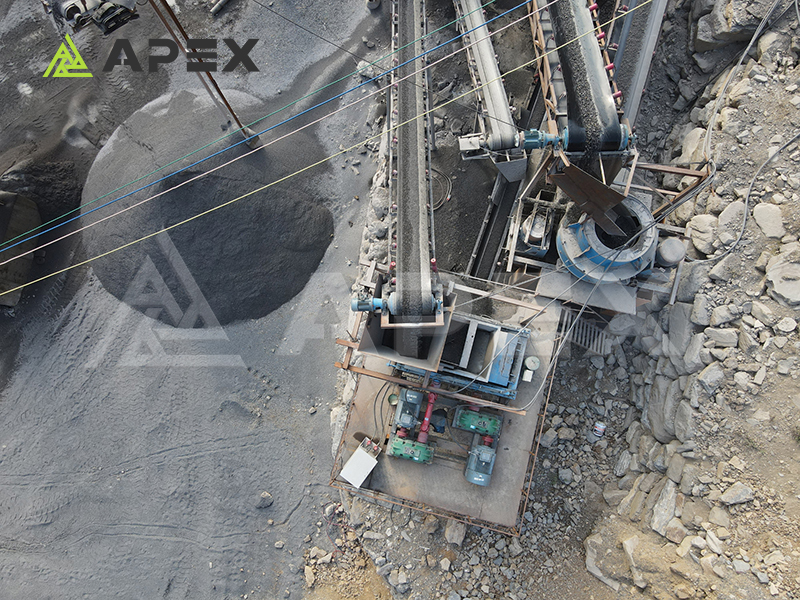
2026-09-16Direct Answer: Because limestone is a medium-to-low hardness rock, it is an ideal material for processing with the Huashengming (APEX) Roller Sand Maker. Operating on the principle of “more crushing, less grinding,” the machine delivers highly uniform 0–5 mm aggregate, minimizes over-crushing compared to impact crushers, and cuts operating power costs. Operational & Performance Advantages Performance Area Technical Capability Aggregate & Economic Benefit Sand Shape & Gradation Controlled compression ratio producing low flaky/needle content. Delivers high-quality, well-graded manufactured sand that fully satisfies strict construction aggregate standards. Fines & Over-Crushing Interparticle compression mechanics. Significantly reduces stone powder and fine waste generation compared to high-speed impact crushers. Output Control Precision millimeter-level roller gap calibration. Ensures stable, consistent production of 0–5 mm fine manufactured sand. Energy Efficiency “More crushing, less grinding” operational design. Lowers motor power demands, cutting electricity and operational expenses for long-term production. Operational Recommendations & Feed Precautions Moisture & Mud Control: If raw limestone contains high moisture or clay/mud, material may adhere to the roller surfaces. Pre-washing and dewatering upstream are recommended to prevent sticking. Feed Size Pre-Treatment: Large raw limestone boulders require primary coarse crushing (e.g., via a jaw or toothed roll crusher) before feeding into the roller sand…
Why Does a Double Roll Crusher Suddenly Produce Coarser and Uneven Output?
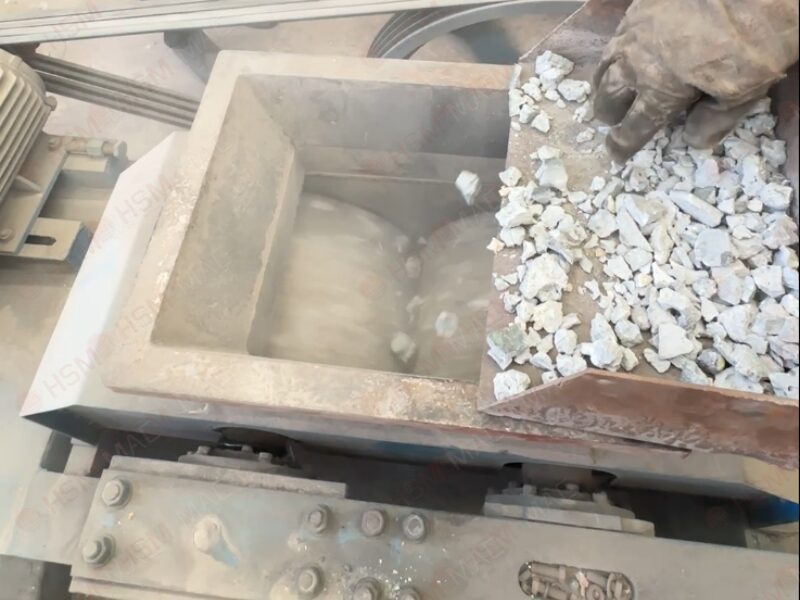
2026-09-14Direct Answer: A sudden increase in coarse or uneven particle sizing is typically caused by abnormal roller gap spacing, uneven roller shell wear, transmission instability, or improper material feeding. Diagram showing roller shell groove wear and gap enlargement causing uncrushed coarse material to escape. 🔍 Root Causes of Coarse & Uneven Output Cause Category Operational Mechanism Uneven Roller Wear Local grooving on roller shells creates inconsistent gaps across the crushing surface, allowing oversized material to pass through. Altered Roller Gap Loose/fatigued springs or unstable hydraulic pressure widen the gap. Foreign metal tramp objects can also push rollers apart. Material Buildup Wet or muddy raw materials stick to roller shells, forming a caked layer that increases the effective crushing clearance. Unstable Feeding Fluctuating feed rates or sudden large rock chunks create an uneven material bed thickness and inconsistent crushing forces. Transmission Failure Worn bearings or slipping couplings lead to unsynchronized rotational speeds between the two rollers. 🛠️ Step-by-Step Troubleshooting Checklist Inspect Wear & Gap Calibration: Stop the machine to inspect roller shell surfaces for local grooving and recalibrate the gap clearance. Clean Sticky Deposits: Scrape off sticky, wet buildup from roller shells to restore true surface contact. Verify Tension & Pressure:…
Double-Roll Crusher Performance in Sand-Making: Fines Production & Finished Particle Shape Guide
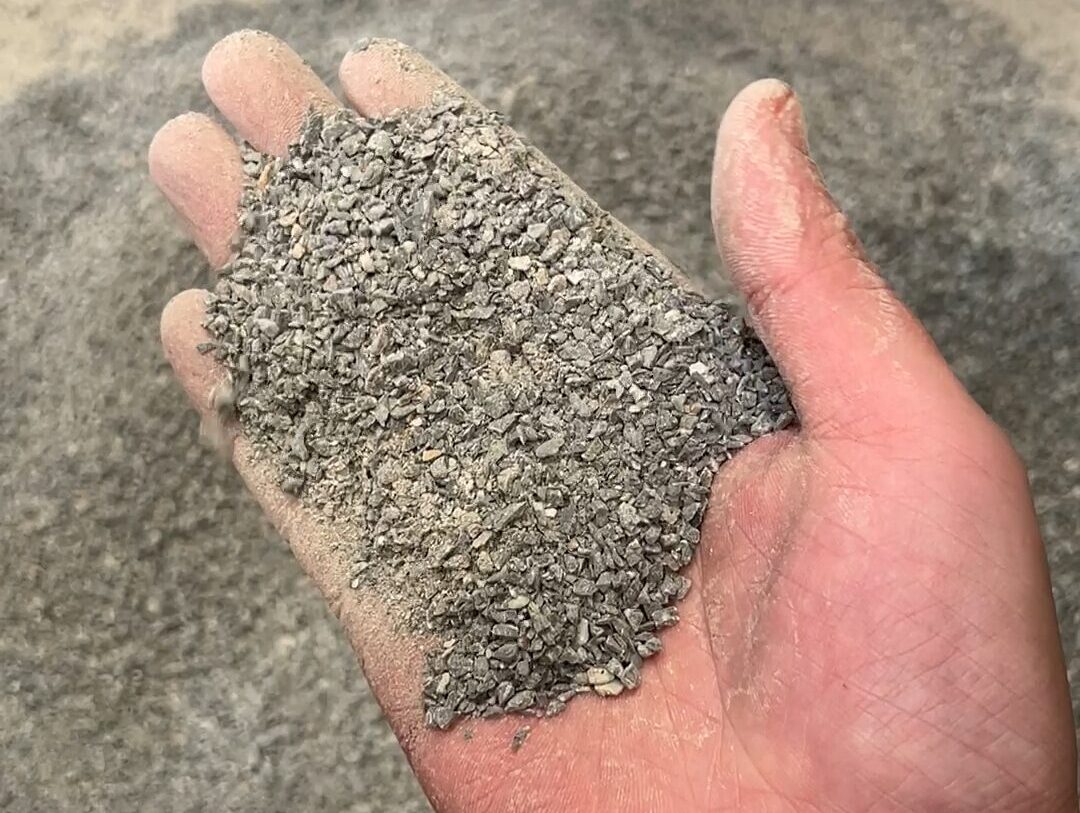
2026-09-08Executive Summary: Utilizing low-speed compression and interparticle bed comminution, double-roll crushers minimize over-crushing and stone powder compared to high-speed impact equipment. Under optimal closed-circuit operation, fines content (<0.075 mm) remains consistently between 3% and 8%. Finished manufactured sand features high cubical content and low flakiness suitable for standard concrete and dry-mix mortar, though dedicated VSI crushers offer superior shaping for ultra-high-specification projects. 📉 Fines & Stone Powder (<0.075 mm) Output Ideal Operating Performance When processing river pebbles, limestone, granite, or other brittle rock under proper conditions (smooth hydraulic rolls, uniform full-width feeding, and closed-circuit screening), stone powder content is strictly controlled within 3–8%. This eliminates the need for intensive water washing in most commercial sand applications. Key Drivers of Excessive Fines Extremely Narrow Roller Gap: Excessive squeeze forces cause over-grinding between particles. Highly Brittle Material: Calcite, heavily weathered rock, or soft minerals shatter easily under pressure. Absence of Screening: Failing to discharge qualified fines via vibrating screens causes repeated grinding. Uneven Roller Shell Wear: Channel grooves on the roller surface generate localized attrition grinding. 📐 Particle Shape & Product Quality Analysis Attribute Performance Evaluation Particle Structure Predominantly cubic and polyhedral with low flakiness and high packing density; compliant with standard…
Double-Roll Crusher Wear Parts & Roller Shell Service Life Guide ?
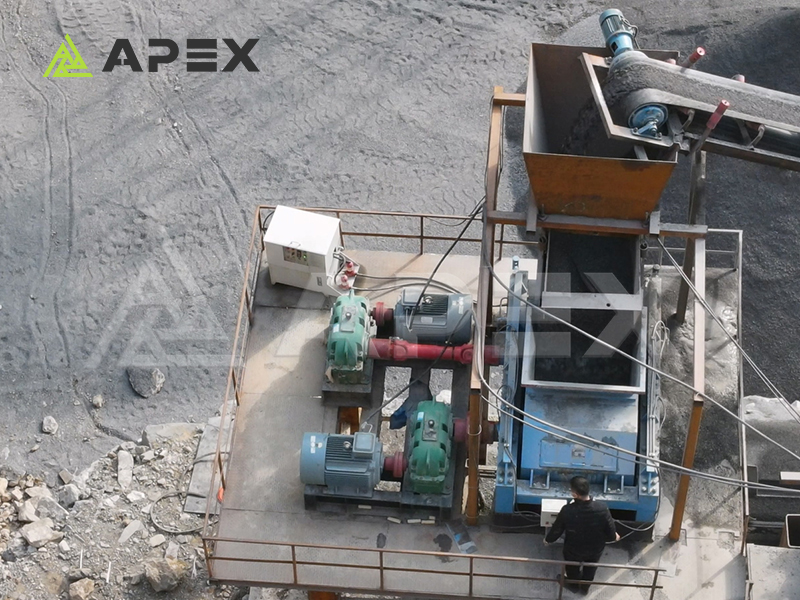
2026-09-07Executive Summary: Compared to hammer or impact crushers, double-roll crushers feature significantly fewer wear components and lower operating expenses, eliminating high-frequency replacements like hammers, blow bars, or screen plates. Wear is primarily concentrated on roller surfaces, transmission, seals, and hydraulic fittings—with the roller shell being the most critical wear part whose service life directly dictates spare parts budgets and plant maintenance intervals. 🔩 Complete Wear Parts Inventory 1. Core Abrasion Resistance Components Roller Shells (Sleeves): The primary component contacting and compressing raw material. Available in smooth or toothed configurations. Crafted from high-chromium-manganese alloy steel, APEX roller shells support on-site hardfacing repair without requiring full replacement. Seals & Dust Boots: Prevent fine dust from penetrating bearing housings; subject to gradual aging and abrasive wear in dusty environments. 2. Transmission & Spring Components (Spring Models) Compression Springs: Experience continuous impact loads leading to tension decay or fatigue fracturing over time. Gears & Bushings: Internal wearing elements within mechanical gearboxes. Drive Belts & Coupling Cushions: Flexible drive elements requiring periodic inspection. 3. Hydraulic-Specific Consumables Hydraulic Hoses & Cylinder O-Rings: Pressure-bearing seals subject to thermal and pressure fatigue. Hydraulic Oil Filter Elements: Require routine replacement to maintain fluid cleanliness and system stability. Note on…

What Materials Are Suitable for a Double-Roll Crusher?
2026-09-03What Materials Are Suitable for a Double-Roll Crusher? Overview: Double roll crushers break materials through compression force, performing best on medium-hard and brittle rocks. Selecting the proper model—smooth-roll for fine sand-making or toothed-roll for primary coarse crushing—depends entirely on your feed material’s characteristics and size. ✅ Suitable Materials: Smooth-Roll Crusher (Hydraulic / Spring) Engineered for high-quality manufactured sand and small aggregate production. Feed materials require pre-crushing upstream. Hard Rocks: Quartz stone, cobblestone, granite, basalt, river pebble, and diabase. Produces well-shaped, cubical sand with low fines. Medium-Hard Stones: Limestone, dolomite, andesite, weathered rock, and weathered sand. Metallic & Industrial Ores: Iron ore, manganese ore, and copper ore (designed for secondary and tertiary crushing circuits). Recycled Aggregates: Concrete fragments and crushed construction waste (steel rebar and iron pieces must be removed in advance). ⚠️ Important Note: Large raw boulders cannot be fed into smooth-roll models directly. Upstream pre-crushing with a jaw crusher is strictly required. Figure 1: Smooth-roll setup optimized for hard rock sand-making ✅ Suitable Materials: Toothed-Roll Crusher Features heavy-duty surface teeth providing strong material-biting capacity, accepting large feed sizes for primary crushing with low fine output. Sedimentary Rocks & Fossil Fuels: Limestone, coal, and coal gangue. Masonry Waste: Construction waste,…
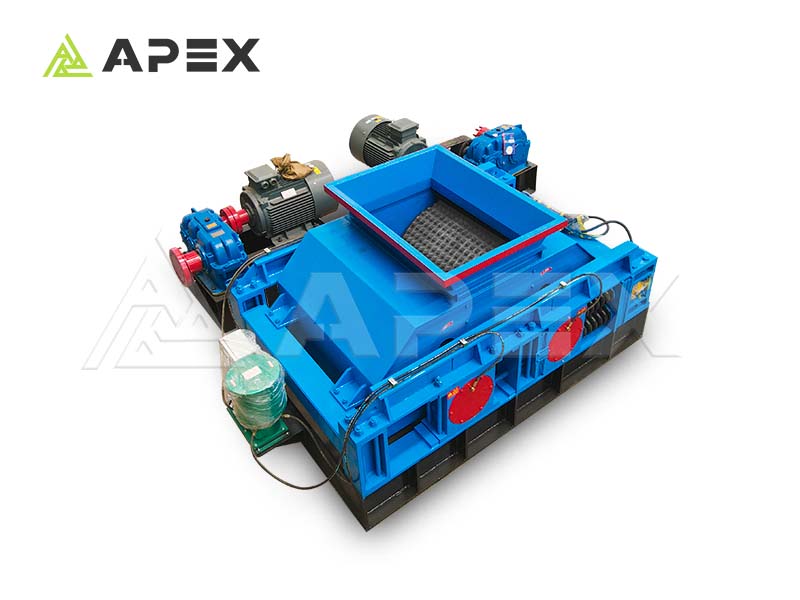
How Does a Roller Crusher Work?
2026-09-01Introduction The roller crusher (also known as a roll crusher) is a widely used compression-type crushing machine in mining and mineral processing. It is particularly valued for its ability to produce uniform particle sizes with minimal fines, making it ideal for gold ore, nickel laterite, and other materials where over-crushing must be avoided. This FAQ answers the most common questions about how a roller crusher works and what makes it effective. Q: What is a roller crusher? A roller crusher is a crushing machine that uses two counter-rotating cylindrical rolls to break material by compression. It is primarily used in medium and fine crushing applications, reducing ore from jaw crusher output down to mill feed size or heap leach size. Unlike impact crushers, which rely on high-speed striking, the roller crusher applies slow, steady pressure to fracture material. Q: How does a roller crusher work? The working principle of a roller crusher is based on compression crushing between two rolls: Feeding: Material is fed from above into the gap between two horizontally mounted, counter-rotating rolls. Nipping: As the rolls turn toward each other, friction grips the material at the “nip angle” — the point where the particle first contacts both roll surfaces….

How Does a Crusher Work?
2026-08-15Crushers are essential processing equipment widely used in mining, building materials, metallurgy, chemical, and other industries. Their core function is to reduce large chunks of ore, rock, coal gangue, and other materials to the required particle size through mechanical force. Different types of crushers operate on different principles and are suited to different materials and operating conditions. Working Principles of Major Crushers Jaw Crusher – Uses compression crushing. The motor drives the belt pulley, which moves the movable jaw up and down through an eccentric shaft. When the movable jaw rises, it approaches the fixed jaw, and the material is crushed by compression, splitting, and bending forces. When the movable jaw descends, the crushed material is discharged from the bottom of the crushing chamber. The jaw crusher has a simple structure, reliable operation, and is suitable for primary crushing of various ores and rocks. Roll Crusher – Uses compression crushing. Two motors drive two pairs of rolls rotating in opposite directions. Material falls into the gap between the rolls and is crushed under high compressive force, then discharged naturally. The discharge size can be precisely controlled by adjusting the roll gap. When encountering unbreakable material, the hydraulic system automatically retracts to increase…

Why Use a Crusher?
2026-08-08In mining and sand production, the crusher is the first critical step in the entire production process and the core equipment that determines whether the production line can operate properly. Many customers ask: “Can’t run-of-mine stone be used directly?” “Why is crushing necessary?” The answer is: Run-of-mine stone is a resource, but only through crushing can it be transformed into a product, and products generate profit. Below, we answer common questions about the necessity of crushers from multiple perspectives. Q1: Why can’t run-of-mine stone be used directly? Run-of-mine stone varies greatly in size—from several tons to sand-sized particles—with irregular shapes and high clay content. Such material cannot be used in concrete, road filling, or high-standard projects like railways and bridges. Even for lower-standard applications, uncrushed stone offers poor compaction and stability. Simply put, run-of-mine stone has no market value without processing. Q2: What role does a crusher play in the production process? A2: The crusher’s core function is “processing large run-of-mine stone into finished aggregates that meet specifications.” Specifically: Particle size control: Reduces large rocks from tens of centimeters or even meters down to finished sizes of a few centimeters or millimeters. Particle shaping: Improves aggregate shape through layer-compression, reducing flaky and elongated particles and…
What is the Working Principle of a Double Roll Crusher?
2026-08-06Q:What is the Working Principle of a Double Roll Crusher? A:The core working principle of a double roll crusher (also known as a roll crusher) is to crush material using compressive force and grinding/shear force generated by two counter-rotating rollers. To help you understand more intuitively, the crushing process can be broken down into the following steps: 1. Material Entry and Draw-in Material falls from the feed hopper above into the gap between the two rollers. Due to the friction between the material and the roller surfaces, the rotating rollers pull the material forcibly into the narrow gap between them (the crushing chamber). 2. Compression and Grinding/Shear Crushing Once the material enters between the two rollers, it is subjected to tremendous compressive force. This pressure quickly exceeds the material’s compressive strength, causing it to crack and fracture. At the same time, the speed difference between the two rollers creates grinding and shear forces that further tear the material apart for more thorough crushing. 3. Discharge of Finished Product The crushed small particles are discharged from the gap between the two rollers along the tangential direction of roller rotation, completing the crushing process. 4. Gap Adjustment and Discharge Control One of the key features…