
APEX Hydraulic Roller Crusher Maintenance FAQ
2026-04-12Technical FAQ: Hydraulic Roller Crusher Maximizing Efficiency through Hydraulic Intelligence Q: How does the “Intelligent Hydraulic Protection” handle metal scraps? Our system uses high-sensitivity pressure sensors. When a foreign object (like a loader tooth) enters the chamber, the hydraulic system automatically retreats one of the rollers to allow the object to pass. Once cleared, it immediately resets to the pre-set gap, ensuring continuous production without manual intervention. Q: Why is the roller skin considered “extra durable”? APEX roller skins are cast from a proprietary high-chromium manganese steel alloy. This specialized material is heat-treated to achieve a service life 3-5 times longer than standard rollers. Furthermore, our modular design allows for easy replacement, significantly reducing downtime and long-term maintenance costs. Q: What is “Laminar Flow Crushing” and why does it matter? Laminar Flow Crushing occurs when material is squeezed between the rollers under static pressure. This method produces cubic particles with low needle-flake content. This is critical for high-grade construction aggregates, as cubic particles provide better bonding strength in concrete and asphalt mixes. Q: Can I adjust the output size without stopping the machine? Yes. One of the greatest advantages of our hydraulic series is on-the-fly adjustment. Through the intelligent control…

APEX Mobile Diesel Jaw Crusher Maintenance FAQ
2026-04-12Technical FAQ: Mobile Jaw Crusher Your Guide to Portable Crushing Success Q: Why choose a Diesel Engine over an Electric Motor for mobile crushing? The diesel engine option is ideal for remote mining sites, road construction, and quarries where electricity is unavailable or unstable. It provides full autonomy and high torque for crushing hard materials. However, if your site has a stable grid, our electric motor option is more energy-efficient and has lower operating costs. Q: How “mobile” is the equipment? Can it be towed on highways? Our mobile jaw crushers are built on a high-strength tire chassis. Smaller models (like the PE150x250) can be easily towed by small tractors or trucks within a work site. For highway transport, we recommend checking local regulations regarding towing speeds and braking systems, as these units are primarily designed for off-road/site mobility. Q: What is the maximum hardness of material this machine can process? APEX mobile jaw crushers are engineered to process materials with a compression strength of up to 350Mpa. This includes exceptionally hard rocks like basalt, granite, and iron ore. It is also highly effective for construction waste and cement clinker recycling. Q: What maintenance is required for the diesel power…

APEX Jaw Crusher Maintenance FAQ
2026-04-12Technical FAQ: Jaw Crusher Optimizing Your Primary Crushing Operations Q: What materials are APEX Jaw Crushers best suited for? APEX Jaw Crushers excel in processing hard and abrasive materials. This includes river pebbles, granite, basalt, iron ore, and gold ore. They are also widely used for recycling construction waste like concrete and bricks, producing high-quality aggregate for infrastructure projects. Q: How do I adjust the discharge particle size? Our machines are equipped with a user-friendly wedge adjustment mechanism. By adjusting the wedges, you can modify the discharge opening within a range of 10mm to 150mm (depending on the model). This allows you to precisely control the final product size to match your specific downstream requirements. Q: What is the benefit of the high-manganese steel jaw liners? The liners are the most critical wear parts. We use heat-treated, high-quality manganese steel which provides exceptional hardness and impact resistance. This specialized alloy significantly extends the operational lifecycle of the equipment and reduces the frequency of part replacements, saving you money on maintenance. Q: Does APEX support different voltage standards for international sites? Yes. We understand that different regions have different power requirements. We offer customized electrical configurations including 380V, 400V, 480V, and…
APEX Four Roller Crusher Troubleshooting FAQ
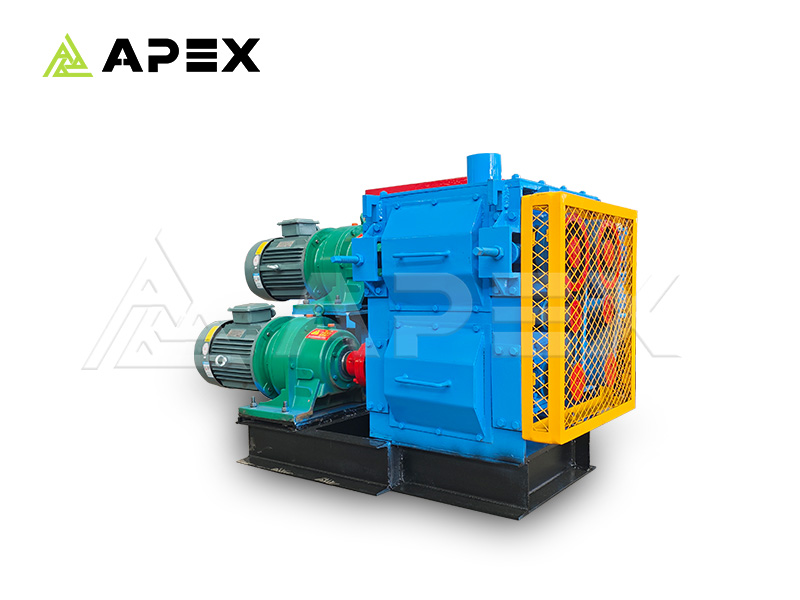
2026-04-10Technical FAQ: Four Roller Crusher Advanced Graded Crushing Knowledge Q: How does the “Two-Stage” crushing process actually work? The machine consists of four rollers arranged in two vertical tiers. The upper tier utilizes extrusion and shear forces to break large feed down to a medium size. The material then falls naturally into the lower tier, where high-speed grinding and fine extrusion occur. This eliminates the need for a secondary crusher and extra screening equipment. Q: Can the Four Roller Crusher handle wet materials like coal gangue? Yes, it is specifically designed for high-moisture materials (up to 30%). Unlike impact or cone crushers that rely on internal screens which easily clog, the APEX Four Roller Crusher uses a screen-less design. The continuous relative rotation of the rollers ensures that even sticky materials are pulled through and discharged efficiently. Q: What are the options for roller surface customization? APEX offers three main roller surface types: Toothed rollers (for better grip and initial break), Surfacing rollers (for heavy-duty wear resistance), and Flat rollers (for fine grinding). We can mix and match these—for example, toothed rollers on top and flat rollers on the bottom—to suit your specific material characteristics. Q: Is maintenance difficult for…
APEX Toothed Roller Crusher Maintenance FAQ
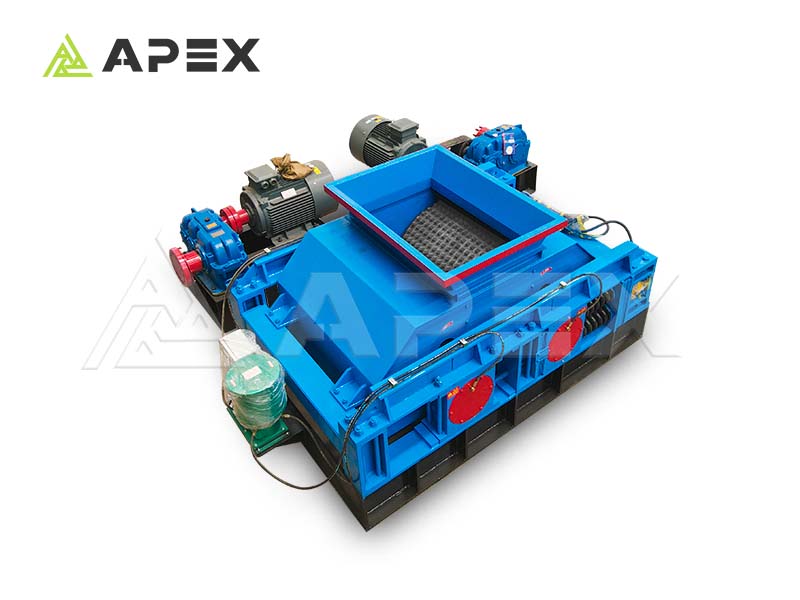
2026-04-10Technical FAQ: Double Toothed Roller Crusher Advanced Solutions for Sticky & Complex Materials Q: Why is a toothed roller crusher better for wet materials than a jaw crusher? Jaw crushers rely on compression, which often compacts wet materials into a “cake” that clogs the chamber. APEX’s toothed rollers use shear and splitting forces. The teeth grip and pull the material through, while the counter-rotating motion creates a self-cleaning effect that prevents adhesion, even with high-mud clay ores. Q: How does the hydraulic system handle unbreakable objects like iron tramp? Our intelligent hydraulic system is equipped with sensors that instantly detect a sudden spike in pressure. The movable roller automatically retracts to let the iron block pass and then immediately resets to the original gap setting. This happens in seconds, protecting the alloy teeth and the transmission system from severe damage. Q: Can I adjust the output size without stopping the machine? Yes. One of the core advantages of the APEX series is the real-time hydraulic adjustment. Operators can tune the roller gap via the control panel while the machine is running, allowing you to instantly switch between different product specifications (e.g., from 15mm to 30mm) as required by your project….

APEX HPGR Technical Support FAQ
2026-04-10Technical FAQ: APEX HPGR Optimizing Performance with High Pressure Grinding Rolls Q: Why is APEX HPGR more energy-efficient than traditional crushers? APEX HPGR utilizes high-pressure extrusion within a material bed, which is fundamentally different from impact-based crushing. This method significantly lowers the specific energy consumption (kWh/t), allowing for energy savings of 30-45% while providing a much finer product for the grinding stage. Q: How does the “90% Roller Liner Utilization” benefit my operation? Most HPGR units require liner replacement much earlier to prevent structural failure. APEX’s high-strength centrifugal casting rollers are designed to maintain structural integrity even at 1cm thickness. This maximizes the life of each roller, reduces the frequency of maintenance, and lowers the overall operation burden. Q: What materials can the APEX HPGR process? Our HPGR is highly versatile. It can effectively process metallic ores such as gold, copper, iron, and molybdenum, as well as aggregates for high-quality sand production. Its hydraulic adjustment system also enables it to handle dry, wet, and viscous materials without losing efficiency. Q: How does the equipment improve the quality of final products? The extrusion process creates particles with high cubical content and uniform size distribution. By effectively controlling the powder generation rate…
Mobile Jaw Crusher Maintenance FAQ
2026-04-10Technical FAQ: Mobile Jaw Crusher Expert Support from APEX Heavy Industry Team Q: Which power system should I choose: Diesel or Electric? It depends on your site conditions. For locations with a stable electrical grid, an electric motor is more energy-saving and environmentally friendly. However, for remote mining areas or road construction without power access, our diesel engines offer superior torque and operational independence. Q: Can the mobile jaw crusher handle construction waste with concrete? Absolutely. The APEX Mobile Jaw Crusher is specifically designed to process concrete, bricks, and mortar blocks. The high-wear-resistant alloy liners in the crushing chamber ensure durability even when dealing with reinforced concrete and abrasive construction debris. Q: How portable is the equipment? Does it require a flatbed trailer? The unit is built on a high-strength tire chassis equipped with a standard towing hitch. For most models, it can be directly towed by a tractor or truck within the job site. This mobility allows for rapid transitions between different sections of a highway or quarry project without complex disassembly. Q: How do I adjust the final product size (discharge opening)? The discharge opening is flexibly adjustable via a mechanical or hydraulic system (depending on the model)….
Hydraulic Roller Crusher Operation FAQ
2026-04-09Hydraulic Roller Crusher FAQ Technical Support from APEX Global Service Team How does the hydraulic gap adjustment improve product quality? The hydraulic system allows for precise, on-the-fly adjustment of the gap between rollers. This ensures you can maintain the exact particle size required for your project. Furthermore, the static pressure principle produces a high percentage of cubic-shaped aggregates, which are superior for concrete gradation compared to impact-crushed materials. What happens if iron or steel scrap enters the crushing chamber? APEX crushers feature an Intelligent Hydraulic Protection System. When the sensors detect an uncrushable object, the hydraulic cylinders instantly retract the movable roller to let the object pass. The system then automatically resets the roller to its original position, preventing damage and minimizing downtime. Is this machine suitable for sticky or high-moisture materials? Yes. The counter-rotating action of the rollers effectively “grips” and pulls material through the zone. Unlike impact or cone crushers that may clog with wet shale or clay, the roller crusher maintains high throughput. We also offer specialized roller textures to further enhance grip for specific material conditions. How difficult is it to replace the roller skins? We use a modular roller skin design. This allows for faster…

Mobile Crusher Technical FAQ
2026-04-08Frequently Asked Questions Expert Guidance on Mobile Crushing Operations How is the equipment moved between different project sites? Our mobile jaw crushers are built on a tire-based chassis with a reinforced towing hitch. This allows the unit to be easily moved by a tractor or heavy-duty truck, making it ideal for road construction, temporary quarry sites, and urban demolition recycling. What materials can the APEX Mobile Jaw Crusher process? The machine is designed for primary crushing of various materials with a compression strength under 350 Mpa. This includes granite, basalt, iron ore, and limestone, as well as construction waste like concrete and asphalt. Are both diesel and electric power options available? Yes. We offer flexible power configurations. For sites with a stable grid, an electric motor is highly efficient. For remote or off-grid operations, our high-torque diesel engines provide the necessary power to maintain consistent crushing throughput. What is the maintenance schedule for the crushing chamber? Maintenance is straightforward. We recommend checking the wear of the manganese jaw plates regularly and ensuring the centralized lubrication system is filled. Our “simple-access” design allows for fast inspections and part replacements to minimize downtime.