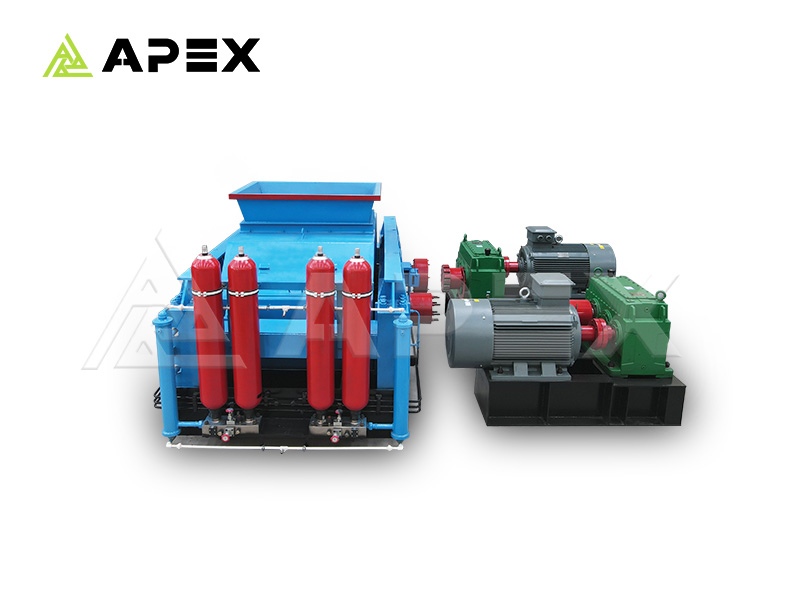
How does the APEX system handle uncrushable materials like tramp iron? Does it require manual resetting?
2026-05-12Expert Technical Support: Intelligent Safety FAQ Q How does the APEX system handle uncrushable materials like tramp iron? Does it require manual resetting? A The APEX Integrated Hydraulic Control System is specifically engineered to eliminate the risks associated with tramp iron and foreign objects. Unlike rigid mechanical or aging spring systems, our tech utilizes a dynamic bypass mechanism that follows a precise three-phase logic: Surge Response: When a non-crushable object (e.g., metal parts or drill bits) enters the rollers, the cylinder pressure spikes instantly, triggering the high-speed safety valve. Rapid Opening: The movable roller glides back in milliseconds, expanding the discharge gap to allow the obstacle to exit without stressing the motor, bearings, or gear shafts. Seamless Recovery: As soon as the object clears, the hydraulic pressure re-equalizes, pushing the roller back to its precision-set position. There is no need to stop the conveyor or manual intervention. Productivity Impact: In traditional operations, clearing a “tramp iron jam” can waste 2-4 hours of labor and production. APEX technology keeps your line running at 100% capacity, safeguarding your high-manganese liners and maximizing total plant ROI. Need more specific data on hydraulic response times? Consult our Engineering Team → © 2026 APEX GOLD…
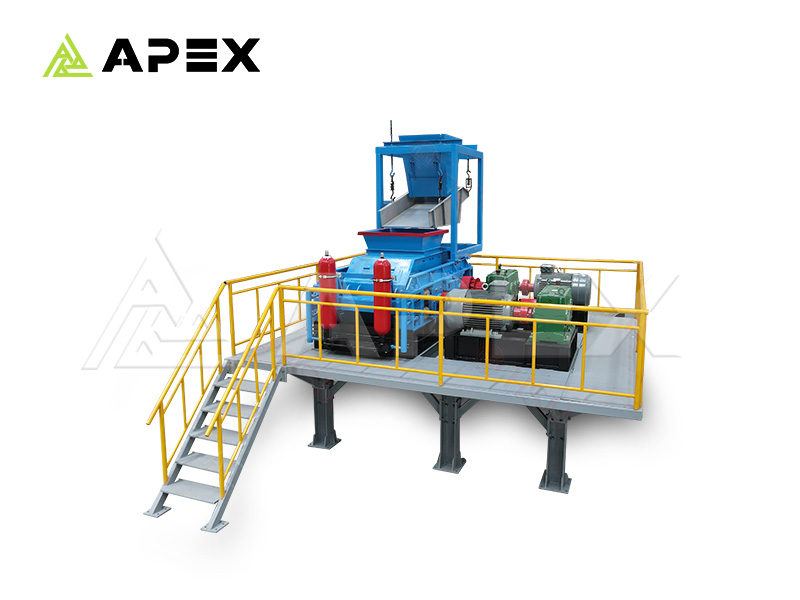
FAQ: Hydraulic Double Roller Crusher
2026-05-05Customer Support FAQ: Hydraulic Double Roller Crusher Q1: How does the intelligent hydraulic system protect the machine? The system automatically retreats the rollers when uncrushable foreign objects are encountered and resets them once the object has passed, preventing internal damage. Q2: Can I adjust the final product size during operation? Yes. The discharge size is precisely determined by the hydraulic adjustment of the roller gap, allowing for quick modifications without interrupting production. Q3: What is the lifespan of the roller skins? Our roller skins are made of high-chromium manganese steel alloy, offering a service life 3-5 times longer than traditional materials even in harsh environments. Q4: Is the roller crusher environmentally compliant? Absolutely. The equipment features a fully enclosed structure with dust removal systems and low-noise operation to meet international environmental standards. For more technical support, visit apexgoldmachinery.com
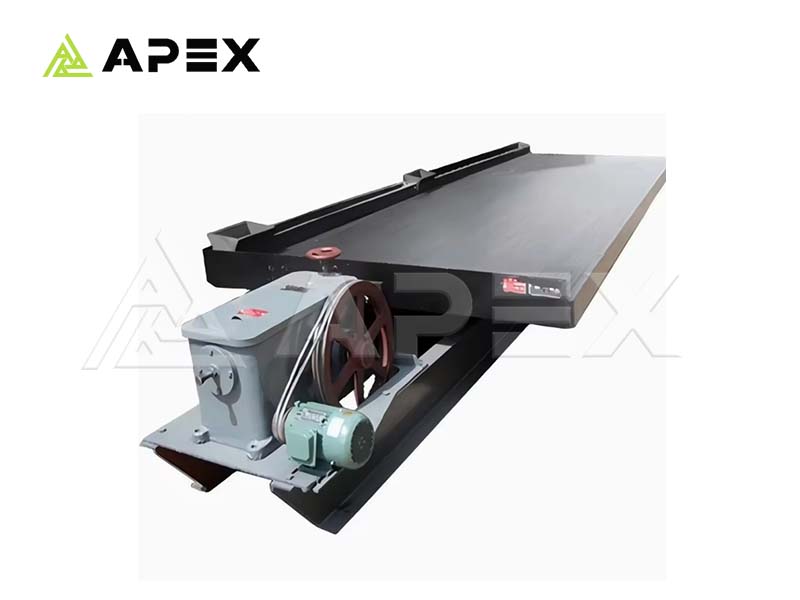
Technical Support & FAQ
2026-05-03Technical Support & FAQ How does the 6S Shaking Table achieve high precision? The 6S achieves precision through its asymmetric reciprocating motion. This motion, combined with transverse flushing water, allows ore particles to distribute in a fan-shape on the bed surface, layered strictly by specific gravity and particle size. Which particle sizes are best suited for shaking tables? The 6S is exceptionally versatile, handling coarse sand (2-0.5mm), fine sand (0.5-0.074mm), and even slime (-0.074mm). We offer specific bed surface designs for each to maximize recovery efficiency. Is the equipment durable enough for mobile mining? Absolutely. With a high-quality fiberglass bed surface that is both corrosion and wear-resistant, the 6S model is designed for a long service life with very few wearing parts, making it ideal for both stationary plants and mobile mineral processing. Need more technical specifications or a 3D plant design? CONSULT WITH AN ENGINEER →
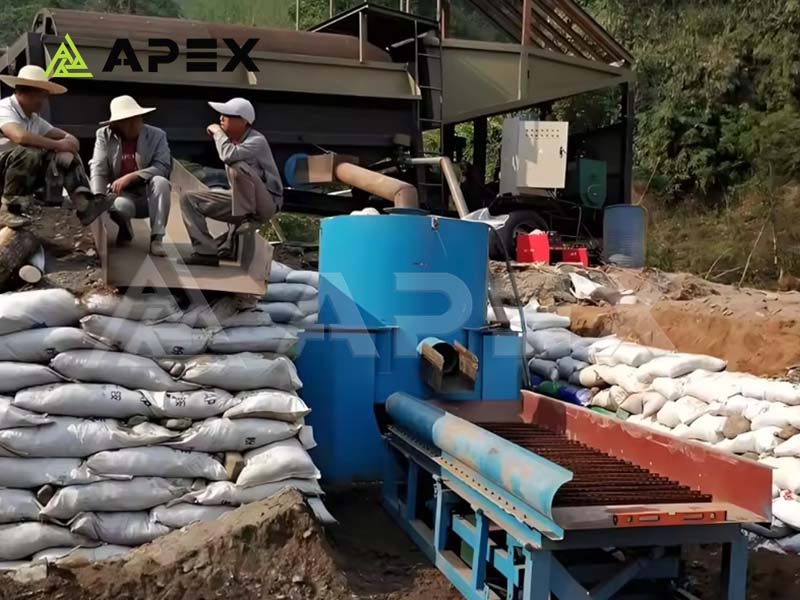
FREQUENTLY ASKED QUESTIONS
2026-04-30FREQUENTLY ASKED QUESTIONS Q1: What is the maximum recovery rate for fine gold particles? Our STLB Centrifugal Concentrators are engineered to capture gold particles as small as 0.074mm (200 mesh). In optimized environments, the recovery rate for fine gold can reach up to 98%, significantly higher than traditional sluice boxes. Q2: How does the system handle high-clay (“sticky”) deposits? Clay binding is the most common cause of gold loss. We utilize heavy-duty Trommel Scrubbers equipped with high-pressure internal spray bars and aggressive lifters to ensure complete disintegration of clay balls before the material reaches the concentration stage. Q3: Is the equipment suitable for remote or harsh mining environments? Yes. All APEX equipment is built to ISO 9001 and CE standards. We use reinforced steel frames, wear-resistant manganese screen plates, and high-torque industrial motors designed to operate 24/7 in demanding conditions across Africa, Southeast Asia, and South America. Q4: Does APEX provide custom plant layouts? Absolutely. We provide turnkey engineering services. Based on your ore sample analysis and terrain requirements, our engineers will design a customized 2D/3D plant layout to ensure optimal gravity flow and material handling efficiency. Q5: What are the power and water requirements? Requirements vary by processing capacity…
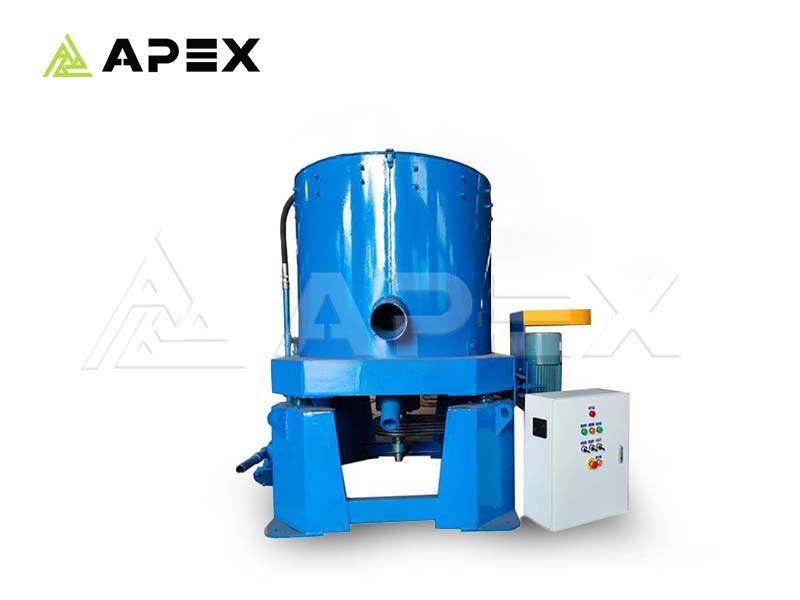
Centrifugal Concentrator Maintenance FAQ
2026-04-29FAQ: Centrifugal Concentration Q: What makes centrifugal force better than a sluice box? Standard gravity equipment relies on 1G (earth’s gravity). The APEX Concentrator generates up to 200G. This massive force allows heavy gold particles to settle much faster and stay trapped in the liner, even when dealing with microscopic “flour gold” that would normally wash away in a sluice. Q: How important is backwash water pressure? It is critical. The “fluidization” water pressure (ranging from 0.04 to 0.20 MPa depending on the model) keeps the concentrate bed from compacting. Without this controlled pressure, the bowl would fill with sand, leaving no room for the gold to settle. Q: Is the recovery process continuous? The feeding and separation are continuous. However, the accumulated gold concentrate is dislodged periodically through an automated cleaning system. This ensures the machine stays at peak efficiency without the need for manual scrubbing or long downtimes. Need help calculating your water requirements? Ask our tech support team.

Gold Trommel Mining FAQ
2026-04-28FAQ: Gold Washing & Screening Q: How does the trommel handle ore with extremely high mud and clay content? Our trommels feature an integrated scrubbing section and high-pressure water jets. As the drum rotates, the material is subjected to mechanical tumbling and a powerful shower, which breaks down clay balls and liberates the gold particles for downstream recovery. Q: Can the Gold Trommel be moved between different mining sites? Yes. We offer mobile trailer models specifically designed for easy transportation between remote sites. These units can be towed to your location and set up quickly, making them ideal for exploration or shifting placer deposits. Q: What recovery rate can I expect if I add a Centrifugal Concentrator? When paired with an APEX Centrifugal Concentrator, the overall gold recovery rate typically reaches between 90% and 97%. The trommel provides the high-quality classification needed for the concentrator to operate at its peak performance. Need help sizing your mesh for a specific deposit? Contact our tech support.
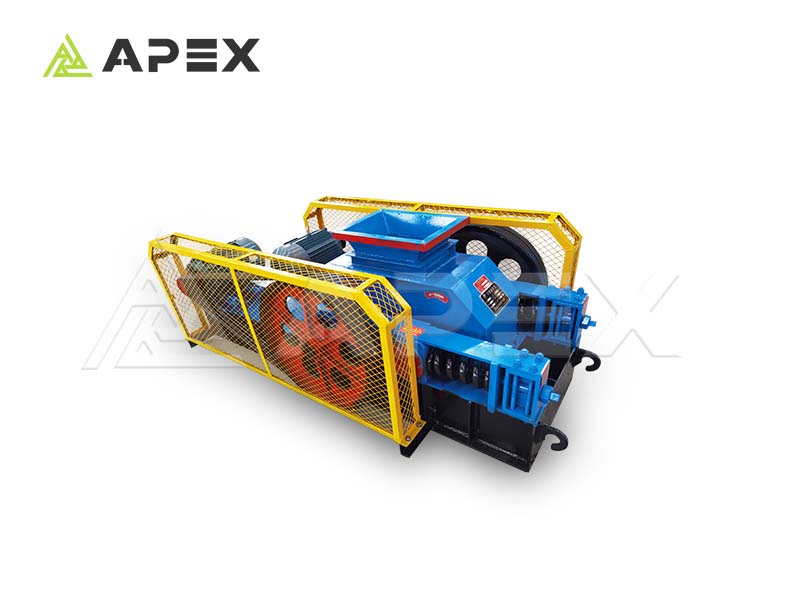
Small Spring Roller Crusher Maintenance FAQ
2026-04-26FAQ: Small Spring Roller Crusher Q: How does the spring buffer mechanism protect the machine? When unbreakable objects (like iron blocks or extremely hard rock) enter the chamber, the spring instantly contracts. This increases the gap between the rollers to let the object pass safely. The system resets in less than 0.5 seconds, ensuring no damage to the body structure. Q: Is this model really more energy-efficient than a hammer crusher? Yes. While a hammer crusher relies on high-speed impact which wastes energy, the double roller uses extrusion. This results in a power consumption of only 1.0-1.8kWh per ton of material, making it significantly cheaper to operate long-term. Q: How difficult is maintenance for small construction teams? The design is intentionally simple with few wearing parts. The roller shells are made from high-chromium manganese steel and typically last over 2 years. Daily maintenance only requires basic lubrication, which any local mechanic can handle. Need help choosing a model? Contact us for expert advice.
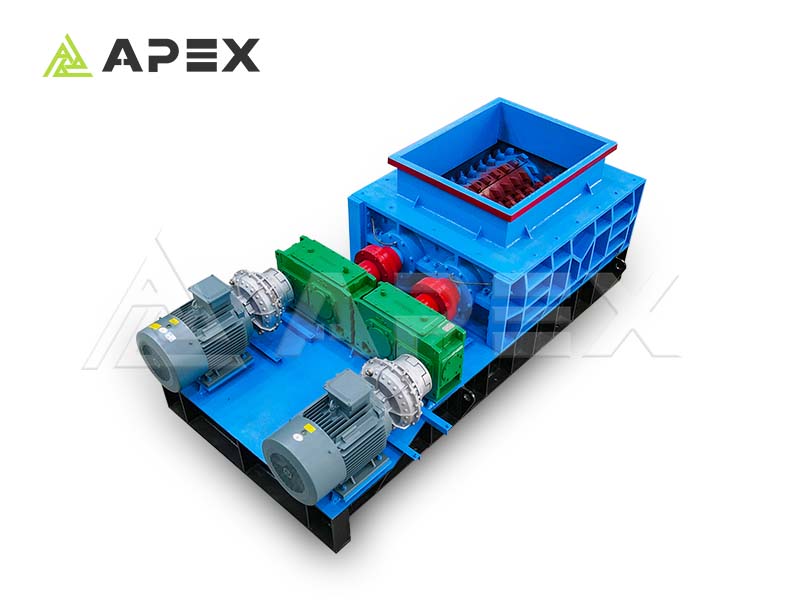
FAQ: Sizing Tooth Roller Crusher
2026-04-25FAQ: Sizing Tooth Roller Crusher Q: What is the benefit of the “Shear-Stretch” crushing principle? Unlike hammer or jaw crushers that use compression or impact, shear-stretch pulls the material apart along natural cracks. This produces fewer fines, meaning your “over-crushing” rate stays under 8%, preserving the value of your final product. Q: How does the machine handle sticky or wet ores? The Sizing Tooth design combined with high-torque rollers prevents material buildup. As the teeth rotate, they naturally “comb” through the material. It is highly adaptable to wet and sticky conditions where standard crushers would clog. Q: Is maintenance difficult for the high-wear parts? No. APEX uses replaceable wear-resistant tooth sleeves. These can be replaced individually if one becomes worn or damaged, avoiding the cost and downtime of replacing the entire crushing roll. Looking for specific model dimensions? Speak with our technicians.
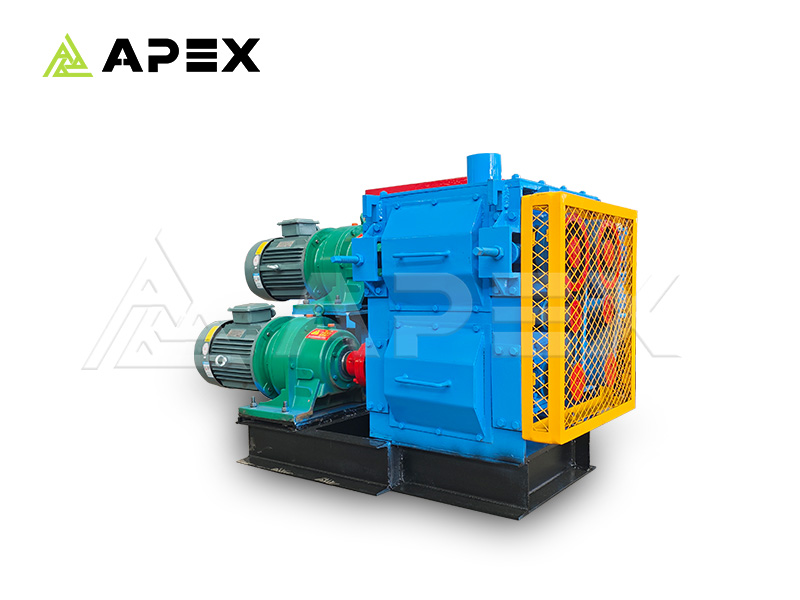
Four Roller Crusher Troubleshooting FAQ
2026-04-24FAQ: Four Roller Crusher Q: Why does the Four Roller Crusher eliminate the need for a vibrating screen? Because the machine features two levels of crushing chambers. The top pair handles the initial breakdown, and the bottom pair performs precision fine grinding. The discharge gap is physically set to your required size, ensuring the output is uniform without needing a secondary screen. Q: Can this machine process wet or sticky coal gangue during rainy seasons? Yes. APEX Four Roller Crushers utilize a screen-less design and low-speed extrusion. This prevents the “pasting” effect found in hammer crushers. It comfortably handles materials with up to 30% moisture content without clogging. Q: How does the equipment protect itself from unbreakable objects like iron tramp? The equipment is fitted with a spring or hydraulic automatic retreat device. When an unbreakable object enters, the rollers instantly retract to let it pass safely and then return to their original position, protecting the motor and rollers from damage. Still have questions? Contact our engineering team.