
Double Roll Crusher for Bentonite: Crushing Sticky Clay Without Blinding
2026-10-30Article Summary: Bentonite processing presents a unique challenge: it is not excessively hard, but its high plasticity and moisture sensitivity cause sticky clay to swell, blind screens, cake impact chambers, and bring high-speed crushers to a halt. When equipped with specialized toothed roll surfaces, double roll crushers overcome sticky clay through low-speed positive gripping, tearing action, and an open crushing chamber. This article explores why toothed roll crushers excel in bentonite duty, reviews processing flowsheets, presents reference model specifications, and details the four critical data points required for custom sizing from Apex (Apex) Heavy Machinery. The bentonite problem is not hardness—it is stickiness. Bentonite is a soft clay mineral (montmorillonite) with a peculiar physical property: it swells when wet and transforms into a sticky, highly plastic mass. Mined bentonite is rarely hard—its compressive strength is low, meaning almost any mechanical crusher can technically “break” it. The true engineering bottleneck is material handling: wet, sticky bentonite blinds screens, cakes impact chambers, builds up on chute walls, and stops high-speed machines dead in their tracks. This is precisely where the double roll crusher—specified with toothed roll surfaces—outperforms impact-type crushers for bentonite duty. Low-speed compression combined with gripping teeth tears sticky clay apart…
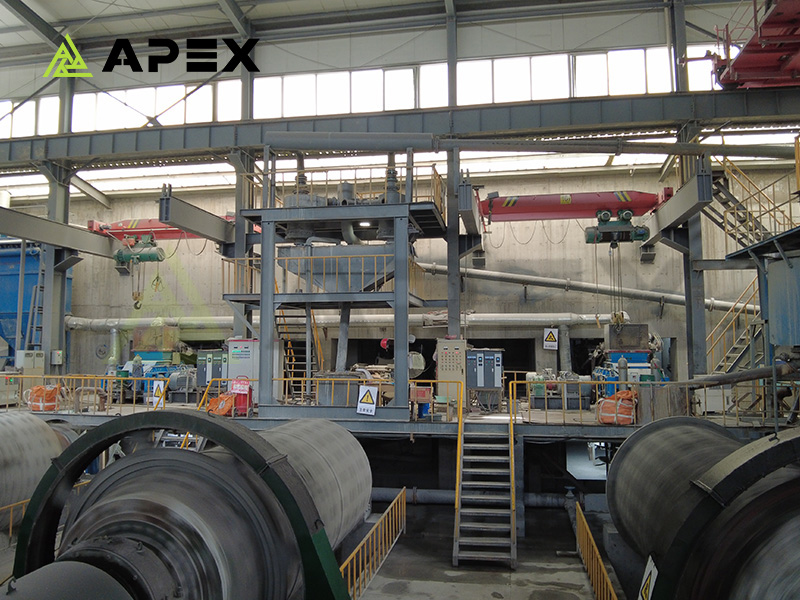
Double Roll Crusher for Mineral Processing: The Fine-Crushing Stage That Pays for Itself
2026-10-26Article Summary: In a typical mineral processing flowsheet, grinding circuits consume the largest share of plant energy. Positioned directly in the tertiary fine-crushing stage ahead of grinding mills, double roll crushers embody the industry-proven strategy of “crush more, grind less.” This article outlines their core roles in reducing mill feed top sizes, stabilizing throughput, and protecting downstream mineral recovery, alongside reference model ranges, retrofit configurations, and expert FAQ guidance from Apex (Apex) Heavy Machinery. In a typical mineral processing flowsheet—crushing, screening, grinding, separation—the grinding circuit consumes the largest share of plant energy, frequently accounting for more than half of the total power draw. That is precisely where a double roll crusher earns its place: in the tertiary (fine) crushing stage, compressing the feed top size before it reaches the mill. The underlying principle is widely recognized across the industry as “crush more, grind less”: size reduction via compression crushing is far more energy-efficient than size reduction via tumbling ball mills. Every millimeter removed upstream by a roll crusher is a millimeter the mill doesn’t have to grind with steel balls. Note: Capacity and energy figures in this article are indicative; actual performance depends on ore characteristics and is confirmed by…
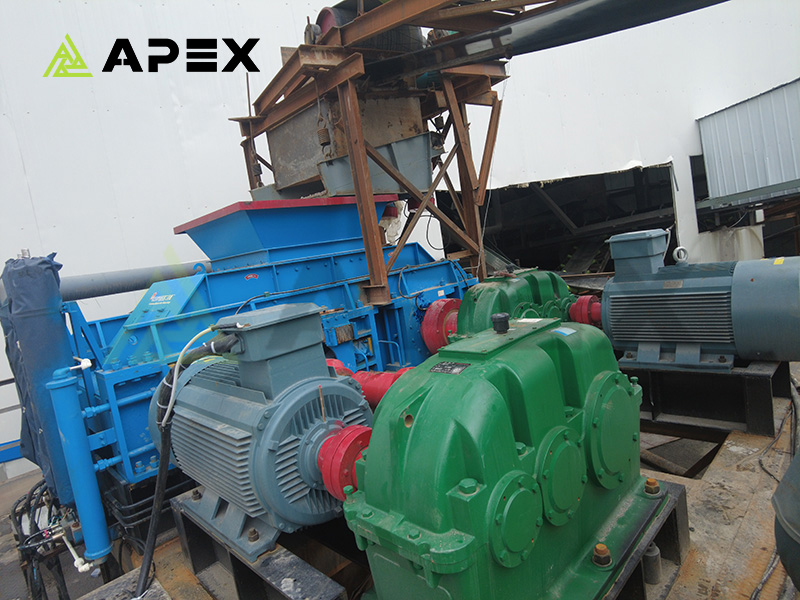
Why Double Roll Crushers Are Recommended for Fine Crushing in Gold Ore Processing Plants
2026-10-24Article Summary: Gold beneficiation plants feature a uniquely challenging cost structure: grinding mills consume the majority of plant electricity, while gold recovery rates depend heavily on precise grinding fineness. The mission of fine-crushing equipment in gold processing is clear—compressing ball mill feed size to the minimum to relieve downstream milling loads. This article explores why double roll crushers are the premier recommendation for gold ore fine crushing, highlighting their role in “more crushing, less grinding,” stable mill feed sizing, slime prevention, low consumable wear, and hydraulic protection. The cost structure of gold beneficiation lines is exceptionally distinct: grinding circuits consume well over half of the entire plant’s electrical power, while gold recovery is critically dependent on grinding fineness. Consequently, the mission of gold ore fine-crushing equipment is unequivocal—compressing mill feed sizing to the absolute minimum so that grinding mills perform less heavy lifting. For this vital link, our definitive recommendation is the double roll crusher. 1. Core Advantages of Double Roll Crushers in Gold Beneficiation Gold Plant Advantage Engineering Mechanism Operational & Economic Value 1. “More Crushing, Less Grinding” Significantly reduces mill feed sizing prior to downstream ball milling circuits 【Custom Parameters Available】. Finer mill feed increases ball mill throughput…
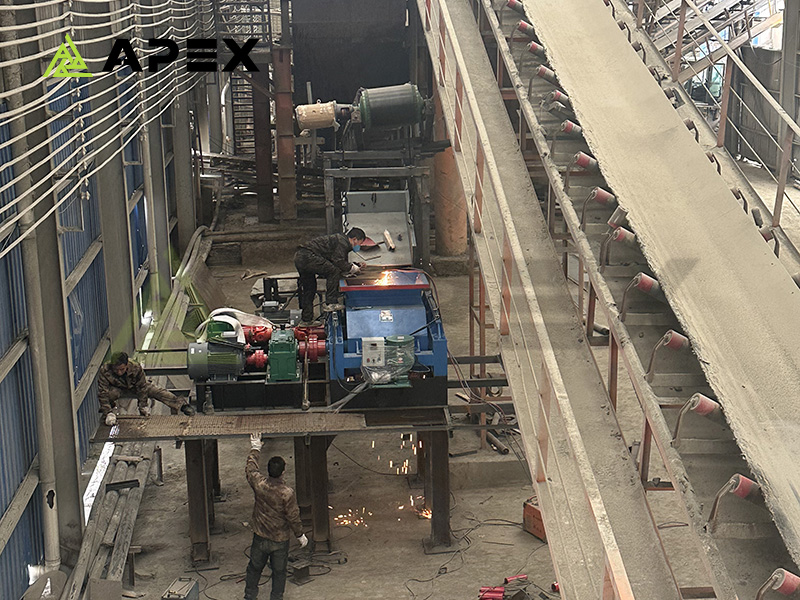
Advantages of Double Roll Sand Makers: Superior Particle Shape, Low Energy Consumption & Economic Value
2026-10-23Article Summary: Sand-making plants commonly struggle with excessive needle-flake particles, failing gradations, high electricity bills, and rapid wear-part consumption. This article explores Apex Heavy Industry’s double roll sand-making machine solution, which replaces high-speed impact crushing with low-speed static compression and shear forces. By analyzing six core advantages—including excellent cubical particle shape, controllable fine powder generation, low power consumption per ton, hydraulic tramp relief, enclosed dust control, and wide material adaptability—the piece demonstrates how roll pressing stabilizes sand quality while lowering operating costs. Sand-making plants typically face two recurring headaches: first, excessive needle-like and flaky particles resulting in failing gradations that get penalized or rejected by commercial concrete batch plants; second, stubbornly high electricity bills and consumable parts expenses driving up per-ton production costs. To address these pain points, Apex Heavy Industry introduces the double roll sand maker as the terminal crushing solution—substituting high-speed impact crushing with low-speed compression and shear forces to control both output particle shape and operating costs simultaneously. 1. Overview: Why Roll Pressing Suits Sand-Making Terminals A double roll sand maker consists of two counter-rotating rolls. Material enters the nip from above, where it is crushed and shaped under sustained compression and shear forces. Unlike the high-speed…
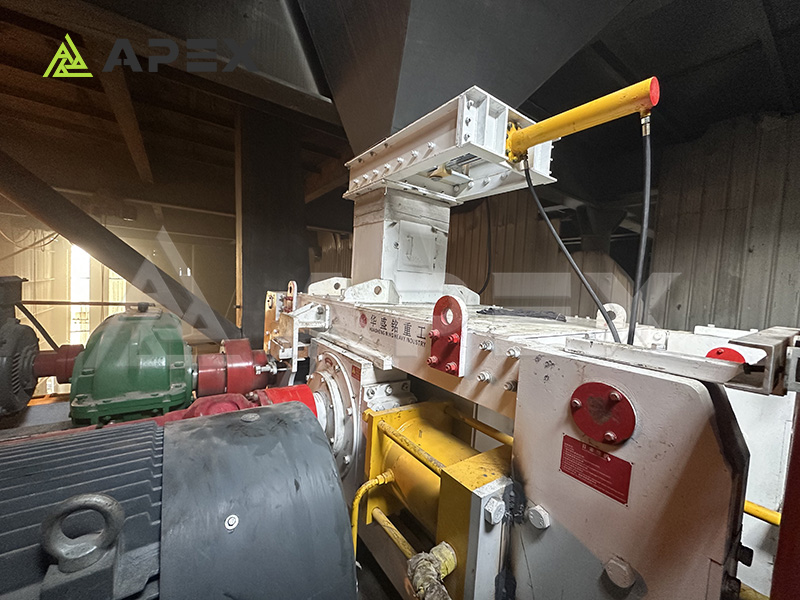
HPGR for Cement: How High-Pressure Grinding Rolls Improve Cement Grinding Efficiency
2026-10-21Article Summary: Cement plants worldwide face constant pressure to lower electricity costs and boost output. High-Pressure Grinding Rolls (HPGR) successfully address both challenges. Deployed as a pre-grinding stage ahead of ball mills or for fine clinker and limestone reduction, HPGR technology slashes specific energy consumption while substantially raising plant throughput. This article explores how HPGR works in cement circuits, core operational benefits, plant placement strategies, and why APEX (APEX) Heavy Industry delivers trusted factory-direct HPGR solutions. Cement plants face two constant operational pressures: rising electricity costs and the constant demand for higher production output. High-Pressure Grinding Rolls (HPGR) help solve both challenges. Installed for pre-grinding before the ball mill, or for fine crushing of clinker and limestone, HPGR technology reduces specific energy consumption and elevates overall circuit throughput. APEX (APEX) Heavy Industry offers advanced HPGR solutions tailored specifically for cement applications, custom-sized to your exact working conditions 【Custom Parameters Available】. 1. What Is HPGR and How Does It Work in Cement? HPGR utilizes two counter-rotating rollers to apply massive hydraulic pressure to a continuous bed of material. Rather than single-particle impact smashing, particles are crushed layer by layer under extreme pressure (inter-particle bed comminution), forming a compacted flake cake that…
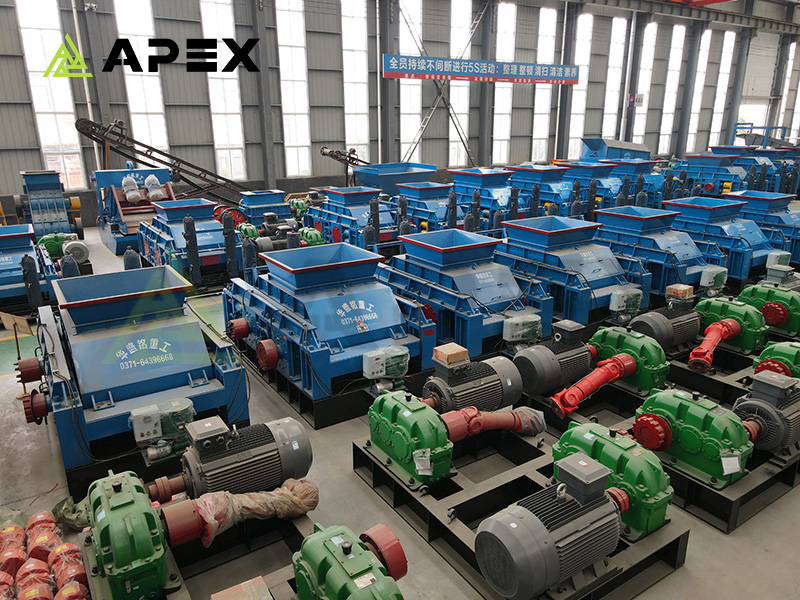
How to Choose a Double Roll Crusher Manufacturer: What to Check Before You Buy
2026-10-21Article Summary: Choosing the right double roll crusher manufacturer is just as critical as selecting the machinery itself. A reputable manufacturer ensures condition-based equipment sizing, high-chromium wear resistance, rapid factory delivery, and long-term after-sales support. This article outlines key verification criteria for buyers, questions to evaluate suppliers, and why APEX (APEX) Heavy Industry remains a trusted factory-direct manufacturing partner across global mining and aggregate markets. Choosing the right double roll crusher manufacturer is as important as choosing the right machine. A reliable manufacturer means correct equipment sizing, quality mechanical engineering, fast delivery, and robust long-term support. Conversely, partnering with a weak supplier can lead to incorrect specifications, frequent mechanical breakdowns, and costly unscheduled downtime. Here is what every plant operator should verify before making a purchase. Apex Heavy Industry Finished Goods Workshop 1. Why the Manufacturer Matters The double roll crusher is a simple but hard-working machine. Its operational performance depends heavily on how well the manufacturer matches equipment parameters to your specific material: maximum feed lump size, rock compressive hardness, target output gradation, and hourly capacity targets. ⚠️ Red Flag vs. Reliable Engineering: A manufacturer that thoroughly analyzes your site conditions before quoting is the partner that gets the…
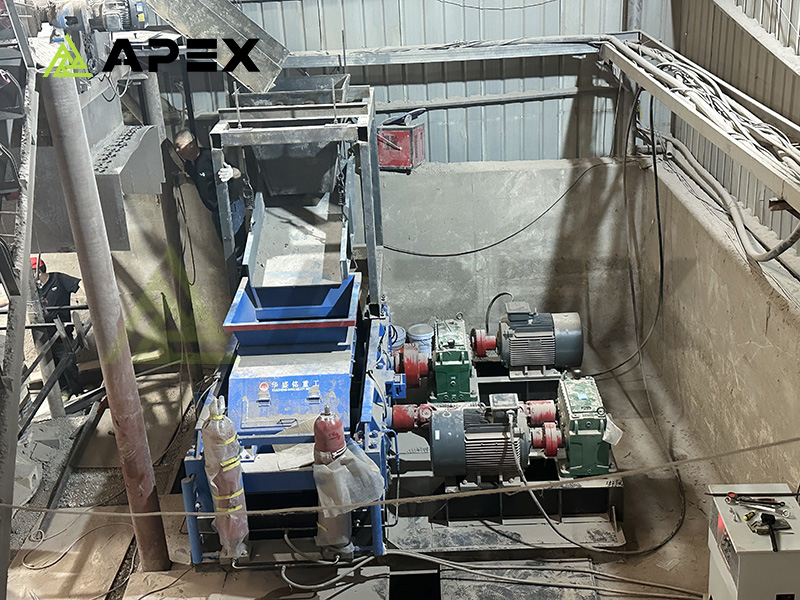
How to Select a 100 TPH Double Roll Crusher?
2026-10-19Article Summary: This article provides a comprehensive selection guide for 100 TPH (tons per hour) double roll crushers in medium-to-large production lines. It evaluates how material hardness, feed lump size, target gradation, motor power, and wear package levels directly dictate machine sizing. Highlighting common pitfalls—such as under-sizing for hard rock or confusing raw feed rates with net finished yields—the piece demonstrates how APEX (APEX) matches heavy-duty equipment configurations to real-world operating conditions, backed by ready-to-ship inventory and factory trial testing. Operating at 100 TPH represents a medium-to-large industrial production scale, imposing far stricter engineering demands than a 50 TPH plant. Key variables—including raw material hardness, maximum feed lump dimensions, target discharge gradation, motor power ratings, and wear protection levels—must be determined accurately right from the start; under-sizing equipment at this capacity severely bottle-necks plant throughput. APEX (APEX) matches heavy-duty equipment configurations to exact operating conditions, backed by ready-to-ship factory stock and empirical material trial testing to ensure total customer purchasing confidence. 1. Key Engineering Priorities for 100 TPH Sizing 1. Material Hardness Dictates Equipment Tier: For medium-hard rocks like limestone, coal, or river pebbles, 100 TPH is a standard large-capacity target satisfied by APEX’s standard heavy-duty models 【Custom Parameters Available】….
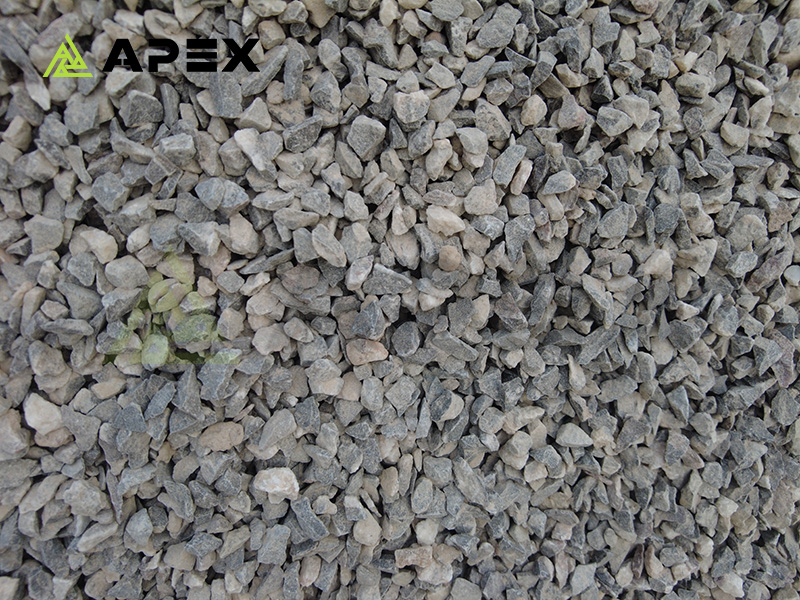
Fine Crushing of High-Hardness Ores with Double Roll Crushers: Configuration, Advantages & Selection Guide
2026-10-14Article Summary: This article examines the application of double roll crushers in the fine comminution of high-hardness ores such as granite, basalt, gold ore, and iron ore. By equipping units with specialized wear-resistant alloy roll shells and hydraulic tramp relief systems, operators can overcome high abrasiveness and impact challenges. Backed by uniform discharge sizing, adjustable roll gaps, minimal over-grinding, and energy efficiency, double roll crushers offer a reliable, cost-effective alternative for hard-rock mineral processing plants. When it comes to fine crushing high-hardness ores, many plant operators assume that cone crushers are the only viable option. In reality, when equipped with specialized wear-resistant configurations, double roll crushers handle hard materials exceptionally well while delivering superior fine-crushing advantages: uniform discharge, adjustable particle sizing, minimal over-powdering, and a simplified, easily maintained mechanical structure. Choosing a double roll crusher for high-hardness ore fine comminution is a practical, highly efficient choice. Apex (Apex) double roll crushers support custom wear-resistant metallurgies and empirical pre-production sample trial testing. 1. Key Challenges in High-Hardness Ore Fine Crushing High Hardness and Extreme Abrasiveness: Severe component wear causes standard roll faces to degrade rapidly, resulting in short operating lifespans. Strict Sizing Tolerances: Fine crushing discharge must remain stable and uniform…
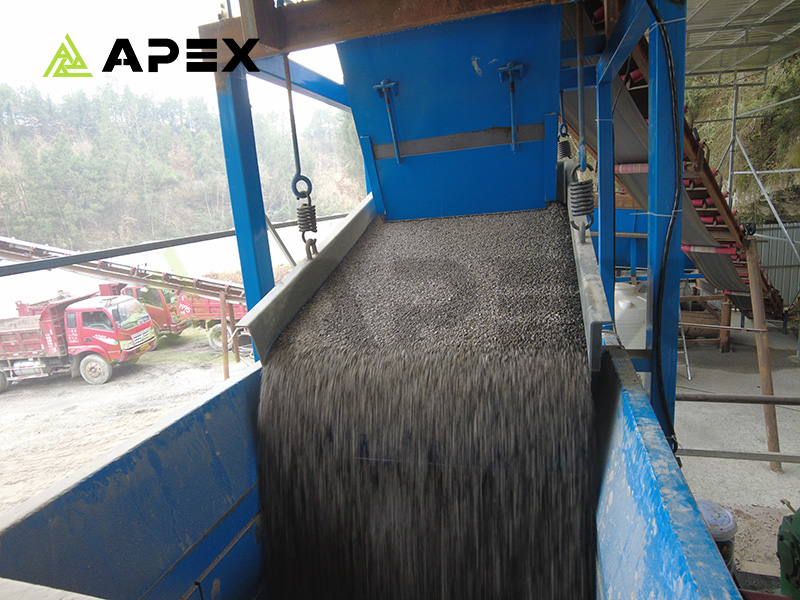
Double Roll Crushers for Wollastonite Mineral Processing: Principles, Advantages & Application Guide
2026-10-12Article Summary: This article explores the application of double roll crushers in wollastonite mineral processing. By utilizing a gentle layer-compression crushing principle instead of high-speed impact, the equipment preserves valuable needle-like crystal structures, reduces over-grinding, and minimizes fine powder generation. Featuring adjustable hydraulic roll gaps, durable alloy roller shells, and automatic tramp protection, it delivers stable, low-maintenance performance for non-metallic mineral processing plants. In wollastonite mineral processing production lines, selecting the right medium-fine crushing equipment is paramount. Designed specifically for non-metallic brittle minerals such as wollastonite, specialized double roll crushers are widely utilized across industrial mineral processing projects. Many plants processing wollastonite encounter challenges such as excessive fine powder, poor particle shape, and rapid equipment wear. Utilizing a pressure squeeze crushing principle rather than violent impact, the APEX (APEX) Wollastonite Double Roll Crusher provides a gentle comminution action that effectively preserves needle-like crystal structures, ensuring premium finished product quality while maintaining low noise and stable operation. 1. Double Roll Crusher Working Principle During operation, two electric motors drive counter-rotating roller assemblies via V-belts or couplings. As raw material enters the crushing cavity between the rolls, positive frictional nip forces pull the material downward into the gap, subjecting it to sustained…