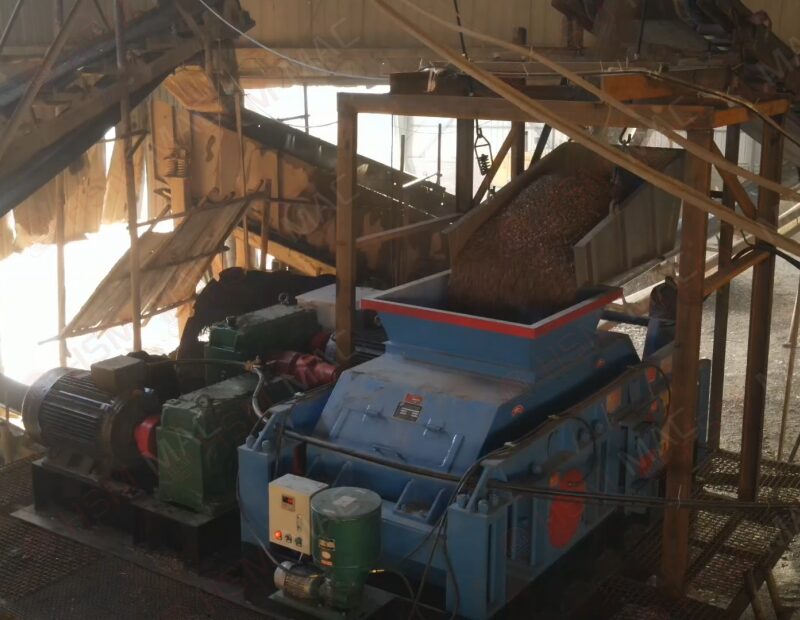
Which Crusher Is Best for Hard Rock?
2026-07-23Q: Which crusher is best for hard rock? A: Hard rock (such as granite, basalt, pebbles, etc.) has high compressive strength and strong abrasiveness. Choosing the wrong equipment will directly increase operating costs. For hard rock, the industry typically uses “Jaw Crusher + Cone Crusher” as the core solution, with sand-making and shaping equipment added based on final product requirements. The specific selection logic is as follows: Q: What is the standard equipment combination for hard rock crushing? A: For hard rock, the industry typically uses “Jaw Crusher + Cone Crusher” as the core solution, with sand-making and shaping equipment added based on final product requirements. Primary Crushing: Jaw Crusher. With a large feed opening and high crushing force, it is suitable for reducing large stones to medium sizes — the standard choice for hard rock primary crushing. Secondary/Tertiary Crushing: Cone Crusher. Using the inter-particle compression crushing principle, it offers excellent wear resistance and is suitable for secondary crushing of high-hardness materials — the mainstream choice for hard rock secondary crushing. Sand Making and Shaping: Vertical Shaft Impact Crusher (VSI). Using the “rock-on-rock” or “rock-on-iron” principle for crushing and shaping, it produces high-quality manufactured sand. Q: Can an impact crusher be used for hard rock? A: Some PF-series impact crushers…

What Is the Processing Capacity of a Double Roll Crusher?
2026-07-18Q1: What is the processing capacity of Huashengming double roll crusher? Huashengming double roll crusher does not have a fixed capacity value. Instead, it varies within a range depending on the model, material characteristics, and output size requirements. The full product line covers capacities from 2 to 450 tons per hour, suitable for projects of all scales. Q2: What are the specific capacity ranges for different models? Based on model and configuration, capacities are divided into the following ranges: Small Models (Spring Type): Approximately 2-20 t/h. Suitable for small sand plants, refractory plants, or laboratory fine crushing. Medium Spring Type: Approximately 10-50 t/h. Suitable for small to medium production lines and medium-fine crushing of conventional materials. Medium Hydraulic Type: Approximately 20-80 t/h. Hydraulic systems provide more stable crushing force, smoother operation, and higher capacity. Large Hydraulic Type: Up to 80-450 t/h. Designed for large quarries and large-scale concentrators, capable of handling high-intensity continuous crushing operations. Q3: What are the key factors affecting processing capacity? Capacity is not a fixed value. It mainly depends on the following four conditions: Model and roll size. The diameter and length of the rolls directly determine the volume of the crushing chamber. Larger rolls process more material per cycle, resulting in higher capacity. Material characteristics. Material…
What Equipment is Needed to Produce Manufactured Sand?
2026-07-14Q:What Equipment is Needed to Produce Manufactured Sand? A:Producing manufactured sand (also known as artificial sand) cannot be achieved with a single machine; it requires the coordinated operation of a complete sand-making production line. Depending on the raw material characteristics, product requirements, and environmental standards, a complete manufactured sand production line typically includes the following core equipment: 1. Feeding and Conveying Equipment: The “Logistics Hub” of the Line Vibrating Feeder: Responsible for continuously and evenly feeding large stones from the raw material bin into the primary crusher, preventing blockages or idling caused by uneven feeding. Belt Conveyor: Connects various production stages to efficiently and stably transport crushed materials between different equipment. 2. Crushing Equipment: Transforming “Large Stones” into “Small Gravel” Primary Crusher (Jaw Crusher): Acting as the first gate of the production line, the jaw crusher initially breaks down large mined rocks (such as river pebbles and granite) into smaller sizes, reducing the pressure on subsequent processes. Secondary and Tertiary Crushers (Cone Crusher or Impact Crusher): Selected flexibly based on raw material hardness. For high-hardness materials like granite and basalt, a cone crusher is usually chosen to reduce wear; for medium-to-low hardness materials like limestone, an impact crusher is mostly…
Which type of toothed roll crusher is commonly used for crushing brittle coal?
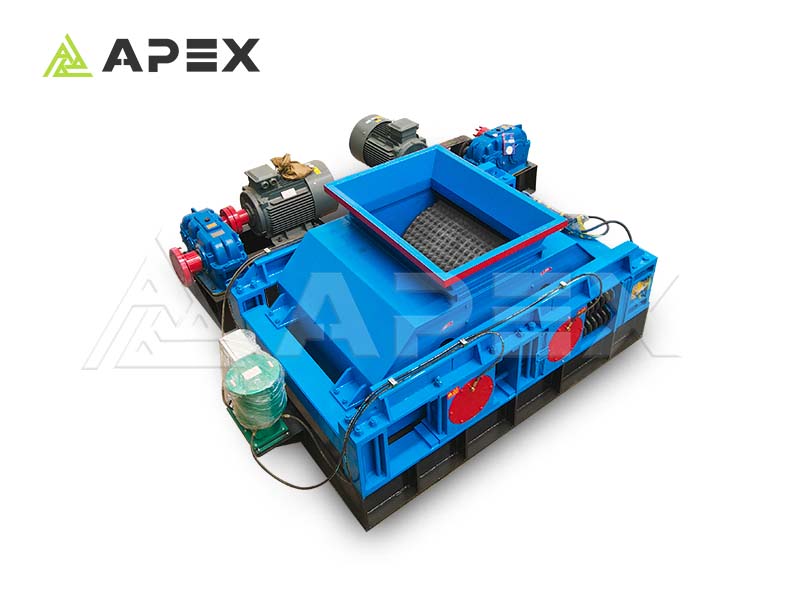
2026-07-06Q: Which type of toothed roll crusher is commonly used for crushing brittle coal? A: The most commonly used toothed roll crusher for crushing brittle coal is the double toothed roll crusher (also known as the 2PGC crusher). The double toothed roll crusher is a dual-roll type with coarse and fine toothed roll surfaces. It operates via two independently driven rollers rotating in opposite directions, using compressive and shearing forces to crush materials. Toothed rolls are well-suited for coarse and medium crushing of brittle and soft materials. Why is the double toothed roll crusher suitable for brittle coal? Excellent material compatibility: Double toothed roll crushers are designed for brittle materials with medium hardness or below—a category that includes various types of coal such as bituminous coal, anthracite, and lignite. Wide range of applications: This equipment is widely used across industries including coal, metallurgy, mining, chemicals, and building materials. It is particularly effective for crushing raw coal (including gangue) in large coal mines or coal preparation plants. Superior crushing performance: Double toothed roll crushers offer a high reduction ratio, low over-crushing rate, and uniform product particle size.
What is a Roll Crusher and What Are Its Core Advantages?
2026-07-02Q: What is a roll crusher? What are its typical applications? A: A roll crusher (also known as a double roll crusher) is a crushing machine that uses two counter‑rotating rolls to crush material through compression, shear, and splitting forces. Unlike traditional impact crushers, it operates on the principle of gentle interparticle crushing, offering distinct advantages such as precise product sizing and low over‑crushing rates. It is widely used for crushing and sand‑making applications with materials including river pebbles, iron ore, granite, basalt, coal, shale, fertilizer raw materials, and more. Core Advantages of Huashengming Roll Crushers Precise Size Control, Low Over‑Crushing By accurately adjusting the gap between the two rolls via hydraulic or mechanical systems, operators can easily control the product size to stay within the required range. Material is discharged immediately upon reaching the target size, avoiding unnecessary recrushing. This significantly reduces fines generation and improves the yield of high‑value materials. Handles High‑Moisture and Sticky Materials Without Blockage The screenless design (no grate bars, no screen) ensures smooth discharge even when processing materials with high moisture or high clay content, such as coal, shale, clay, and asphalt millings. This guarantees continuous production without clogging issues. Intelligent Overload Protection for…
What is the difference between a roller crusher and a hammer crusher?
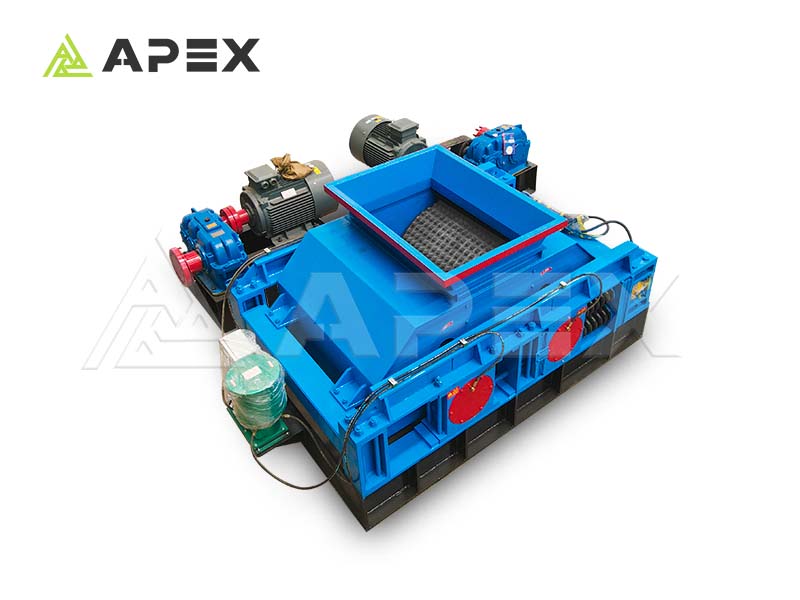
2026-06-23Q: What is the difference between a roller crusher and a hammer crusher? How to choose? A: The main differences lie in crushing principles, output size, and material adaptability: Crushing Principle: Hammer crushers rely on high-speed impact, while roller crushers use low-speed extrusion and shearing. Output Size: Hammer crushers generate more fines. Roller crushers produce uniform particles with low fines, and the output size is easily adjustable. Material Adaptability: Hammer crushers are suitable for dry, brittle materials and easily clog with wet/sticky ones. Roller crushers have no screen bottom, making them perfect for high-moisture and sticky materials (e.g., coal, clay) without clogging. How to Choose: Choose a Hammer Crusher for dry, brittle materials with low initial budget. Choose a Huashengming Roller Crusher for wet, sticky materials, or when uniform particle size and low fines are required.
Granite Sand Maker – Frequently Asked Questions
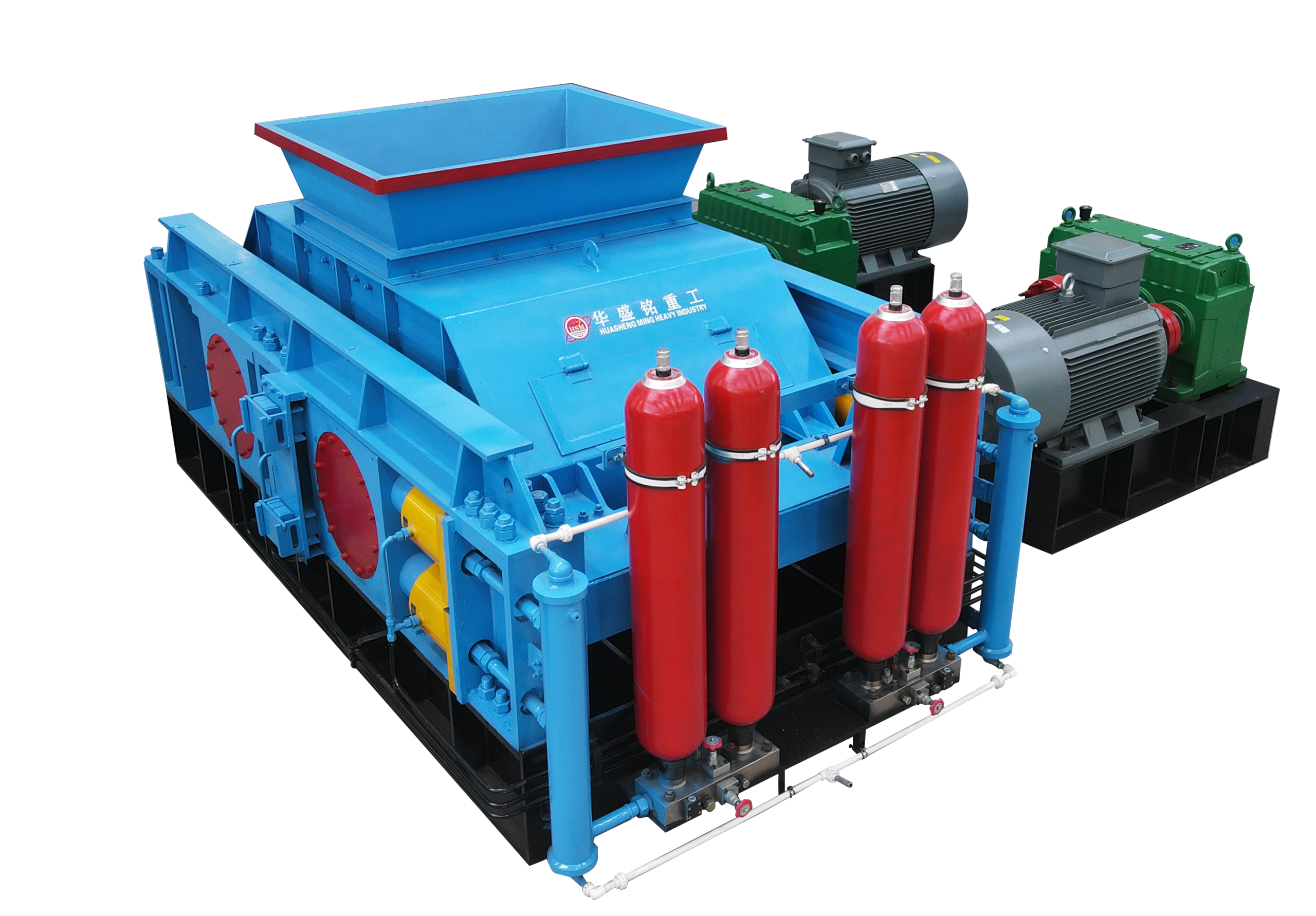
2026-06-16Granite is hard and highly abrasive, making it one of the toughest materials in the sand‑making industry. Many users have questions when choosing a sand maker: Can a roll crusher handle granite? Are the roll shells wear‑resistant? What about sand quality? Based on HSM’s field experience, here are answers to some common questions. Q1: Why is a roller sand maker recommended for granite sand production? Granite has a Mohs hardness of 6‑7, making it a typical high‑hardness, highly abrasive material. Traditional hammer crushers and impact sand makers rely on high‑speed impact to break the material, which causes extremely fast wear on hammers and impact plates, leading to frequent replacement and costly downtime. The HSM roller sand maker uses a double‑roll lamination crushing principle: two rolls rotate at low speed in opposite directions, continuously compressing and grinding the material rather than impacting it. This significantly reduces wear on wear parts, and the roll shells have a much longer service life than ordinary hammers. Q2: Are the roll shells durable enough for crushing granite? Granite causes significant wear on roll surfaces. Ordinary materials tend to develop grooves or spalling. HSM roller sand makers use high‑chromium manganese steel composite hardfacing roll shells with…
Coal Gangue Double Tooth Roll Crusher – Frequently Asked Questions
2026-06-13Q1: What materials is the coal gangue double tooth roll crusher suitable for? The coal gangue double tooth roll crusher is specifically designed for coal gangue, but it can also handle coal, coke, shale, limestone, gypsum, cement clinker, and other brittle or soft materials of medium hardness or below. Especially for coal gangue with high moisture and high clay content, HSM equipment delivers stable and reliable crushing performance thanks to its self-cleaning tooth profile and forced discharge structure. Q2: What are the advantages of the coal gangue double tooth roll crusher compared to a hammer crusher? Compared to a hammer crusher, the coal gangue double tooth roll crusher uses a low-speed, high-torque shearing principle rather than high-speed impact. The advantages are clear: low over-crushing rate, fewer fines in the product – making it more suitable for downstream use; lower dust and noise levels, meeting environmental requirements; slower tooth plate wear and longer service life; and no clogging when handling wet coal gangue, resulting in high equipment availability. Q3: Coal gangue often has high moisture and high stickiness. Will the crusher clog? The HSM coal gangue double tooth roll crusher is specifically optimized to prevent clogging. The double rolls provide forced…
Double Roll Crusher – Frequently Asked Questions
2026-06-11Double Roll Crusher – Frequently Asked Questions Welcome to Huashengming Heavy Industry FAQ Center. Below are the 17 most common questions from our customers, covering product selection, technical parameters, maintenance, ordering & delivery, quality certification, and after-sales service. If your question is not listed, please feel free to contact us. 1. Product Selection & Application Q1: What materials can Huashengming double roll crushers process? A: Our double roll crushers can process over 200 types of brittle materials, including river pebbles, granite, basalt, limestone, dolomite, iron ore, gold ore, coal gangue, shale, gypsum, and construction waste. The maximum compressive strength is up to 300 MPa. Q2: How do I choose the right model for my production line? A: Please provide your material type, required capacity (t/h), feed size, and target output size. Our engineers will recommend the most suitable model – from small spring roll crushers (2-20 t/h) to large hydraulic series (up to 400 t/h). Q3: Can the same machine process both dry and wet materials? A: Yes. Our double roll crushers work well with both dry and wet materials. The screen‑less design and self‑cleaning tooth geometry prevent clogging even at 30% moisture content. 2. Technical Parameters & Performance Q4:…