Article Summary:
Understanding the working principle of a double roll crusher clarifies why it outperforms impact-style machines in particle shape control, energy efficiency, and fines reduction. By utilizing steady, low-speed rolling compression rather than high-speed kinetic shattering, double roll crushers fracture material along natural grain boundaries to produce cubical, low-fines output. This article details the step-by-step operating mechanism, smooth versus toothed roll variations, hydraulic tramp metal relief protection, and sizing requirements from Apex (Apex) Heavy Machinery.
Understanding the working principle of a double roll crusher clarifies why it outperforms impact-style machines in particle shape control, energy efficiency, and fines reduction. By utilizing steady, low-speed rolling compression rather than high-speed kinetic shattering, double roll crushers fracture material along natural grain boundaries to produce cubical, low-fines output. This article details the step-by-step operating mechanism, smooth versus toothed roll variations, hydraulic tramp metal relief protection, and sizing requirements from Apex (Apex) Heavy Machinery.
The Working Principle in One Paragraph
A double roll crusher crushes material by compression and shear between two counter-rotating rolls. Material enters the crushing chamber from above, is nipped between the two rolls, drawn down through the narrowing gap, fractured under compressive force, and discharged at the bottom at a size set by the roll gap (the distance between the roll faces at their closest point). There is no high-speed impact and no free-flying hammers—the only crushing action is the steady squeeze of one roll against the other, with the material trapped directly in between.
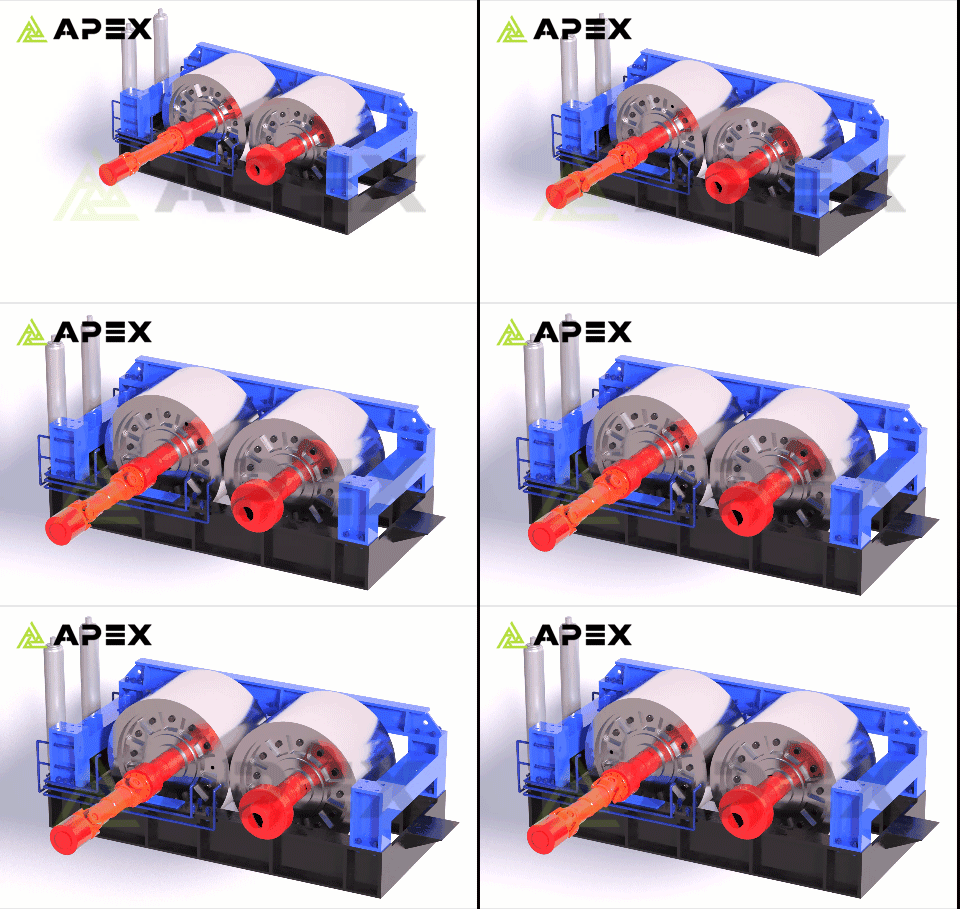
Double Roll Crusher Compression & Nip Action Diagram
1. How It Works, Step by Step
- Feed Entry: Material drops or is fed into the chamber above the two rolls. The rolls rotate toward each other (one clockwise, one counter-clockwise), so the surface motion at the top carries feed directly into the nip gap.
- Nipping: As the rolls close on the material, the nip angle—the angle between the roll tangent at the contact point and the vertical—determines the largest particle the rolls can grip. Hard, large feed requires a larger roll diameter to maintain an adequate nip angle, which is why high-capacity models utilize $\phi 1500\text{mm}$ to $\phi 2000\text{mm}$ rolls 【Custom Parameters Available】.
- Compression and Shear: Trapped particles are squeezed between the roll faces. Compressive force builds until it exceeds the material’s compressive strength, causing the particle to fracture—typically along natural planes of weakness and grain boundaries, rather than shattering randomly.
- Discharge: Once a particle is smaller than the gap, it exits immediately. This “crush-to-size-and-exit” behavior is the reason roll crushers generate minimal over-crushing and low fines—there is no secondary or tertiary impact to grind already-sized material finer.
- Gap Adjustment: The movable roll slides on its bearing housing to change the gap width; product top size follows the gap setting directly. This is the single most important operating adjustment on the machine.
2. Why the Principle Produces Cubical, Low-Fines Product
Compression crushing fractures particles along their weakest internal planes—natural grain boundaries, micro-cracks, and bedding planes. The result is particles that break into cubical and near-cubical fragments, avoiding the flat, elongated flakes that high-speed impact tends to generate.
Combined with the crush-to-size-and-exit discharge, this principle delivers two properties buyers actually measure:
- Low Flakiness Index: Essential for concrete sand, asphalt aggregate, and iron ore lump production.
- Low Fines / Low Over-Crushing: Critical wherever fines sell at a discount or interfere with downstream recovery circuits.
3. Smooth Rolls vs. Toothed Rolls — Two Versions of the Same Principle
The compression principle accommodates a wide range of materials, but roll surfaces are selected to match specific feed characteristics:
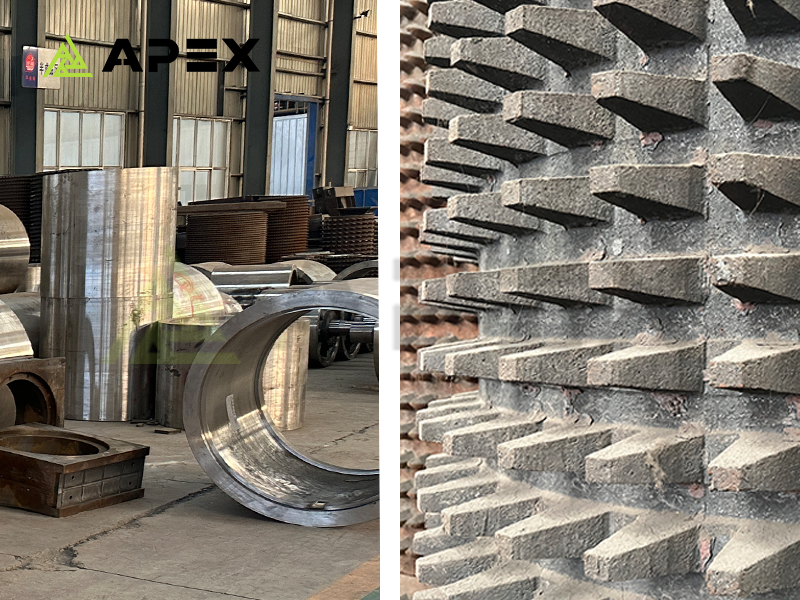
- Smooth Rolls: Ideal for hard, clean, sized feed where tight product top-size control is paramount (iron ore, granite, washed sand feed). Delivers maximum compression and the tightest size control.
- Toothed / Grooved Rolls: Engineered for sticky, moist, slabby, or lower-hardness feeds (coal, clay-bearing ore, wet river pebbles). Teeth grip and tear as well as compress, preventing slip and clogging.
The working principle remains identical; the roll surface adapts the bite behavior for difficult feed materials 【Custom Parameters Available】.
4. Tramp Iron Protection — How Hydraulic Relief Works
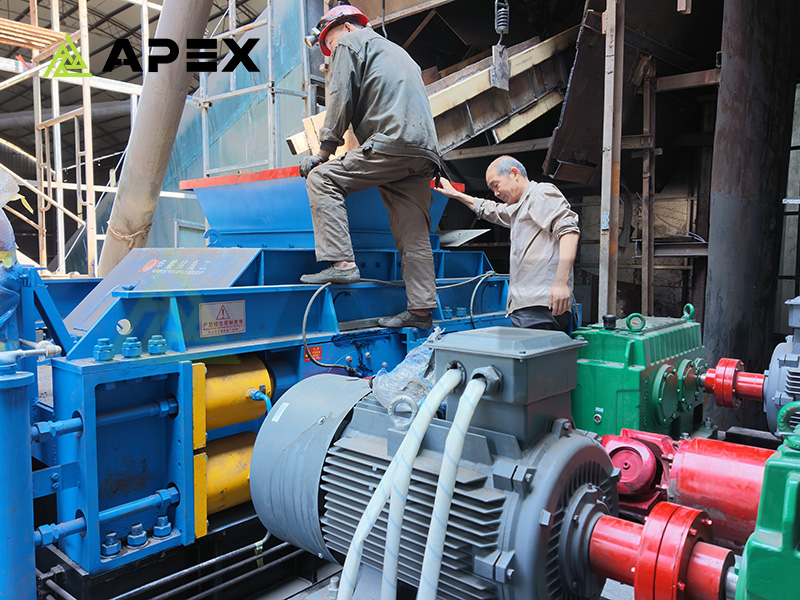
Mining and aggregate feed inevitably contains tramp metal—excavator shovel teeth, drill steel fragments, and liner bolts. The fixed roll remains stationary while the movable roll is held against it by hydraulic pressure. When an uncrushable object enters the nip:
- Hydraulic pressure is overcome, causing the movable roll to retract instantly.
- The foreign object passes safely through the widened gap.
- Hydraulic pressure automatically resets the movable roll to its operating position.
- Crushing resumes—typically without interrupting the material feed.
This protects roll shells from fracture and main shafts from bending damage, avoiding the costly unplanned downtime high-throughput operations can least afford. On smaller models, this function is performed by spring-relief mechanisms.
5. The Feed-Size Limit, Explained by the Principle
Because rolls must successfully nip incoming material, there is a maximum feed size the machine can grip—typically a fraction of the roll diameter. This is why double roll crushers function as fine-crushing machinery rather than primary crushers:
- Small Models ($\phi 400$–$\phi 610\text{mm}$): Feed top size $\le 25\text{–}30\text{mm}$.
- Large Models ($\phi 1800$–$\phi 2000\text{mm}$): Feed top size $\le 100\text{–}120\text{mm}$.
Oversize feed will not nip; instead, it bounces on top of the rolls. Primary crushing (jaw crushers) and secondary crushing (cone crushers) must bring feed dimensions within the roll crusher’s nip capacity first.
6. Frequently Asked Questions
Q: How does product size relate to the roll gap?
A: Product top size follows roll gap settings closely—roughly 3–5× the gap width for hard materials, and tighter for softer feeds. The exact achievable window depends on material hardness, feed grading, and moisture; we confirm performance against your specifications through engineering calculations 【Custom Parameters Available】.
Q: Why does a roll crusher produce fewer fines than an impact crusher?
A: Impact crushers shatter particles repeatedly at high velocity, generating fine powder with every strike. A roll crusher compresses particles once to the set gap size and discharges them immediately—avoiding repeated impacts and keeping over-crushing to a minimum.
Q: What is the difference between spring relief and hydraulic relief?
A: Both systems allow movable rolls to retract and pass tramp metal. Spring relief is mechanical and utilized on smaller models; hydraulic relief provides finer pressure control, faster reset times, and is standard on high-capacity 2PGY series machines. The underlying crushing principle remains identical.
Q: Can the working principle handle wet or sticky material?
A: Yes, when equipped with toothed roll surfaces—teeth grip and tear sticky feed rather than letting it slip or blind the rolls. Smooth rolls are best suited for hard, clean, and dry feed stocks.
7. Want the Right Model for Your Material?
Send us four data points for precise equipment sizing:
- Material Type & Hardness: (e.g., granite, iron ore, limestone, river pebbles)
- Feed Top Size: (Maximum lump dimensions entering the double roll stage)
- Required Product Size: (Target output gradation or fineness spec)
- Design Capacity: (Tons per hour target)
Providing these four metrics allows Apex to specify exact equipment models, motor ratings, and roll surface configurations 【Custom Parameters Available】.
Referenced process descriptions serve as engineering guidelines; specific performance parameters are governed by official project customization agreements.
Contact Apex Heavy Machinery
Factory-direct inventory, rapid dispatch, and smooth or toothed roll surfaces matched to your feed 【Custom Parameters Available】.
Working-principle demonstrations and site videos available for Southeast Asian and African projects upon request!
Hot Products
How Fine Can Double Roll Crushers Adjust Their Discharge Sizing? Engineering Limits & Adjustment Guide
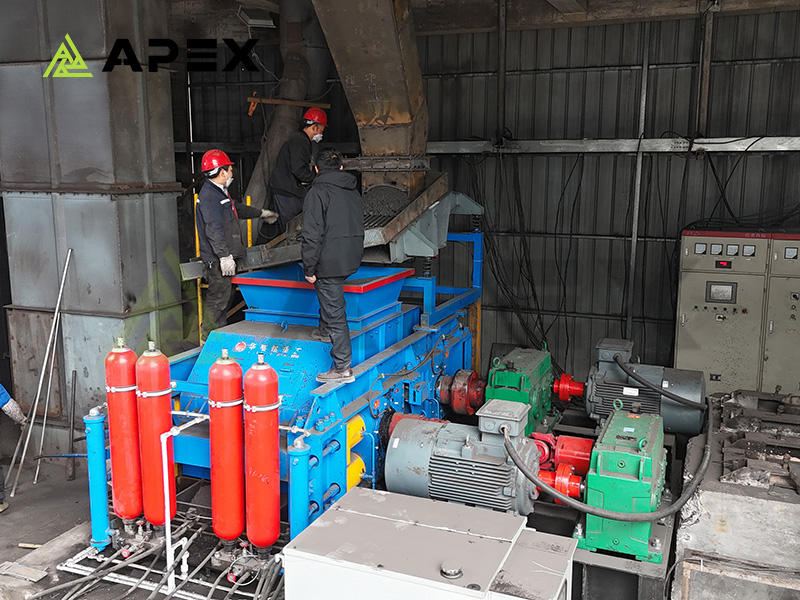
What Is the Ideal Feed Size for Crushing Hard Rock with Double Roll Crushers?
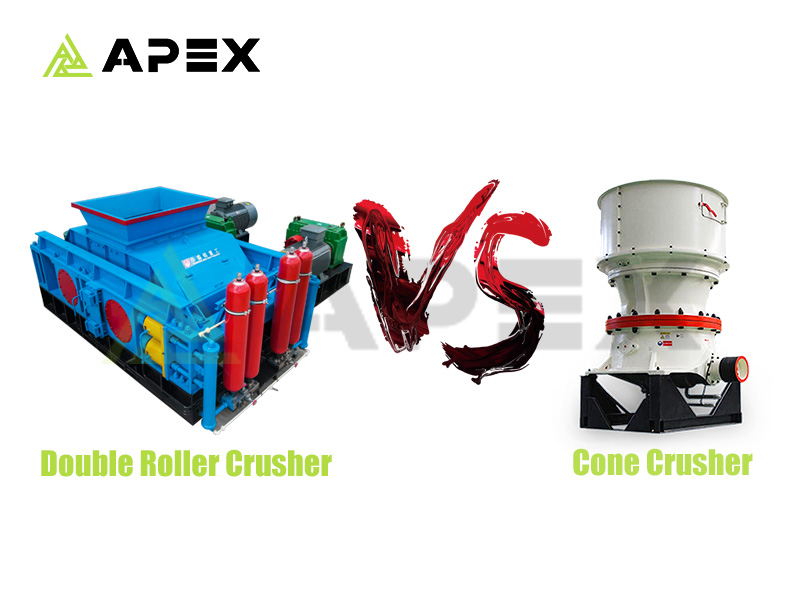
Double Roll Crushers vs. Cone Crushers: How to Choose the Right Fine Crushing Equipment for Your Plant
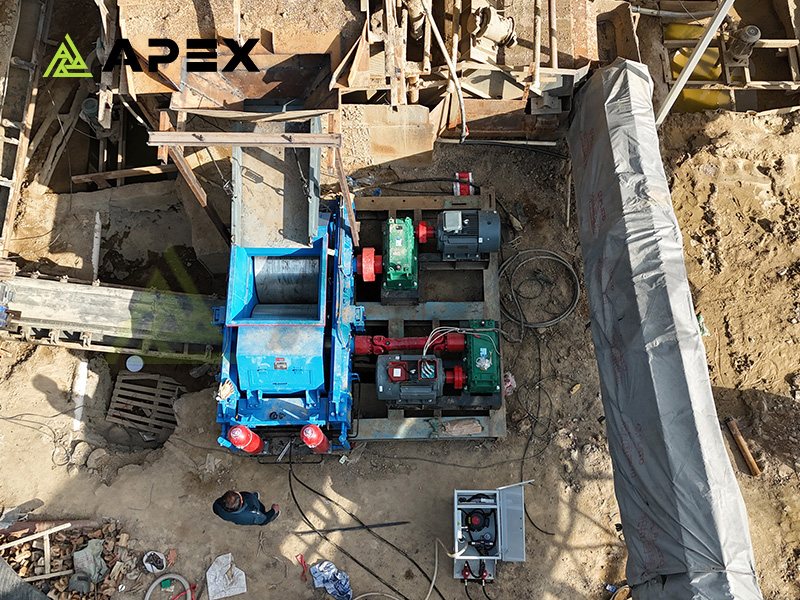
Does Decreasing the Roll Gap of a Double Roll Crusher Reduce Throughput? Performance Analysis & Solutions