Top 3 Grinding Bottlenecks in Ore Beneficiation Plants:
- Coarse Feed Size: Traditional fine crushing leaves ball mills overloaded with coarse feed, significantly lowering grinding efficiency.
- High Power & Steel Consumption: Milling accounts for the vast majority of energy and wear component consumption, creating a tough cost-reduction barrier.
- Micro-Fracture Deficits: Single-particle impact fails to induce internal micro-cracks, limiting ore grindability and plant throughput.
In metallic mineral processing, implementing the principle of “More Crushing, Less Grinding” is vital for energy savings and operational efficiency. Traditional ball mills have long suffered from high power draw and rapid steel media consumption. Engineered specifically for ultra-fine crushing in beneficiation plants, the APEX High-Pressure Grinding Roll (HPGR) operates on the advanced “Interparticle Crushing” principle. By dramatically reducing ball mill feed size and relieving grinding circuit loads, APEX HPGR technology enables iron, gold, copper, and molybdenum processing plants to achieve higher yields while lowering operating costs.
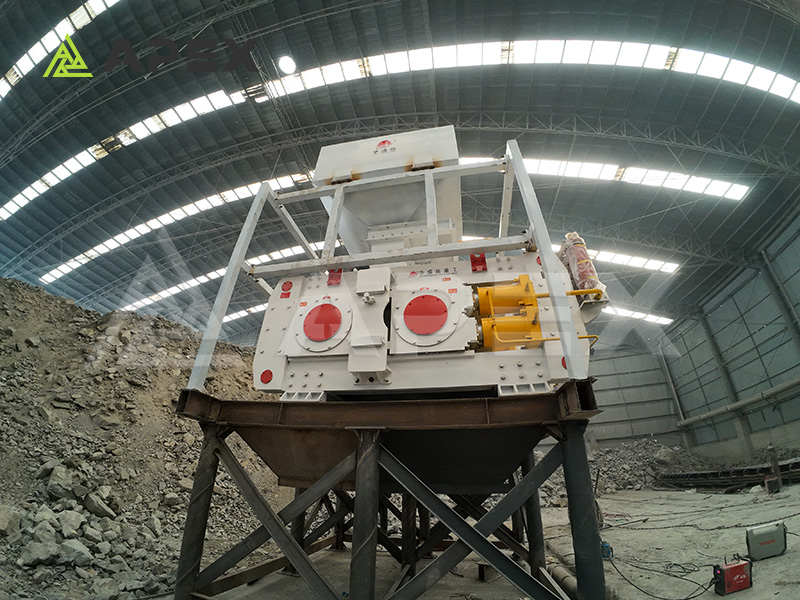
APEX High-Pressure Grinding Roll (HPGR)
⚙️ Core Features & Operational Benefits of APEX HPGR
| Technical Feature | Working Principle & Engineering | Value for Processing Plants |
|---|---|---|
| 1. Efficient Interparticle Crushing | Counter-rotating rolls under intense hydraulic pressure compress material into a dense bed, crushing particles against each other. | Delivers superior energy efficiency compared to single-particle impact crushing, fulfilling “crushing instead of grinding.” |
| 2. Lower Bond Work Index | High compressive forces induce extensive micro-fractures within ore particles, altering physical grindability. | Reduces Bond Work Index by 15%–20% on average, cutting downstream ball mill power draw and steel ball wear. |
| 3. Ultra-Fine Feed Size Control | Reduces 30–60 mm feed down to below 3–5 mm in a single pass with a high percentage of fine dust content. | Dramatically lowers ball mill feed size, directly increasing hourly ball mill throughput (t/h). |
| 4. Digitalized Control System | Integrated PLC cabinet with touchscreen HMI for real-time monitoring of current, hydraulic pressure, and roll gap. | Simple operation with single-touch start/stop; operators can master site controls with short-term training. |
🛡 Wear-Resistant Roll Configurations for Hard & Abrasive Ores
To handle various mining conditions, APEX offers two industrial-grade wear surface designs capable of handling extremely hard and abrasive ores:
• APEX Process Alloy Roll Surfaces: First Choice for High-Hardness Ores
Cast using proprietary alloys and treated with advanced deep-heat processing, these rolls offer exceptional impact toughness and wear resistance. They excel in fine crushing hard metallic ores such as iron, gold, copper, and molybdenum.
• Studded Roll Surfaces (Studded Tire): Upgraded Armor for Extreme Abrasiveness
Featuring tungsten carbide studs embedded into an alloy steel body, this design forms an autogenous ore layer that shields the roll matrix. It delivers maximum wear life in highly abrasive environments, minimizing replacement downtime and maintaining continuous production.
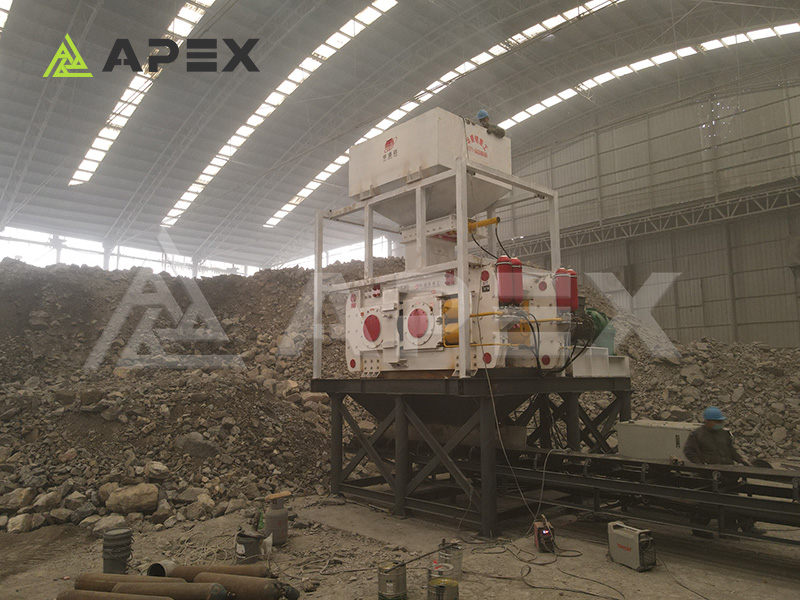
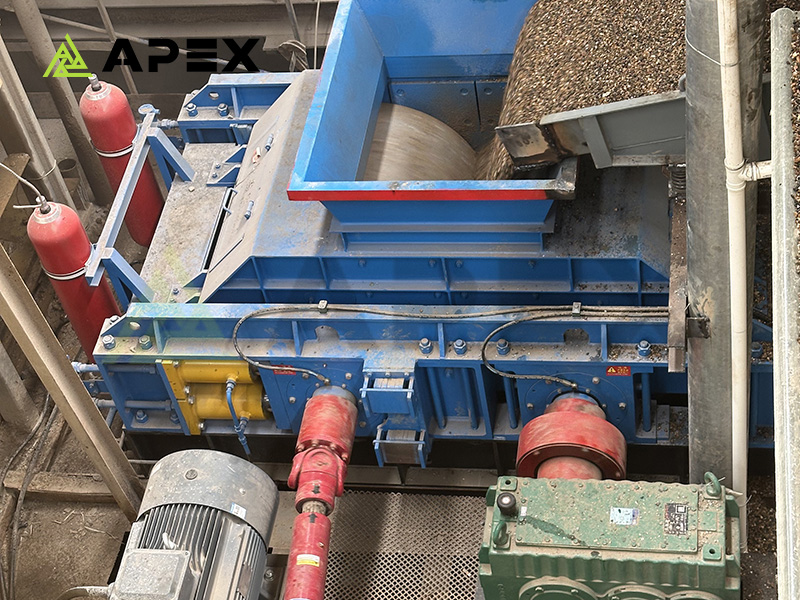
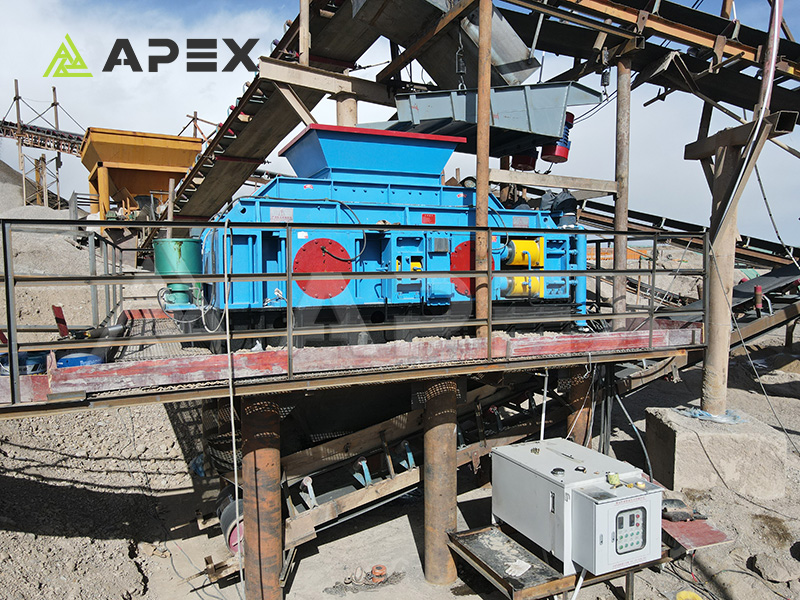
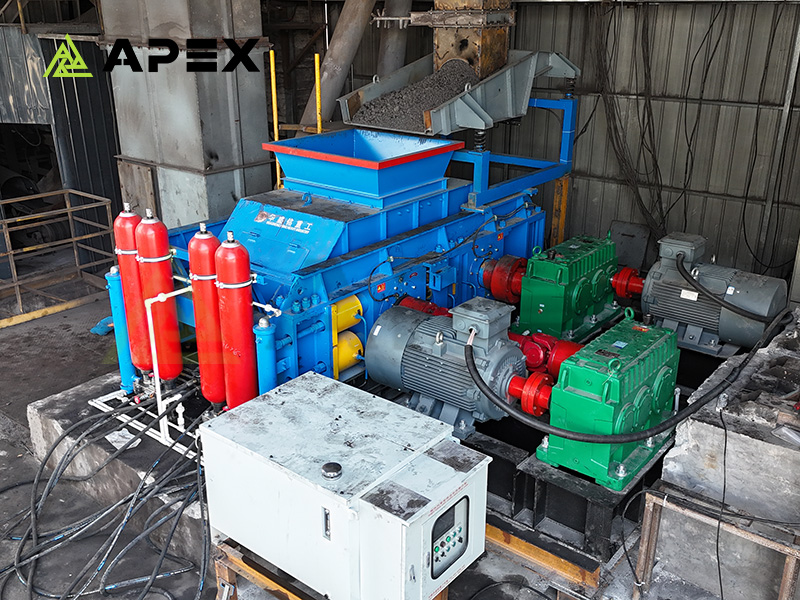
High-Pressure Roller Mill Crushing Site
Summary: By utilizing interparticle crushing to reduce both feed size and the Bond Work Index, the APEX High-Pressure Grinding Roll substantially relieves ball mill workloads. Combined with ultra-wear-resistant studded rolls and intelligent PLC controls, it stands as an indispensable asset for mineral processing plants optimizing their “More Crushing, Less Grinding” circuits.
Hot Products
Double Roll Crusher Selection Guide: Sizing Machinery Based on Raw Feed Parameters
Can a Double Roll Crusher Grip Smooth River Pebbles? Physics & Performance Analysis
Where a Double Roll Crusher Fits in a Crushing Circuit
Troubleshooting Excessive Fines and Over-Crushing in Double Roller Crushers & Control Strategies
