Three Major Bottlenecks in Mining, Building Materials & Solid Waste Processing:
- Soaring Electricity Bills: Traditional impact crushing or ball milling exhibits low energy utilization, causing grinding circuits to dominate total operational expenditure.
- Constrained Production Capacity: Low efficiency in conventional single-particle crushing creates persistent plant bottlenecks under heavy operational loads.
- Inconsistent Output Size: Severe over-crushing or coarse particle bypass increases recirculating loads in downstream mills and screens, destabilizing final product quality.
Facing skyrocketing electricity bills, production bottlenecks, and inconsistent discharge sizes in your crushing and grinding circuits? This is a common pain point across mining, aggregate, and solid waste recycling operations. The APEX High-Pressure Grinding Roll (HPGR) utilizes the principle of interparticle bed crushing, replacing high-speed impact with low-speed, ultra-high-pressure compression. This approach delivers substantial energy savings, massive throughput, and exceptional size uniformity. Equipped with heavy-duty wear-resistant roller surfaces and an intelligent hydraulic protection system, it offers an efficient, low-consumption solution for heavy-duty industrial processing.
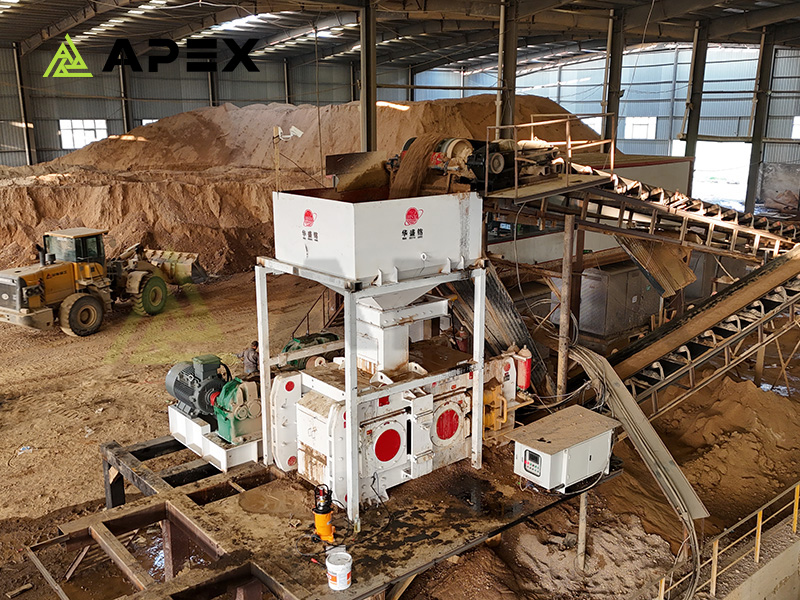
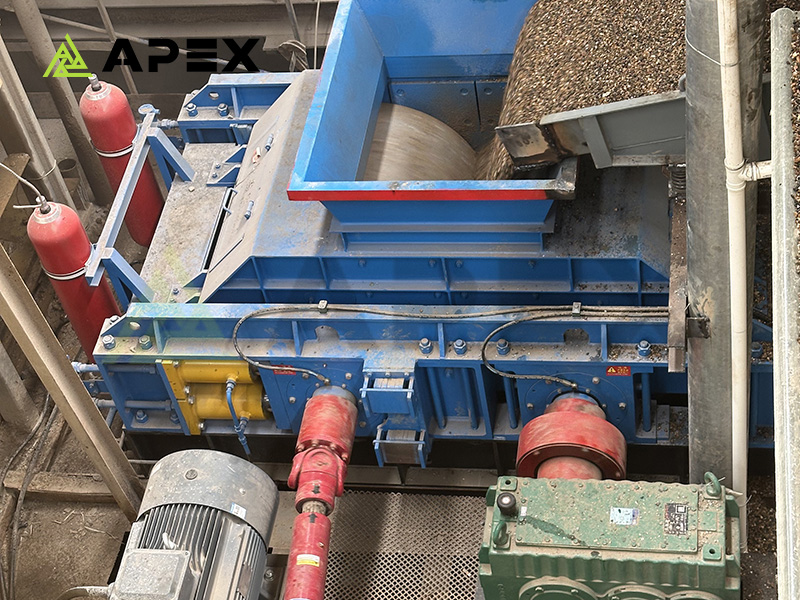
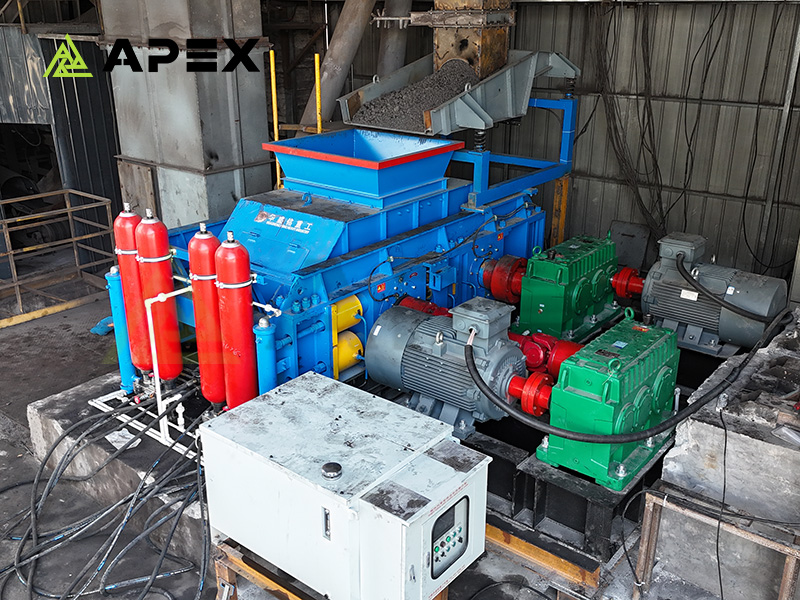
high-pressure rollers, hydraulic cylinders, and reinforced drive system.
Equipment Overview: High-Pressure, Low-Speed Compression Crushing
Also known as a high-pressure double roll mill, the HPGR centers around two counter-rotating rollers. Material continuously feeds into the crushing gap to form a dense material bed subjected to extreme hydraulic compression. Unlike single-particle impact crushing, interparticle crushing forces particles against one another. This distributes stress evenly and targets micro-defects along crystal boundaries, dramatically boosting energy efficiency and maximizing fine fraction yield. The APEX HPGR features a heavy-duty frame, high-pressure roller assembly, hydraulic power unit, drive mechanism, and automated gap adjustment system—engineered specifically for continuous full-load duty.
Five Core Advantages of APEX HPGR
| Core Advantage | Engineering & Design Features | Operational Value |
|---|---|---|
| Substantial Energy Savings | High-efficiency bed compression minimizes kinetic energy loss compared to traditional impactors and ball mills. | Dramatically reduces kWh consumed per ton, lowering baseline power expenses over long operating cycles. |
| High Capacity & Throughput | Continuous high-pressure force combined with high bed permeability maximizes throughput per hour. | Seamlessly handles large-scale production requirements and eliminates front-end crushing bottlenecks. |
| Uniform Size & High Fines Yield | Uniform pressure across the material bed generates a high percentage of fine particles enriched with micro-cracks. | Improves bond work index and grindability for downstream ball mills or vertical roller mills, boosting grinding efficiency. |
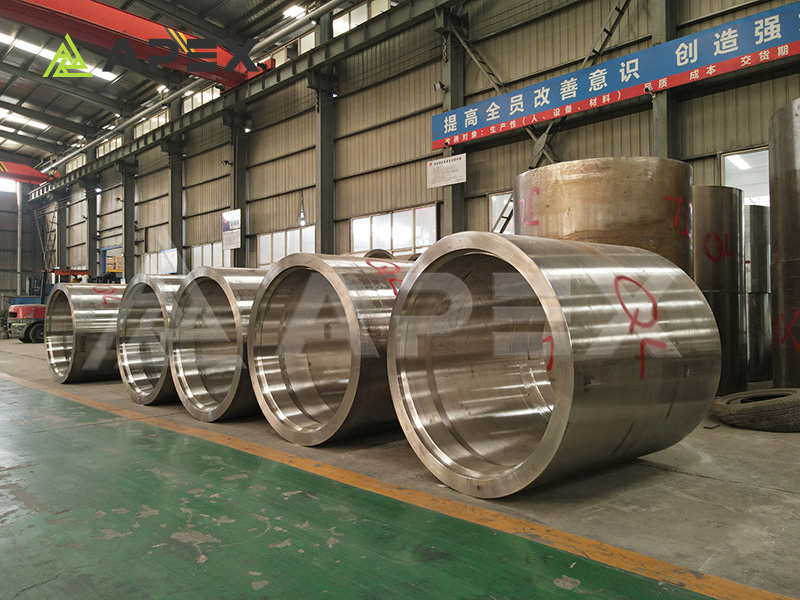
| Wear-Resistant Roller Surface | Rollers feature tungsten carbide studs or hardfacing alloy surfaces with rebuildable/repairable designs. | Extends wear liner life and works alongside hydraulic relief systems to prevent damage from tramp metal. |
| Hydraulic Control & Versatility | Integrated hydraulic system enables real-time, dynamic adjustments of operating pressure and roller gap. | Flexibly adapts to medium-hard and brittle feed materials with precise control over product discharge specs. |
Suitable Materials & Application Scenarios
• Compatible Feed Materials
Ideal for medium-hard and brittle materials including limestone, river pebbles, coal, glass, calcite, sintered slate, rock slabs, and metallic ores.
• Key Application Scenarios
Fine Aggregate & Sand Making: Replaces fine cone or impact crushers to increase yield of fine-grade aggregate.
Pre-grinding for Building Materials & Ores: Installed upstream of ball mills or vertical mills to implement a “more crushing, less grinding” strategy.
Solid Waste & Mineral Processing: Enables efficient liberation and size reduction in industrial byproduct, slag, and tailings processing.
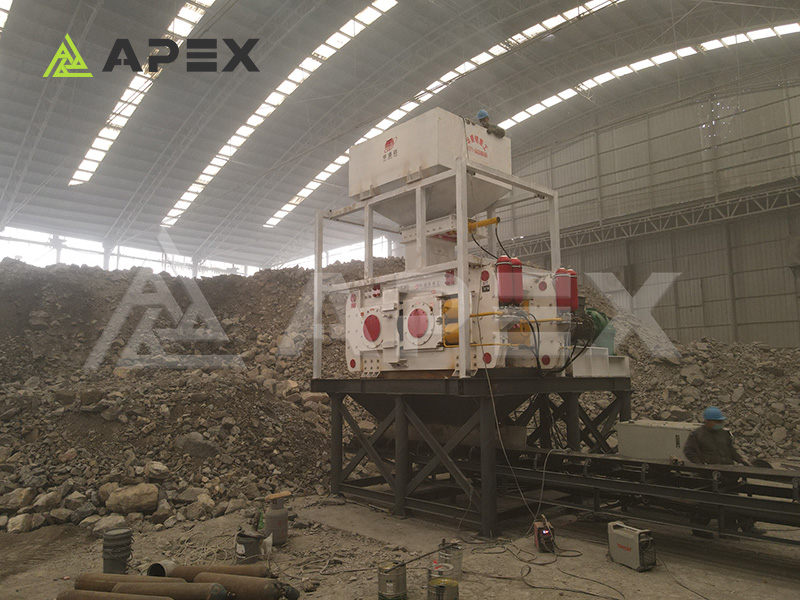
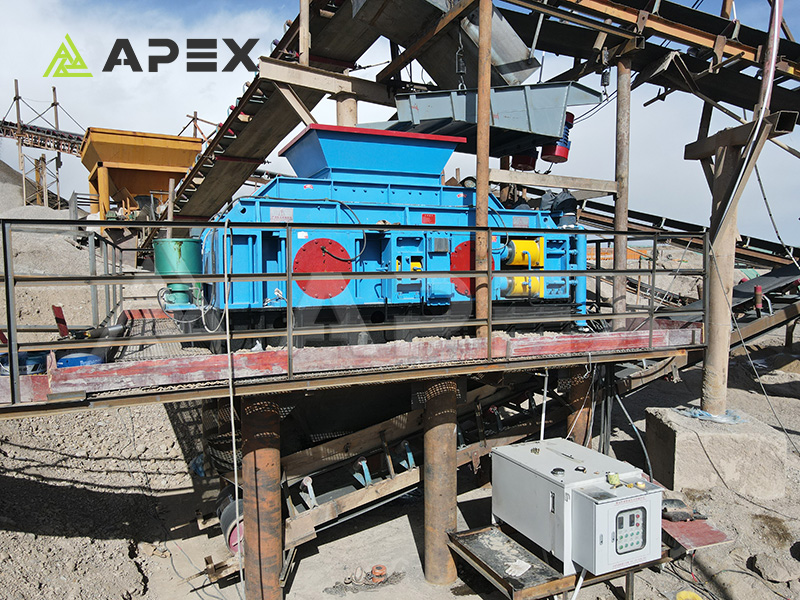
High-Pressure Roller Mill Crushing Site
Suggested visuals: HPGR installed in a closed-circuit circuit alongside photos of compacted material cakes/fines after crushing.
4. Standard Plant Circuit Configuration
In industrial plants, the HPGR typically operates in a closed circuit with screening equipment and downstream milling or sand-making units:
【Typical Process Flow】
Vibrating Feeder → APEX HPGR → Vibrating Screen (Sizing) → Fine Product / Downstream Circuit (Ball Mill / VRM / Sand Maker)
- Closed-Circuit Recirculation: Material compressed by the HPGR passes through a vibrating screen; oversize material returns to the HPGR for re-pressing, ensuring 100% sizing compliance.
- Downstream Energy Benefits: Micro-fractures induced by HPGR compression increase downstream mill throughput by 20% to 40%, reducing total plant energy consumption per ton.
- Custom System Design: Model selection, roller pressure ratings, and motor drive sizing are fully customized based on material hardness, feed size, and target hourly output.
Summary & Technical Support: The APEX High-Pressure Grinding Roll directly resolves high power usage, low throughput, and particle size instability through advanced bed compression crushing. Contact the engineering team at APEX Heavy Industry today to request technical datasheets, custom circuit designs, or performance data from active job sites!
Hot Products
Double Roll Crusher Selection Guide: Sizing Machinery Based on Raw Feed Parameters
Can a Double Roll Crusher Grip Smooth River Pebbles? Physics & Performance Analysis
Where a Double Roll Crusher Fits in a Crushing Circuit
Troubleshooting Excessive Fines and Over-Crushing in Double Roller Crushers & Control Strategies
