Article Summary:
In a typical mineral processing flowsheet, grinding circuits consume the largest share of plant energy. Positioned directly in the tertiary fine-crushing stage ahead of grinding mills, double roll crushers embody the industry-proven strategy of “crush more, grind less.” This article outlines their core roles in reducing mill feed top sizes, stabilizing throughput, and protecting downstream mineral recovery, alongside reference model ranges, retrofit configurations, and expert FAQ guidance from Apex (Apex) Heavy Machinery.
In a typical mineral processing flowsheet, grinding circuits consume the largest share of plant energy. Positioned directly in the tertiary fine-crushing stage ahead of grinding mills, double roll crushers embody the industry-proven strategy of “crush more, grind less.” This article outlines their core roles in reducing mill feed top sizes, stabilizing throughput, and protecting downstream mineral recovery, alongside reference model ranges, retrofit configurations, and expert FAQ guidance from Apex (Apex) Heavy Machinery.
In a typical mineral processing flowsheet—crushing, screening, grinding, separation—the grinding circuit consumes the largest share of plant energy, frequently accounting for more than half of the total power draw. That is precisely where a double roll crusher earns its place: in the tertiary (fine) crushing stage, compressing the feed top size before it reaches the mill.
The underlying principle is widely recognized across the industry as “crush more, grind less”: size reduction via compression crushing is far more energy-efficient than size reduction via tumbling ball mills. Every millimeter removed upstream by a roll crusher is a millimeter the mill doesn’t have to grind with steel balls.
Note: Capacity and energy figures in this article are indicative; actual performance depends on ore characteristics and is confirmed by formal project engineering calculations 【Custom Parameters Available】.
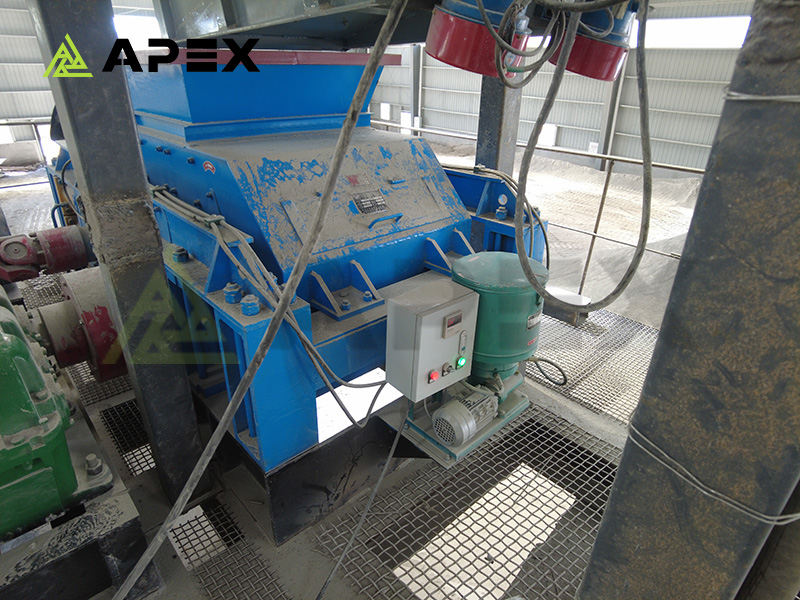
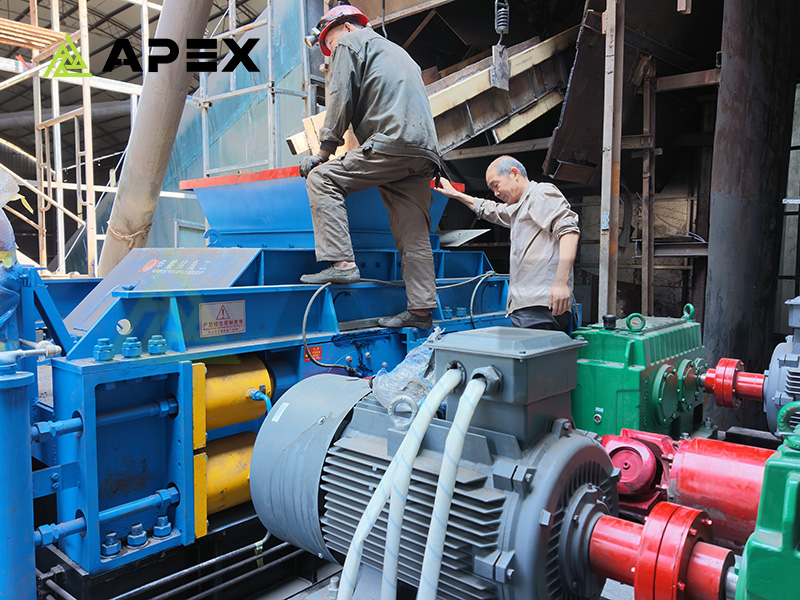
Apex Double Roll Crusher Operating in an Industrial Mineral Concentrator
1. What the Double Roll Crusher Does in the Circuit
Position: Installed after the cone crusher and directly before the grinding ball mill.
Standard Proven Flowsheet:
Vibrating Feeder rightarrow Jaw Crusher (Primary) rightarrow Cone Crusher (Secondary) rightarrow Double Roll Crusher (Tertiary Fine Crushing) rightarrow Vibrating Screen (Closed Circuit) rightarrow Mill Feed / Fine Ore Bin.
Its operational mission is threefold:
- Lower the Mill Feed Top Size: Finished product sizing is governed by precise inter-roll gap adjustments, allowing feed top sizes entering the mill to be targeted precisely and held stable 【Custom Parameters Available】.
- Stabilize Mill Feed: A consistent, uniform mill feed keeps grinding fineness and hourly throughput steady. Variations in feed top size represent one of the most common hidden causes of erratic mill performance.
- Protect Downstream Recovery: Low-speed compression crushing produces minimal over-grinding. In mineral processing, excess ultra-fine slimes from over-crushing interfere with flotation or gravity separation and reduce metal recovery—the roll crusher stops precisely at target sizing without creating unwanted fine powders.
2. Why Compression Crushing Suits Hard Ores
Mineral ores—including iron, copper, gold, and manganese—are typically hard and abrasive. Double roll crushers handle them effectively using low-speed, high-pressure compression rather than high-speed kinetic impact:
- No High-Speed Rotors or Hammers: Free from fragile components susceptible to shattering. Wear on roller shells is gradual and uniform rather than localized impact gouging.
- High-Chrome Shells for Abrasive Ores: Roller shells wear evenly across their full active width and can be replaced independently without requiring major machine overhauls.
- Hydraulic Relief for Tramp Metal: Stray bucket teeth and drill steel inevitably enter plant feeds despite precautions; hydraulic accumulators retract the movable roll to pass foreign objects and reset automatically—preventing shell fracture and shaft damage while avoiding unplanned shutdowns.
- Low Specific Energy Consumption: Low-speed comminution with zero impact windage losses keeps energy expenditure per ton down, yielding financial savings that scale directly with plant throughput.
3. Model Range for Mineral Processing Plants (Reference)
| Model Designation | Roll Diameter (mm) | Max Feed Size (mm) | Capacity (T/H) |
|---|---|---|---|
| 2PGT610×400 | 610 | 30 | 5–20 |
| 2PGT750×500 | 750 | 30 | 10–40 |
| 2PGY800×1000 | 800 | 40 | 50–80 |
| 2PGY1000×1000 | 1000 | 40 | 80–100 |
| 2PGY1200×1200 | 1200 | 60 | 120–150 |
| 2PGY1500×1200 | 1500 | 80 | 200–250 |
| 2PGY1800×1000 | 1800 | 100 | 250–300 |
| 2PGY2000×1200 (Flagship) | 2000 | 120 | 300–400 |
Selection Rule of Thumb: Choose a model whose mid-range capacity covers your target, not one whose ceiling equals it. Small-scale gold milling operations commonly utilize the 2PGT400–610 series (2–20 TPH), while large-scale concentrators specify the 2PGY hydraulic series, with multi-unit parallel layouts readily available for throughput requirements exceeding 400 T/H 【Custom Parameters Available】.
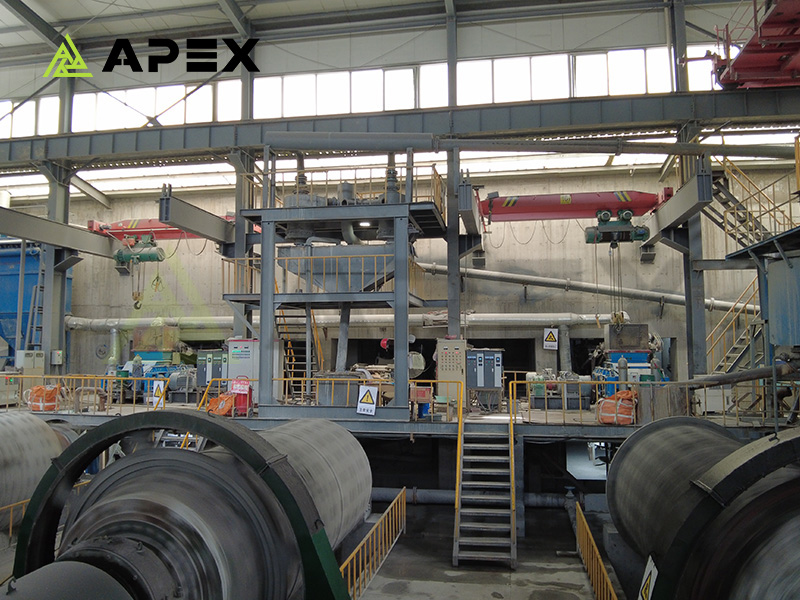
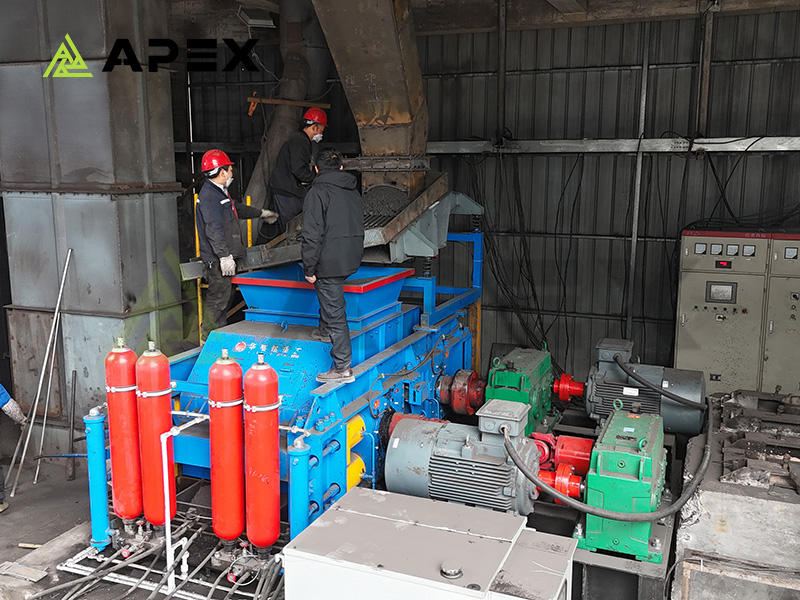
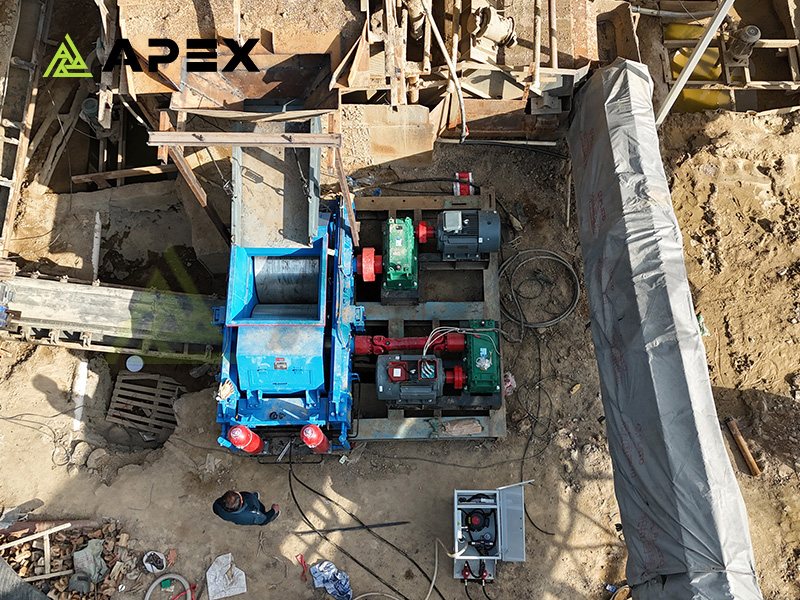
Retrofitted Mineral Flowsheet with Parallel Bypass & Roll Crusher
4. Retrofit: Adding a Roll Crusher to an Existing Plant
Plants whose operational bottleneck lies in the grinding mill—rather than the primary crushing stage—can successfully integrate a double roll crusher without rebuilding the entire flowsheet. Three common arrangements include:
- After the Screen: Screen undersize or coarse fraction passes through the roll crusher prior to entering the fine ore bin.
- Closed Circuit with the Screen: Oversized particles return for another pass, firmly locking down the mill feed top size.
- Parallel Bypass: A diverting valve arrangement lets the plant run its original flowsheet during scheduled roll crusher maintenance, ensuring the mill never starves.
A proper retrofit audit requires three numbers: current mill feed top size, mill specifications, and ore crushability. With those metrics, potential savings can be calculated honestly without relying on generic percentage claims 【Custom Parameters Available】.
5. Frequently Asked Questions
Q: Is a roll crusher suitable for gold ore processing?
A: Yes, in the fine-crushing stage directly ahead of grinding. For oxide or soft ores, standard wear-resistant roller shells suffice; hard primary ores with high quartz content call for high-chrome alloy shells. Low over-grinding also helps avoid excess slimes that interfere with downstream gold recovery 【Custom Parameters Available】.
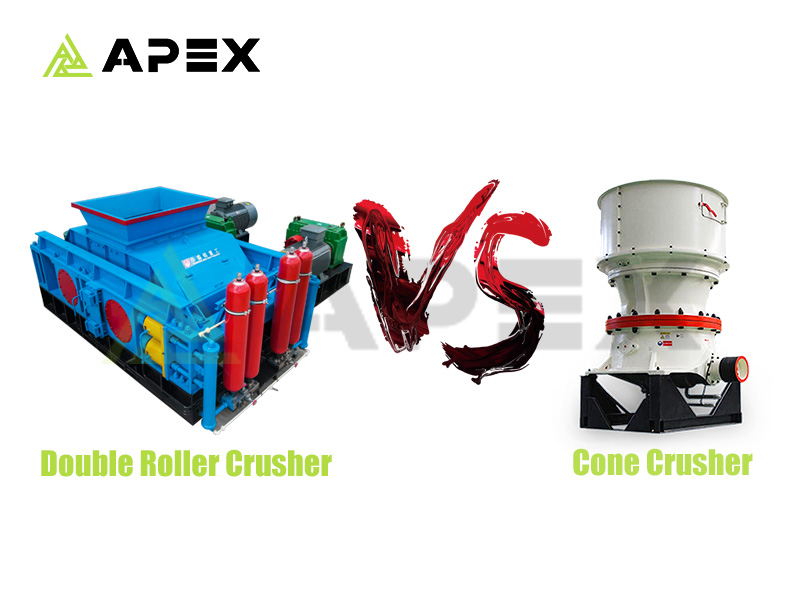
Q: Roll crusher or cone crusher for tertiary crushing?
A: They are complementary rather than competing. Cone crushers handle bulk reduction, while roll crushers take over where product shape, precise top-size control, and low fines generation matter most—typically directly ahead of the grinding ball mill.
Q: What data do you need to size a machine?
A: Ore type and hardness, feed top size, target product size (or mill feed top size), and target capacity. Providing these four parameters allows us to confirm equipment models, roller shell metallurgy, and line configurations through engineering calculations 【Custom Parameters Available】.
Talk to Apex Heavy Machinery
Factory stock, fast delivery, and customized configurations. References and site videos available for Southeast Asian and African projects. Send your ore data for a calculated proposal—not a guess 【Custom Parameters Available】!
Hot Products
How Fine Can Double Roll Crushers Adjust Their Discharge Sizing? Engineering Limits & Adjustment Guide
What Is the Ideal Feed Size for Crushing Hard Rock with Double Roll Crushers?
Double Roll Crushers vs. Cone Crushers: How to Choose the Right Fine Crushing Equipment for Your Plant
Does Decreasing the Roll Gap of a Double Roll Crusher Reduce Throughput? Performance Analysis & Solutions