Article Summary:
Sand-making plants commonly struggle with excessive needle-flake particles, failing gradations, high electricity bills, and rapid wear-part consumption. This article explores Apex Heavy Industry’s double roll sand-making machine solution, which replaces high-speed impact crushing with low-speed static compression and shear forces. By analyzing six core advantages—including excellent cubical particle shape, controllable fine powder generation, low power consumption per ton, hydraulic tramp relief, enclosed dust control, and wide material adaptability—the piece demonstrates how roll pressing stabilizes sand quality while lowering operating costs.
Sand-making plants commonly struggle with excessive needle-flake particles, failing gradations, high electricity bills, and rapid wear-part consumption. This article explores Apex Heavy Industry’s double roll sand-making machine solution, which replaces high-speed impact crushing with low-speed static compression and shear forces. By analyzing six core advantages—including excellent cubical particle shape, controllable fine powder generation, low power consumption per ton, hydraulic tramp relief, enclosed dust control, and wide material adaptability—the piece demonstrates how roll pressing stabilizes sand quality while lowering operating costs.
Sand-making plants typically face two recurring headaches: first, excessive needle-like and flaky particles resulting in failing gradations that get penalized or rejected by commercial concrete batch plants; second, stubbornly high electricity bills and consumable parts expenses driving up per-ton production costs. To address these pain points, Apex Heavy Industry introduces the double roll sand maker as the terminal crushing solution—substituting high-speed impact crushing with low-speed compression and shear forces to control both output particle shape and operating costs simultaneously.
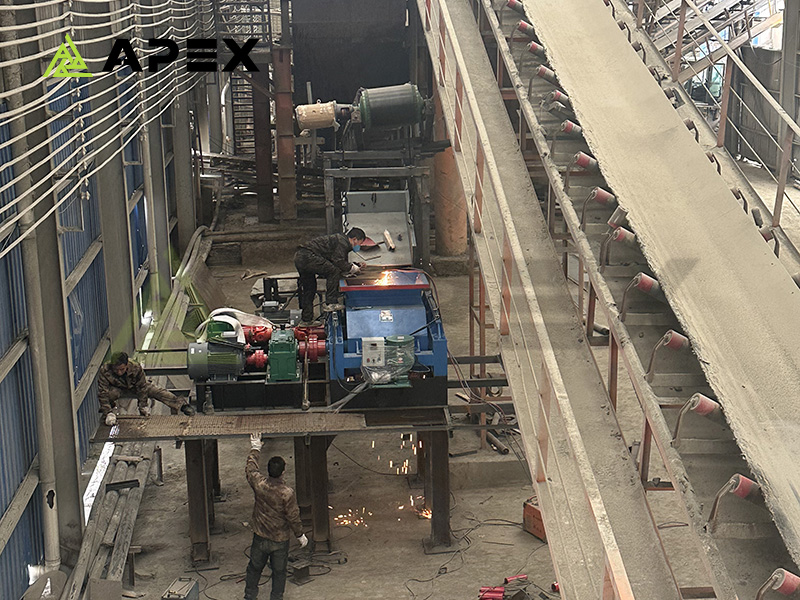
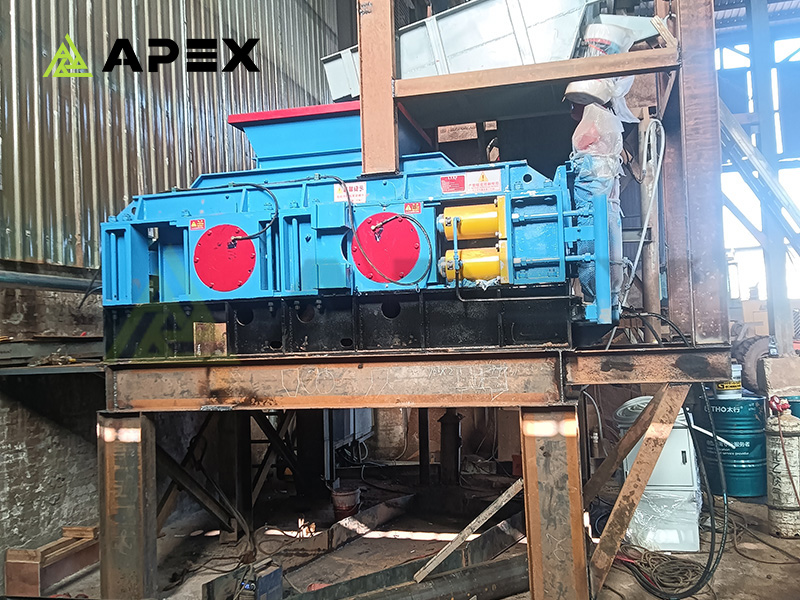
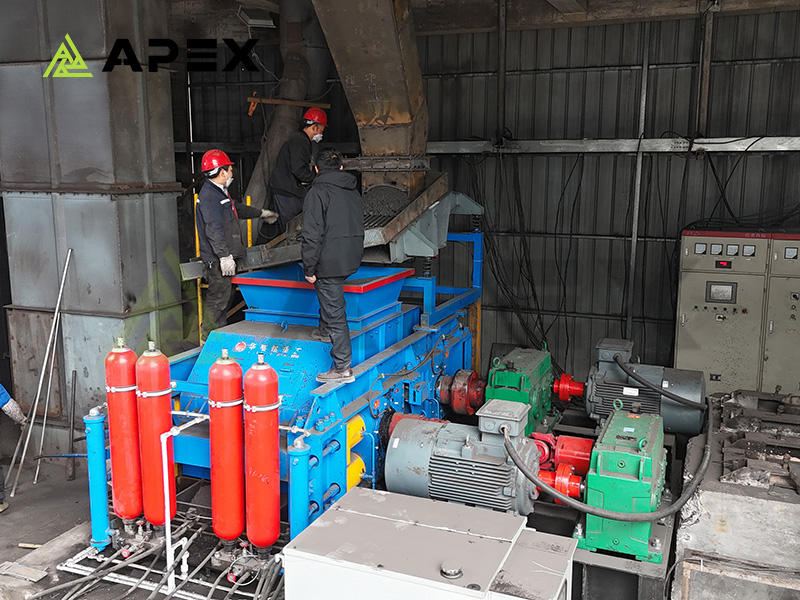
Apex Double Roll Sand Maker Operating in a Sand Plant
1. Overview: Why Roll Pressing Suits Sand-Making Terminals
A double roll sand maker consists of two counter-rotating rolls. Material enters the nip from above, where it is crushed and shaped under sustained compression and shear forces. Unlike the high-speed impact smashing of hammer and impact crushers, roll pressing operates via low-speed, high-pressure, single-pass comminution: material inside the roll gap undergoes repeated squeezing, expanding internal micro-cracks until fracturing along natural mineral grain boundaries. This yields finished particles with minimal angular edges, high cubical proportions, and low fine powder ratios.
For manufactured sand circuits, this translates directly to reduced downstream screening loads, lower return material volumes, and significantly decreased overall plant electricity consumption.
2. Six Core Advantages of Double Roll Sand Makers
| Core Advantage | Engineering Mechanism | Plant Operational Benefit |
|---|---|---|
| 1. Superior Particle Shape & Stable Gradation | Static compression yields cubical particles with minimal needle-flake content 【Custom Parameters Available】. | Easily passes concrete quality inspections; gap adjustments cover coarse and medium sand specs effortlessly. |
| 2. Controllable Fine Powder (Low Over-Crushing) | “Sufficiently crushed, immediately discharged” mechanical logic preventing unnecessary grinding. | Reduces stone powder waste, eases environmental dust burdens, and stabilizes sand methylene blue ($MB$) values. |
| 3. Low Power Draw & Controlled OPEX | Low-speed direct force transfer paired with wear-resistant high-chromium alloy shells 【Custom Parameters Available】. | Slashes kWh-per-ton electricity costs, extends replacement cycles, and simplifies routine maintenance. |
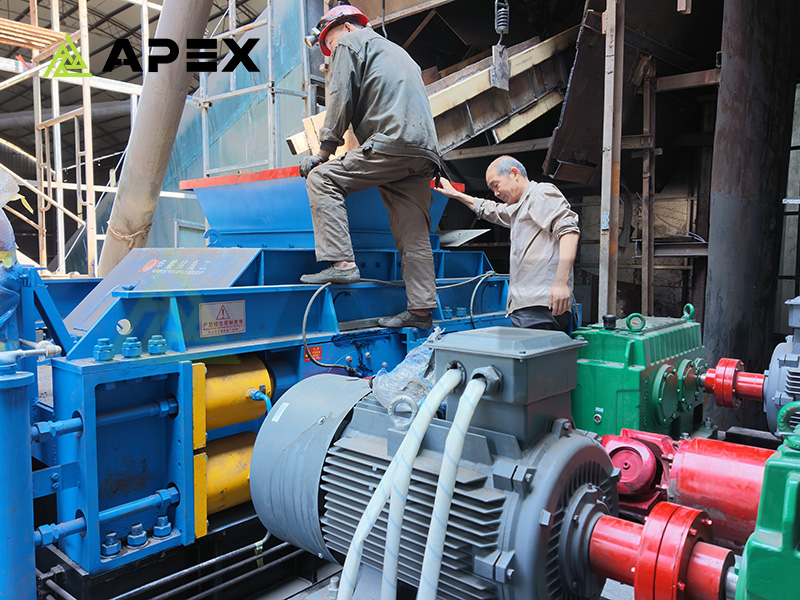
| 4. Hydraulic Tramp Metal Protection | Spring-loaded or hydraulic accumulators allowing movable rolls to retract and reset automatically. | Protects roller shells and main shafts from uncrushable tramp iron, preventing costly unexpected downtime. |
| 5. Enclosed Dust Control Architecture | Sealed crushing chamber structure with direct connection points for dust collection systems. | Maintains low ambient particulate concentrations, meeting strict environmental compliance and safety standards. |
| 6. Wide Material Adaptability | Versatile roll configurations capable of handling limestone, river pebbles, coal, and slag. | Resists plugging on slightly damp materials, outperforming high-speed impactors in sticky feed conditions. |
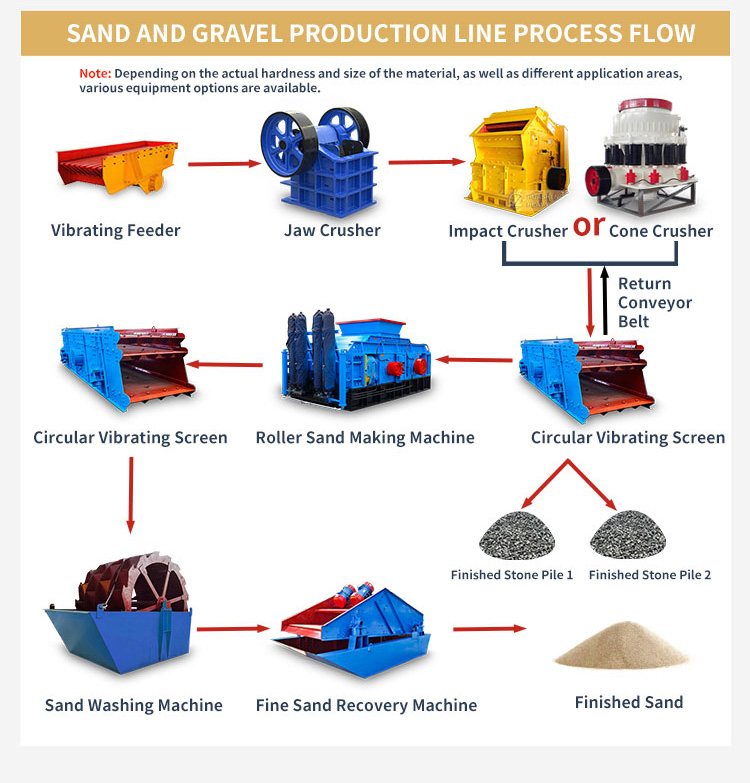
Typical Sand-Making Plant Flowsheet
3. Primary Application Scenarios
- Aggregate & Sand Quarries: River pebble and limestone manufactured sand production; serving as a primary shaping and fine-reduction stage alongside or replacing vertical shaft impactors (VSI) 【Custom Parameters Available】.
- Commercial Concrete Batch Plants: Dedicated sand production units producing continuous gradation, tightly controlled powder content medium sand for high-grade concrete.
- Coal & Coal Gangue Processing: Primary coal reduction and coal gangue utilization projects.
- Glass & Solid Waste Recycling: Fine crushing of waste glass and construction rubble into clean recycled aggregates.
- Non-Metallic Mineral Processing: Fine comminution of industrial minerals such as calcite and gypsum.
4. Standard Reference Configuration
Typical Proven Sand-Making Flowsheet:
Vibrating Feeder $rightarrow$ Jaw Crusher (Primary Coarse Reduction) $rightarrow$ Double Roll Sand Maker (Fine Reduction & Shaping) $rightarrow$ Circular Vibrating Screen (Grading & Classification) $rightarrow$ Sand Washing Machine / Dust Collection System.
Apex configures exact roll diameters, roll widths, and motor power ratings based on raw feed size, target hourly capacity, and finished product specs, ensuring fully customized plant design 【Custom Parameters Available】.
Ready to Secure Higher Profit Margins in Your Sand-Making Plant?
The true profitability of a sand plant lies in high particle shape qualification rates and low per-ton electricity consumption. The value of a double roll sand maker is not just that it crushes material, but that it crushes it cleanly, economically, and consistently.
Contact Apex Heavy Industry today for model parameters, price quotes, site operation videos, or to design a custom sand-making flowsheet tailored to your feed material and capacity targets 【Custom Parameters Available】. Factory-direct inventory with global shipping support for domestic and international projects!
Hot Products
What Is the Ideal Feed Size for Crushing Hard Rock with Double Roll Crushers?
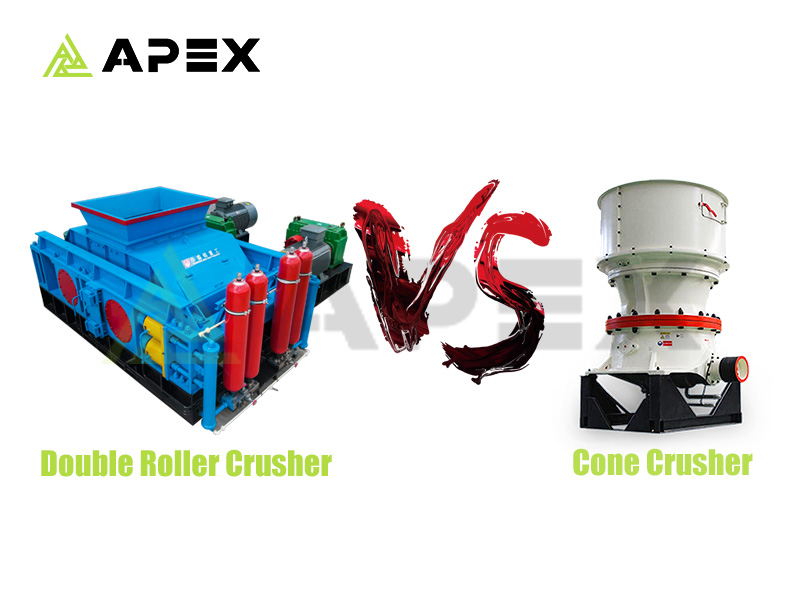
Double Roll Crushers vs. Cone Crushers: How to Choose the Right Fine Crushing Equipment for Your Plant
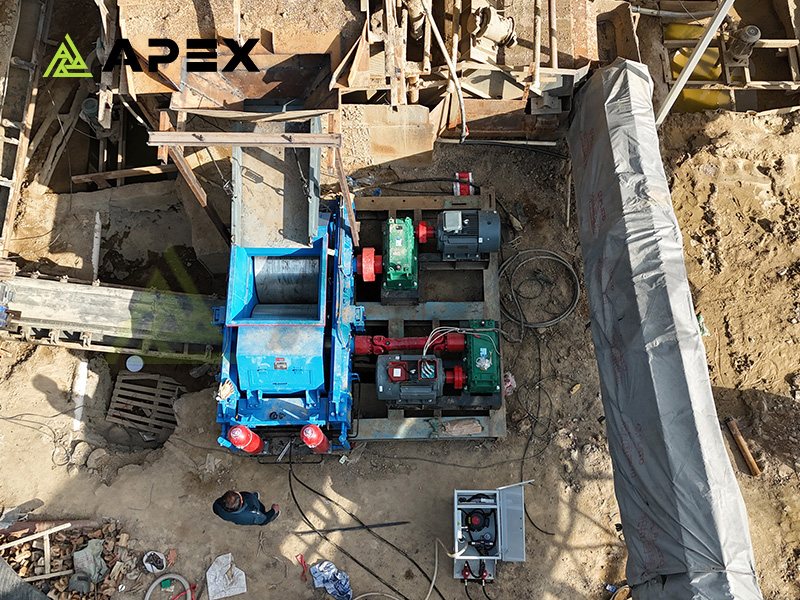
Does Decreasing the Roll Gap of a Double Roll Crusher Reduce Throughput? Performance Analysis & Solutions
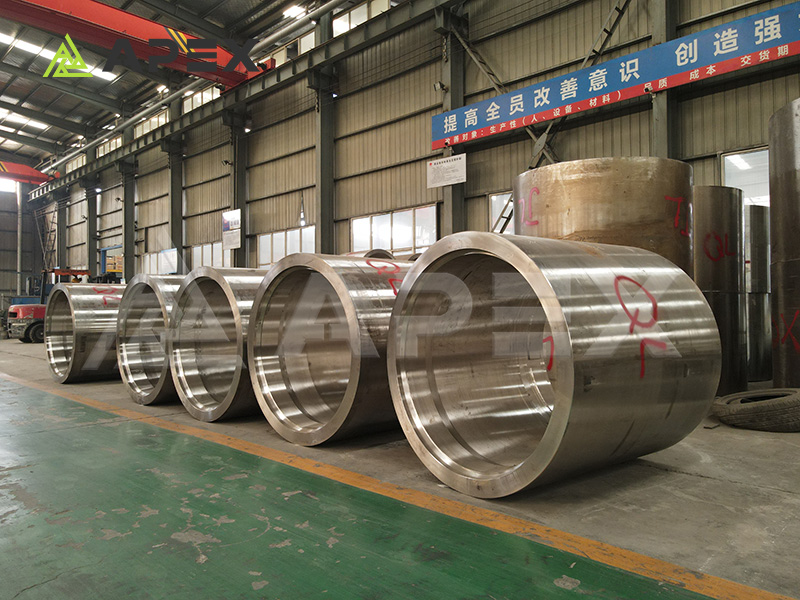
How Long Do Double Roll Crusher Roller Shells Last? Understanding the 3 Wear Stages & Maintenance Timing