Article Summary:
Selecting between a double roll crusher and a hammer crusher for calcite (Mohs hardness ~3) depends entirely on your plant’s process objective. If the crusher prepares feed for downstream grinding mills (the most common scenario in ground calcium carbonate / GCC and precipitated calcium carbonate plants), the double roll crusher is the superior engineering choice due to whiteness protection, minimal fines, and low power consumption. This article provides a comprehensive six-point comparison, analyzes why roll crushers dominate GCC flowsheets, and outlines when hammer crushers have a valid niche.
Selecting between a double roll crusher and a hammer crusher for calcite (Mohs hardness ~3) depends entirely on your plant’s process objective. If the crusher prepares feed for downstream grinding mills (the most common scenario in ground calcium carbonate / GCC and precipitated calcium carbonate plants), the double roll crusher is the superior engineering choice due to whiteness protection, minimal fines, and low power consumption. This article provides a comprehensive six-point comparison, analyzes why roll crushers dominate GCC flowsheets, and outlines when hammer crushers have a valid niche.
Deciding whether to choose a double roll crusher or a hammer crusher for calcite comes down to understanding what role the crushing stage plays in your overall plant flowsheet. If the crusher prepares feed for a downstream grinding mill (the standard setup in ground calcium carbonate and GCC lines), the double roll crusher is the definitive choice. If whiteness is insensitive and you intend to produce fine product directly from the crusher without a grinding stage, hammer crushers have a specific niche. Let’s break down both options so you can match your plant requirements accurately.
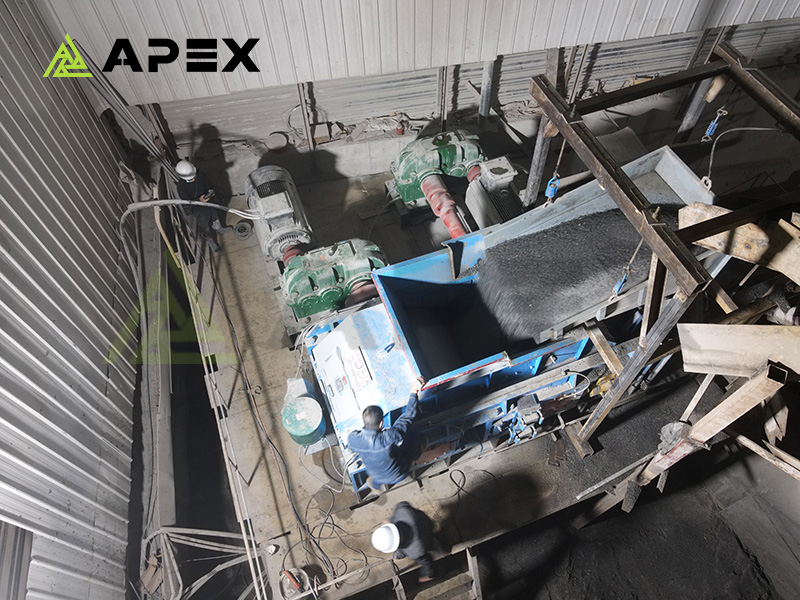
Apex Double Roll Crusher Operating in a Calcite Processing Facility
1. Working Principle Differences Dictate Downstream Results
- Double Roll Crusher: Operates on low-speed compression, causing material to fracture naturally along internal grain boundaries. Material discharges the moment it reaches target sizing (“crush to size and exit”—sufficiently crushed, immediately discharged with zero redundant impacts).
- Hammer Crusher: Relies on high-speed kinetic hammer impact, beating material repeatedly against breaker plates and grate bars until particles are small enough to pass through screen slots. This results in heavy impact counts, excessive fine powder, and localized mechanical wear.
Because calcite is relatively soft (Mohs hardness ~3), both machine types can crush it easily. The critical differences lie in post-crushing outcomes: particle shape, fine powder generation, whiteness preservation, and operating economics 【Custom Parameters Available】.
2. Six-Point Performance Comparison
| Comparison Metric | Double Roll Crusher | Hammer Crusher |
|---|---|---|
| Over-Crushing / Fines | Minimal (discharges immediately upon reaching gap size) | High (repeated high-speed hammer battering) |
| Whiteness Risk | Low (slow roll shell wear minimizes iron contamination) | Moderate-High (rapid hammer wear sheds steel into product) |
| Specific Energy ($kWh/t$) | Low (efficient single-pass compression) | Higher (high-speed rotor windage and impact energy) |
| Wear Part Lifespan | Long (calcite causes minimal abrasive wear on rolls) | Short (frequent hammer replacements required) |
| Wet Feed Tolerance | Good (toothed rolls handle damp calcite effectively) | Poor (wet fines blind grate bars and cake crushing chambers) |
| Equipment Investment | Moderate-High | Low |
While double roll crushers win across five out of six metrics, and hammer crushers win solely on initial capital investment, the true selection decision must be guided by operational priorities in GCC processing plants.
3. Why Double Roll Crushers Excel in GCC Processing
- Whiteness Is Money: Calcium carbonate buyers purchase powder based on strict whiteness grading. High-speed hammer wear sheds micro-steel particles into the product, degrading optical whiteness and lowering market value. Double roll crushers experience negligible wear when processing soft calcite, ensuring metal contamination is virtually eliminated.
- Crushing Stages Should Not Do Milling Work: In calcite flowsheets, final fineness is established by grinding mills (Raymond mills, ball mills, or vertical roller mills). Hammer crushers batter material excessively, generating unwanted fine powder that downstream mills must process anyway—wasting electrical energy and overburdening dust-collection systems. Double roll crushers deliver precise mill feed sizing without over-grinding.
- Long-Term Operating Economics: Calcite barely abrades robust roller shells, resulting in extended replacement intervals and minimal maintenance downtime. Combined with low specific energy consumption, double roll crushers deliver superior long-term profitability in margin-sensitive GCC industries.
4. When Hammer Crushers Make Engineering Sense
To remain completely objective, hammer crushers are viable in two specific operating scenarios:
- Low Whiteness Requirements: General-purpose industrial aggregate or low-grade filler applications where optical color specifications are non-existent.
- Direct Fine Sizing Without Grinding Mills: Operations seeking to produce relatively fine finished products directly from a single crushing stage without downstream grinding mills.
However, if your end product is high-grade ground calcium carbonate powder governed by strict whiteness contracts, the double roll crusher remains the definitive industry standard.
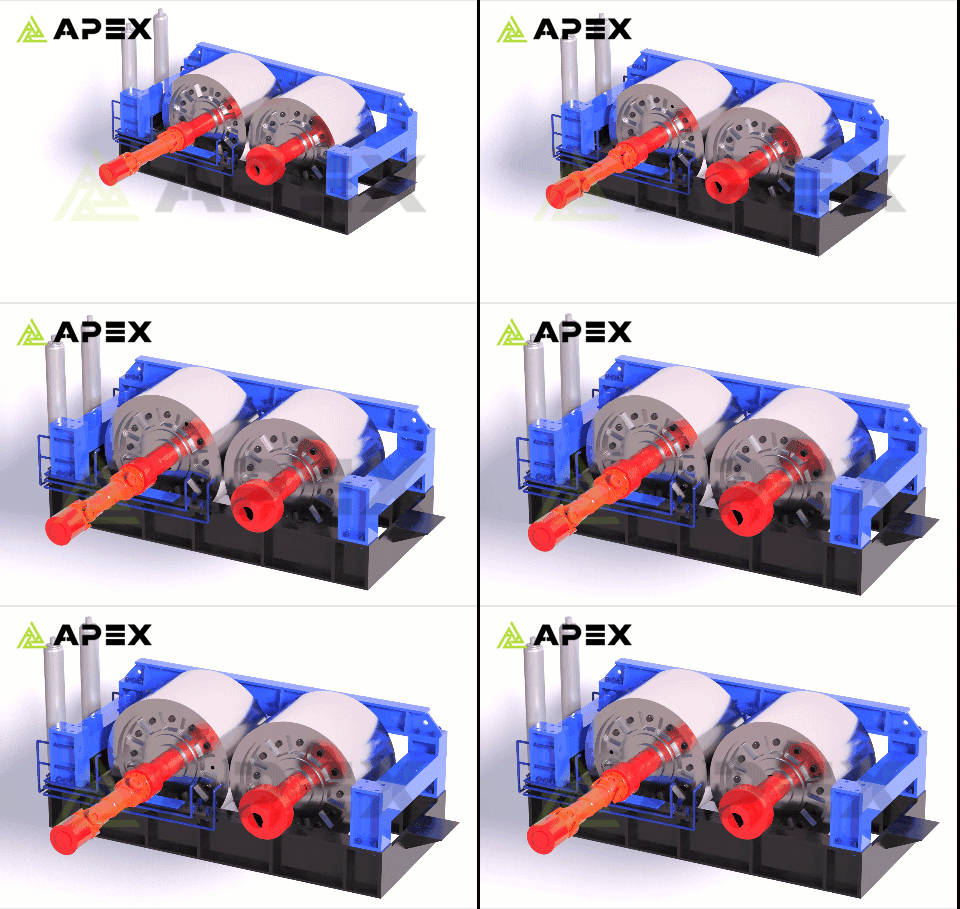
How a Double-Roll Crusher Works
5. Four Parameters Needed for Custom Sizing
To receive a precise engineering proposal and quotation for calcite crushing, please provide:
- Calcite Grade & Whiteness Requirements: (Optical whiteness percentage and chemical purity specs)
- Maximum Feed Lump Dimensions: (Top-size entering the crusher)
- Target Output Sizing: (Grinding mill feed specifications or direct finished product specs)
- Design Capacity: (Tons per hour target)
Providing these four metrics allows Apex to specify exact equipment models, motor ratings, and specialized roll surface metallurgies tailored to your whiteness requirements 【Custom Parameters Available】.
Referenced process descriptions serve as engineering guidelines; specific performance parameters are governed by official project customization agreements.
The video below demonstrates double roll crusher operation and compression crushing mechanics in industrial processing plants.
Hot Products
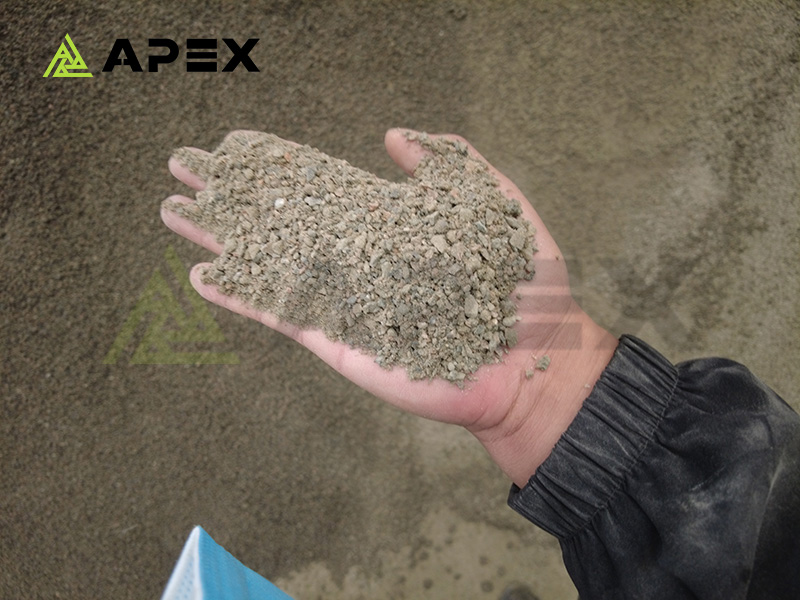
How to Solve Excessive Fine Powder in Crusher Output? Apex Double Roll Crusher for Low Over-Crushing & Cubical Particles
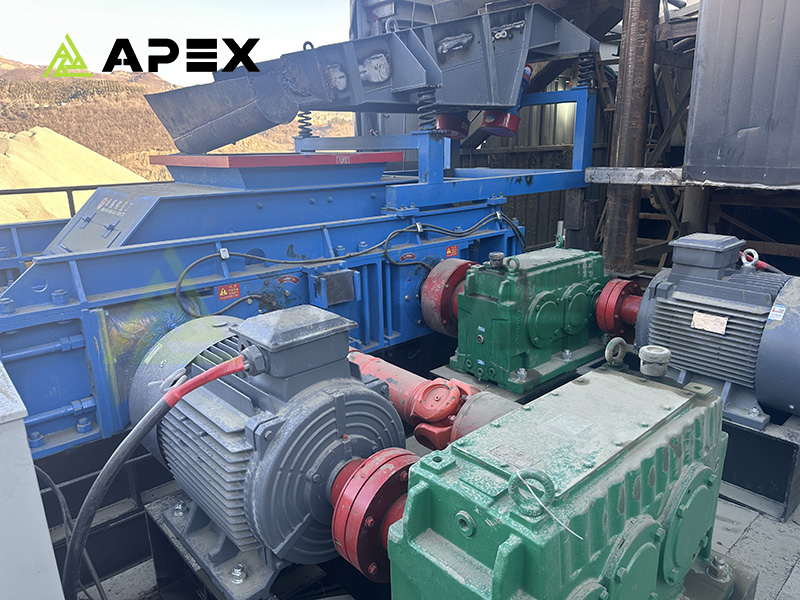
Can a Double Roll Crusher Process High-Hardness Ore? Engineering Capabilities and Reinforced Design
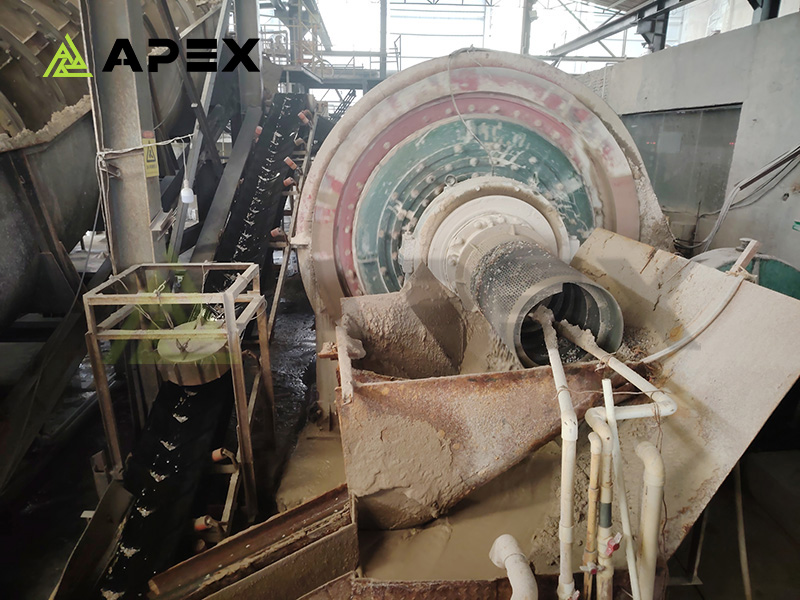
Can a Double Roll Crusher Replace a Ball Mill? The Fundamental Boundary Between Crushing and Grinding
Calcite Crushing: Double Roll Crusher vs. Hammer Crusher for Whiteness Protection and Energy Efficiency