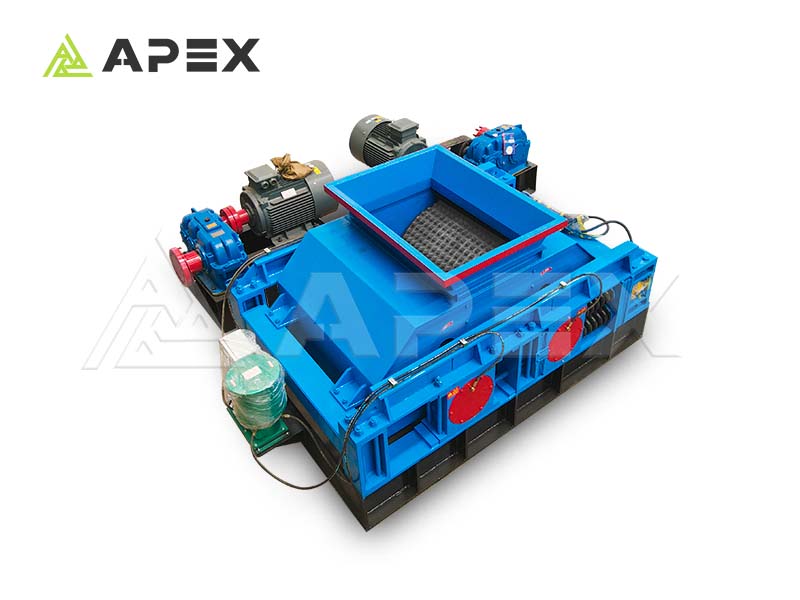
Executive Summary: Utilizing low-speed compression and interparticle bed comminution, double-roll crushers minimize over-crushing and stone powder compared to high-speed impact equipment. Under optimal closed-circuit operation, fines content (<0.075 mm) remains consistently between 3% and 8%. Finished manufactured sand features high cubical content and low flakiness suitable for standard concrete and dry-mix mortar, though dedicated VSI crushers offer superior shaping for ultra-high-specification projects.
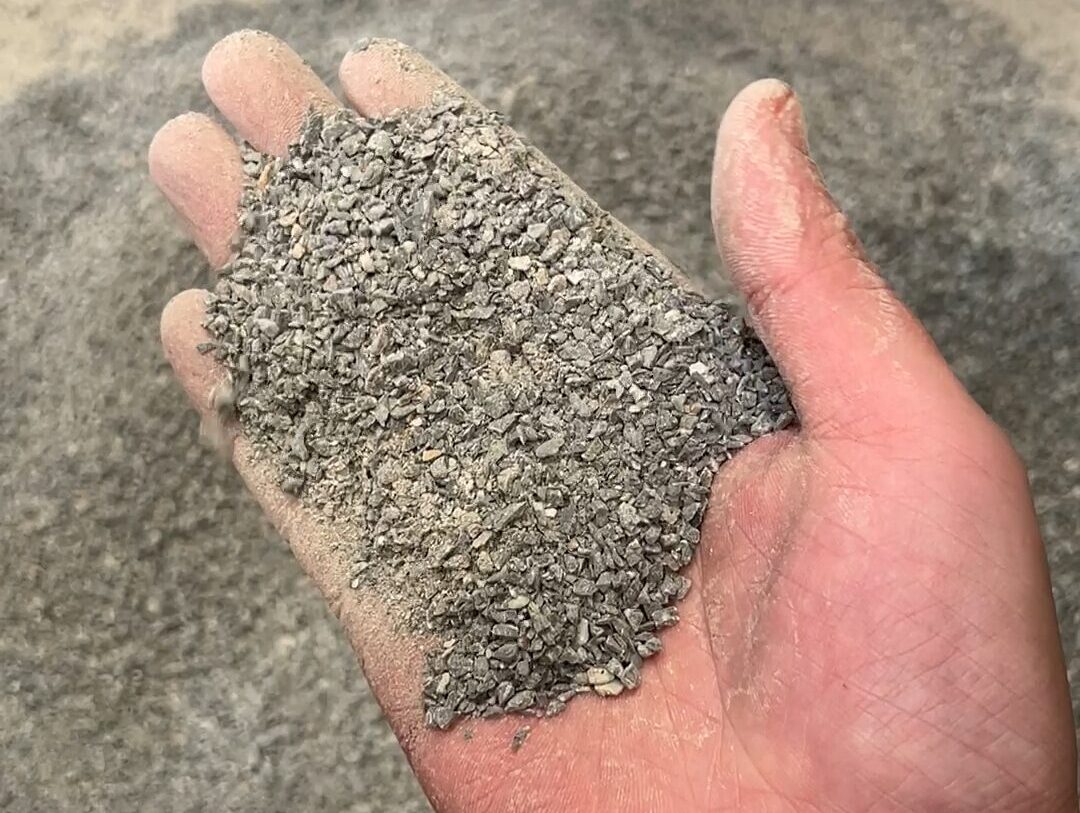
Sand-Making Performance of Double-Roll Crushers
📉 Fines & Stone Powder (<0.075 mm) Output
Ideal Operating Performance
When processing river pebbles, limestone, granite, or other brittle rock under proper conditions (smooth hydraulic rolls, uniform full-width feeding, and closed-circuit screening), stone powder content is strictly controlled within 3–8%. This eliminates the need for intensive water washing in most commercial sand applications.
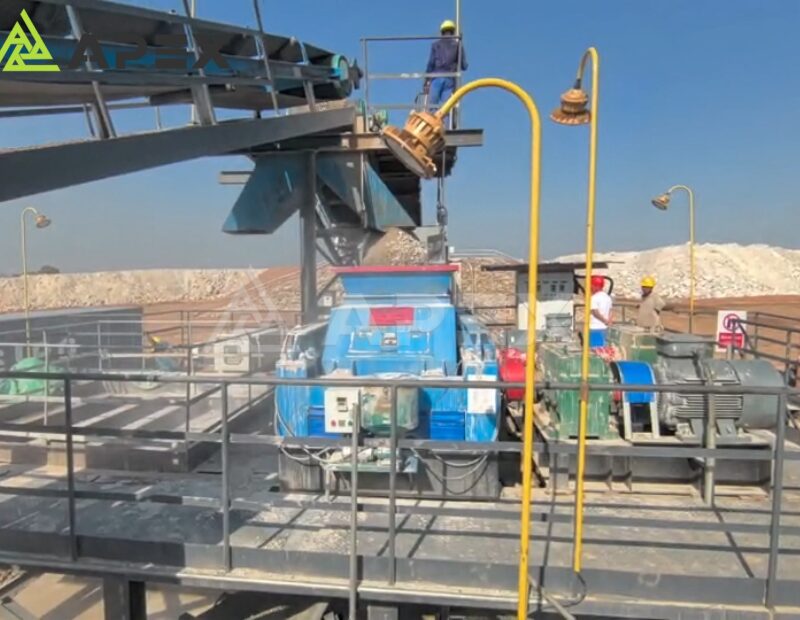
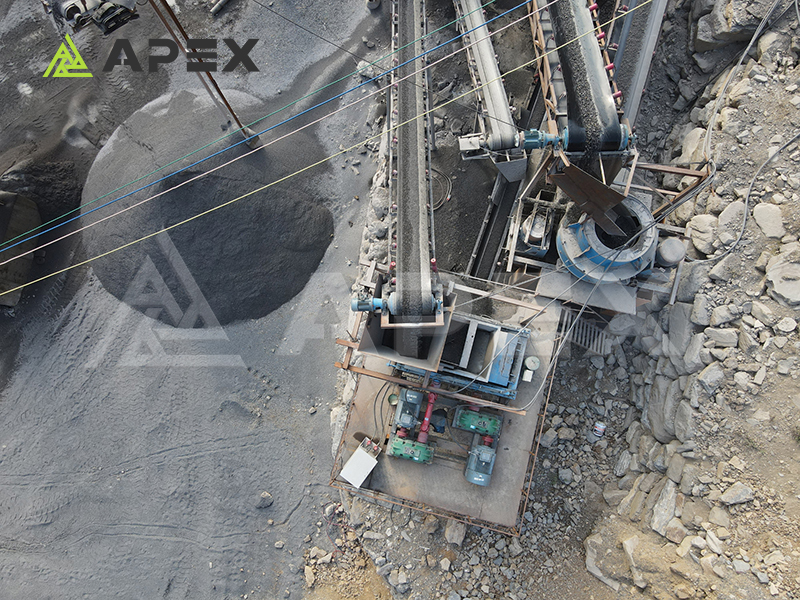
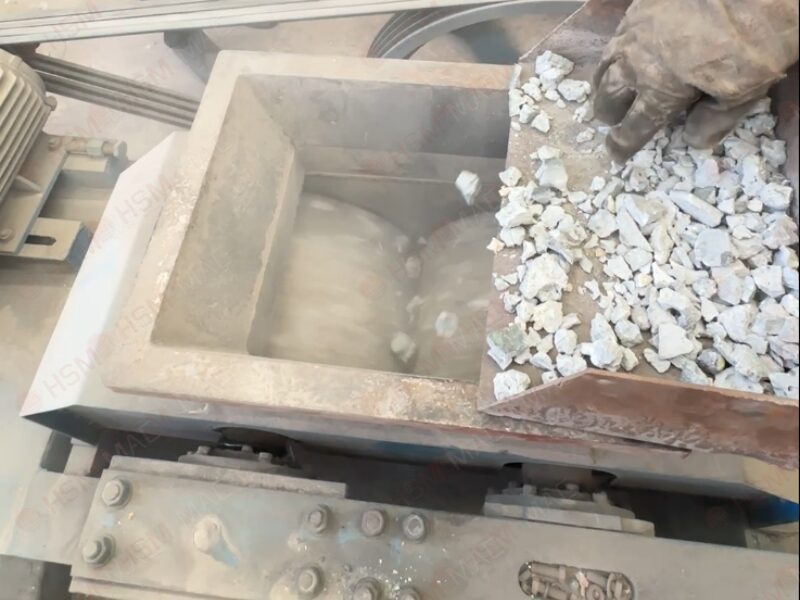
Double-Roll Crushers
Key Drivers of Excessive Fines
- Extremely Narrow Roller Gap: Excessive squeeze forces cause over-grinding between particles.
- Highly Brittle Material: Calcite, heavily weathered rock, or soft minerals shatter easily under pressure.
- Absence of Screening: Failing to discharge qualified fines via vibrating screens causes repeated grinding.
- Uneven Roller Shell Wear: Channel grooves on the roller surface generate localized attrition grinding.
📐 Particle Shape & Product Quality Analysis
| Attribute | Performance Evaluation |
|---|---|
| Particle Structure | Predominantly cubic and polyhedral with low flakiness and high packing density; compliant with standard concrete, bedding, and dry-mix mortar. |
| Shaping Limitations | Relies on compression rather than high-speed impact. Spherical edge rounding is lower than VSI crushers; high-spec projects may require a combined VSI circuit. |
| Smooth vs. Toothed Rolls | Smooth Rollers: Ideal for 0–5 mm fine sand-making with consistent grain gradation. Toothed Rollers: Preferred for coarse aggregate and chip stone, not fine sand. |
💡 Operation & Maintenance Recommendations
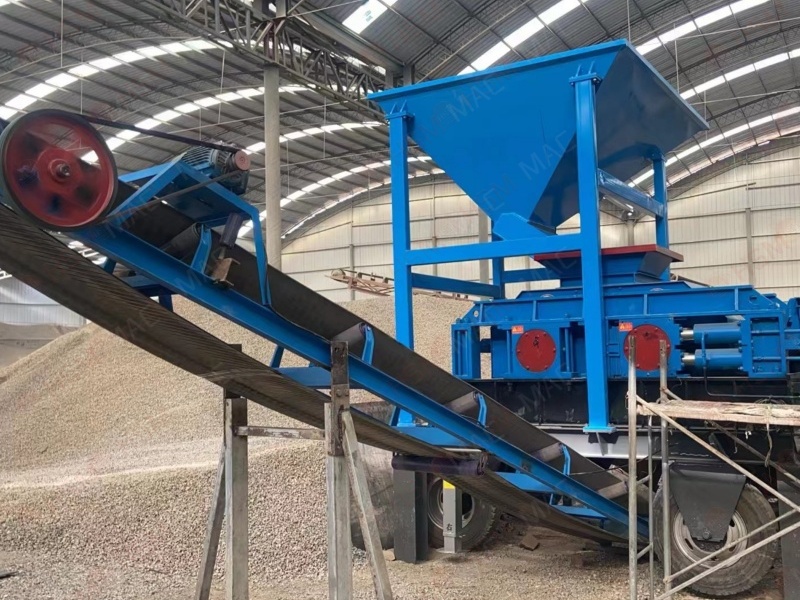
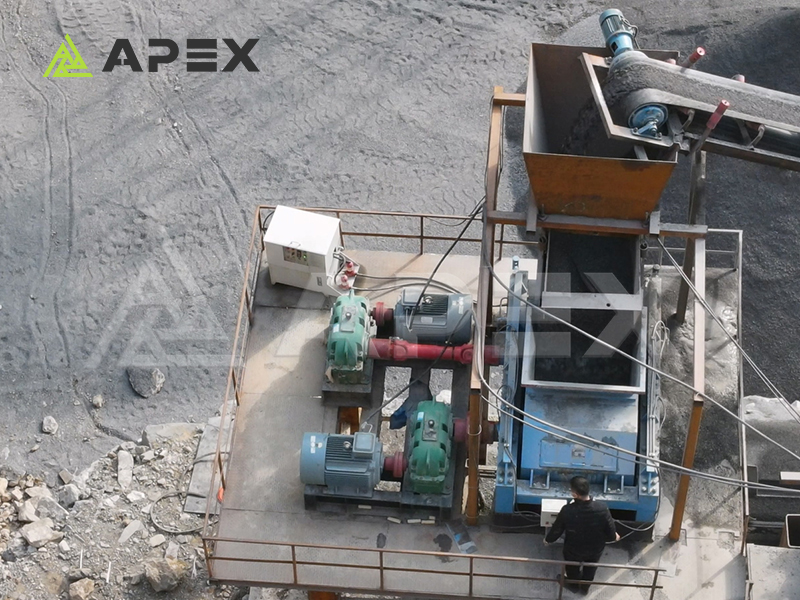
Mobile Double-Roll Crusher
- Select Hydraulic Smooth Models: Hydraulic gap controls maintain accurate pressure settings and stable particle size distribution.
- Avoid Over-Tightening Gaps: Setting gaps too small increases fines production, accelerates shell abrasion, and reduces overall throughput.
- Maintain Full-Width Feeding: Distribute feed evenly across the entire length of the rolls to prevent localized central channel grooving.
- Utilize Closed-Circuit Screening: Screen fine material out immediately and return oversized fractions for secondary reduction.
- Perform Timely Surface Hardfacing: Repair minor channel grooves using hardfacing welding techniques before severe wear distorts sizing control.
System Design Consultation: Share your target raw material type, feed size, and output specifications to receive customized roller gap calibration data and plant circuit layouts.
Hot Products
Why Does a Double Roll Crusher Suddenly Produce Coarser and Uneven Output?
Double-Roll Crusher Performance in Sand-Making: Fines Production & Finished Particle Shape Guide
Double-Roll Crusher Wear Parts & Roller Shell Service Life Guide ?

What Materials Are Suitable for a Double-Roll Crusher?