Article Summary:
Are ball mills starving or failing to grind fine enough? In many mineral processing plants, the actual bottleneck is not the mill itself, but feed material that is too coarse. Introducing a double roll crusher for fine comminution ahead of grinding circuits reduces mill feed sizing, frequently driving a clear, measurable increase in milling capacity. This is the industry-standard “more crushing, less grinding” technical retrofit—requiring modest capital investment and short installation schedules.
Are ball mills starving or failing to grind fine enough? In many mineral processing plants, the actual bottleneck is not the mill itself, but feed material that is too coarse. Introducing a double roll crusher for fine comminution ahead of grinding circuits reduces mill feed sizing, frequently driving a clear, measurable increase in milling capacity. This is the industry-standard “more crushing, less grinding” technical retrofit—requiring modest capital investment and short installation schedules.
Are ball mills starving or failing to grind fine enough? In many mineral processing plants, the actual operational bottleneck is not the mill itself, but feed material that is excessively coarse. Introducing a double roll crusher for fine comminution directly ahead of the grinding circuit compresses mill feed sizing, frequently driving a clear, measurable increase in milling capacity. This represents the mineral processing industry’s standard “more crushing, less grinding” engineering strategy—delivering high ROI with modest capital investment and short retrofit timelines.
d
⚙️ 1. Why Adding a Roll Crusher Upstream Boosts Mill Output
A massive portion of grinding mill energy is consumed simply grinding coarse particles down. Grinding efficiency drops precipitously as feed sizing coarsens: processing 25mm feed versus 8mm feed to reach the same target fineness yields drastically different effective mill throughputs. Coarse particles occupy tumbling barrel volume and consume steel ball impact energy while taking excessive time to reach discharge specs.
The Economics of Energy Transfer:
Double roll crushers execute this workload far more economically: low-speed compression comminution energy efficiency vastly exceeds brute-force tumbling grinding. Particle size reduction achievable via crushing should never be left to steel balls inside a mill. Inserting a double roll fine-crushing stage between secondary reduction and grinding transfers the heavy lifting of coarse grinding from the mill to the far more energy-efficient crushing circuit 【Custom Parameters Available】.
📊 2. Retrofit Integration: Flowsheet Options
Double roll crushers feature compact footprints and straightforward feed/discharge connections, making them the simplest stage to integrate into existing flowsheets:
Flowsheet Transition:
- Existing Flowsheet: Secondary Cone Crusher $rightarrow$ Screening $rightarrow$ Fine Ore Bin $rightarrow$ Ball Mill
- Retrofitted Flowsheet: Secondary Cone Crusher $\rightarrow$ Screening $\rightarrow$ [New Double Roll Crusher] $\rightarrow$ Fine Ore Bin $\rightarrow$ Ball Mill
Three Common Integration Methods (Selected by Site Layout):
- Post-Screening Fine Reduction: Route screen-overflow or coarse screen-underflow fractions through the roll crusher before entering the bin for optimal mill feed control.
- Closed-Circuit Configuration: Pair the roll crusher directly with vibrating screens in a closed loop, locking down the upper limit of mill feed sizing.
- Parallel Bypass Arrangement: Install isolation bypass chutes so that during scheduled fine-crusher maintenance, the plant reverts seamlessly to its original route without halting mill operations.
[ 📷 Image Location: Plant Retrofit Flowsheet Diagram with Bypass Chutes & Roll Crusher ]
Suggested visuals: Process schematic illustrating the insertion of a double roll crusher and bypass valve upstream of a grinding bin.
❓ 3. Frequently Asked Questions
Q: What capacity increase can plants realistically expect?
A: Improvement depends on three variables: current mill feed sizing, target compression sizing, and ore breakage characteristics. Compressing feed from 25mm down to 10mm yields very different gains than compressing from 12mm to 8mm. While universal percentage claims are irresponsible without site data, conservative calculations consistently prove that crushing-stage electricity and consumable costs are far lower than the excess power and steel ball consumption mills waste on coarse feed.
Q: Will adding a fine-crushing stage require major upstream modifications?
A: No major overhauls are necessary. Double roll crushers accept feed sizes ranging from 25mm to 120mm (depending on model), aligning perfectly with secondary cone crusher discharges. Work is generally limited to structural footprint layout and conveyor belt tie-ins, which most plants complete during routine maintenance shutdowns.
Q: How do we prevent introducing new plant failure points?
A: Configuring a parallel bypass channel ensures maximum reliability. If the fine-crushing unit undergoes maintenance, operators simply switch valves to route material through the bypass channel. The mill continues running uninterrupted, with feed sizing temporarily returning to pre-retrofit baseline levels.
📋 4. Four Parameters Needed for Custom Retrofit Proposals
To receive a customized retrofit engineering proposal and ROI calculation, please provide:
- Current Mill Feed Sizing (or Screening Aperture): (Baseline top-size entering the grinding bin)
- Grinding Mill Specifications & Target Tonnage: (Mill dimensions and desired processing capacity)
- Ore Type & Comminution Characteristics: (Ore hardness and breakage behavior)
- Available Installation Footprint: (General spatial constraints around the existing crushing-to-milling transfer point)
Providing these four details allows Apex to deliver a comprehensive retrofit layout proposal and investment payback analysis 【Custom Parameters Available】.
Actual capacity enhancement metrics depend on material testing and formal engineering calculations.
Want to Calculate the ROI on Your Grinding Mill Retrofit?
Contact Apex Heavy Industry today for factory-direct inventory, custom engineering schemes, and real-world retrofit reference data 【Custom Parameters Available】.
Reliable global shipping support for domestic mineral plants as well as installations across Africa, Southeast Asia, and international destinations!
Hot Products
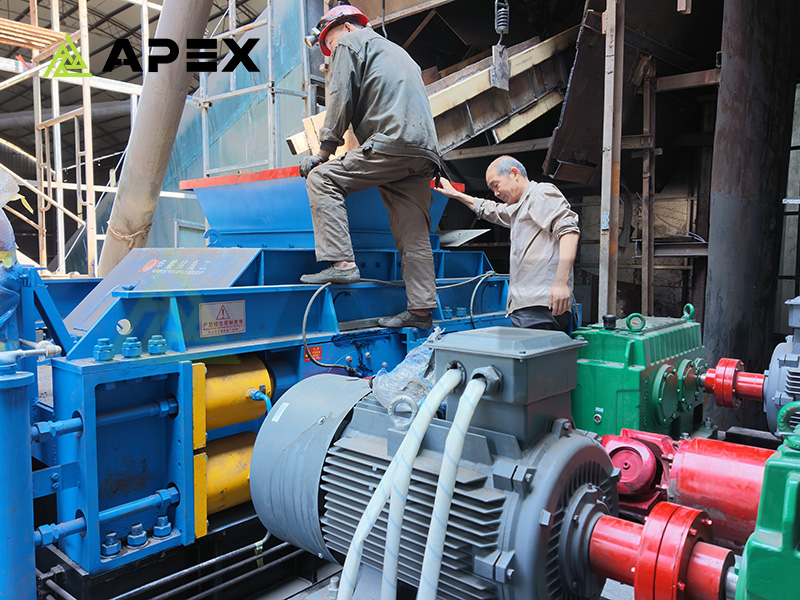
How Fine Can Double Roll Crushers Adjust Their Discharge Sizing? Engineering Limits & Adjustment Guide
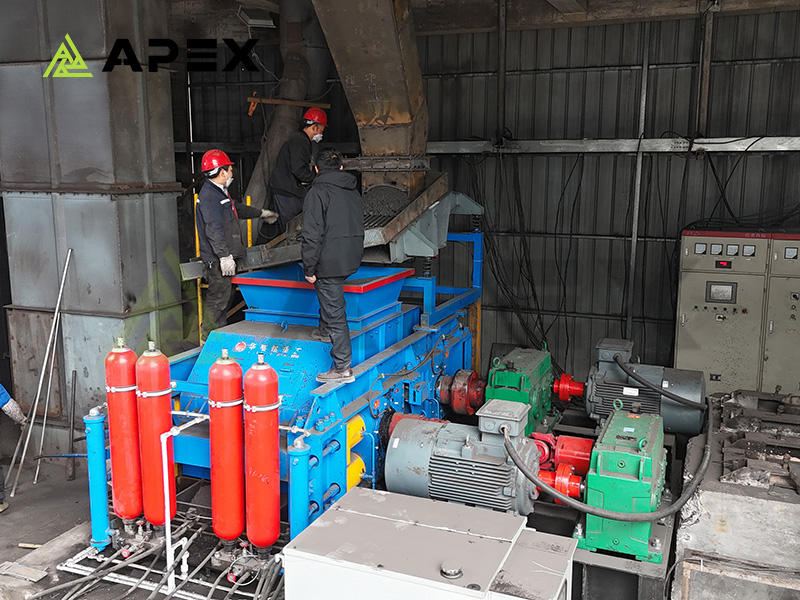
What Is the Ideal Feed Size for Crushing Hard Rock with Double Roll Crushers?
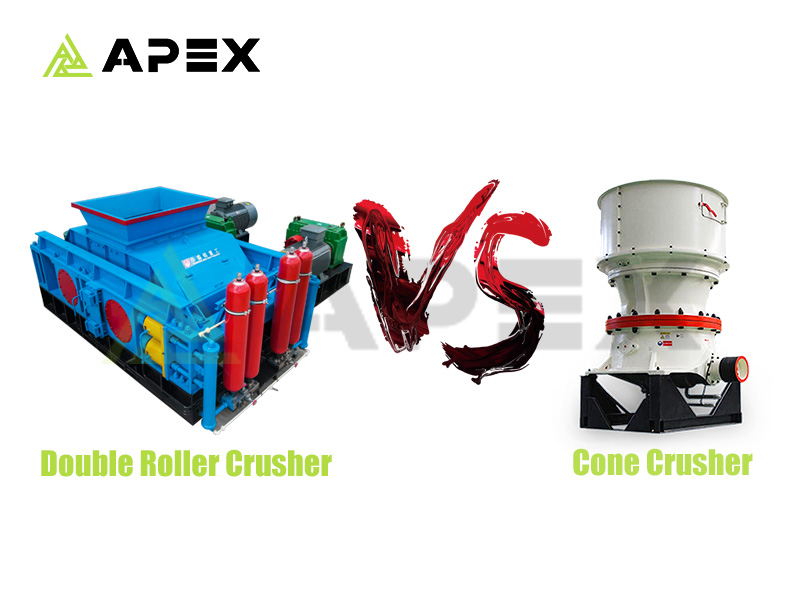
Double Roll Crushers vs. Cone Crushers: How to Choose the Right Fine Crushing Equipment for Your Plant
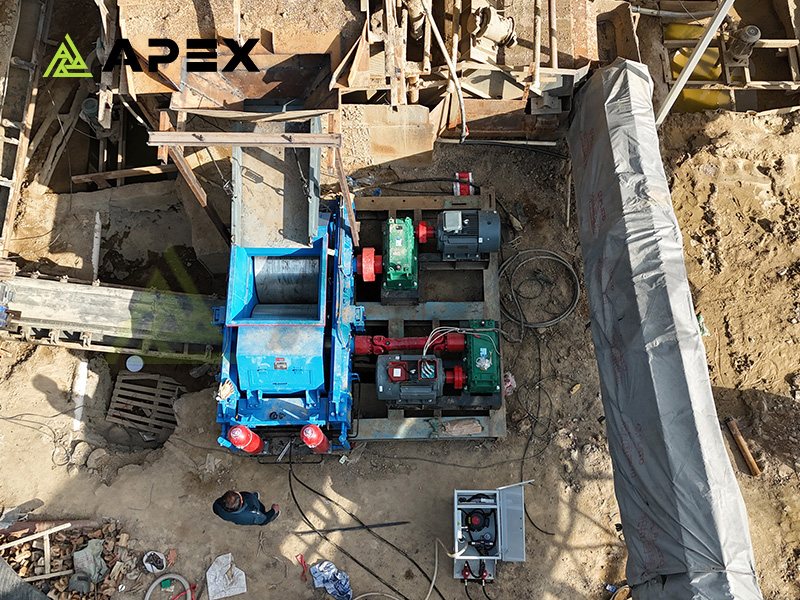
Does Decreasing the Roll Gap of a Double Roll Crusher Reduce Throughput? Performance Analysis & Solutions