Article Summary:
Calcite (calcium carbonate, Mohs hardness ~3) is a soft industrial mineral where hardness is not the primary challenge. Calcite processing demands precise pre-mill feed sizing, minimal over-crushing to save energy, immaculate product whiteness without metal contamination, and low operating costs. This article explores why the low-speed compression principle of double roll crushers is uniquely suited for calcite, protecting mineral purity while delivering highly efficient pre-grinding performance for Apex (Apex) Heavy Industry clients.
Calcite (calcium carbonate, Mohs hardness ~3) is a soft industrial mineral where hardness is not the primary challenge. Calcite processing demands precise pre-mill feed sizing, minimal over-crushing to save energy, immaculate product whiteness without metal contamination, and low operating costs. This article explores why the low-speed compression principle of double roll crushers is uniquely suited for calcite, protecting mineral purity while delivering highly efficient pre-grinding performance for Apex (Apex) Heavy Industry clients.
Calcite doesn’t need force—it needs control. Calcite (calcium carbonate, Mohs hardness ~3) is one of the softest industrial minerals any crushing plant will ever encounter. Hardness is simply not the problem. What calcite processing actually demands from the crushing stage includes:
- Controlled feed sizing for downstream grinding mills (Raymond mills, ball mills, or vertical roller mills).
- Minimal over-crushing—grinding calcite finer than the process requires wastes electrical energy and dust-handling capacity.
- Clean product—calcium carbonate buyers pay premium prices for whiteness; steel wear contamination ruins the final color.
- Low operating costs—soft minerals demand lean economics where every avoidable kilowatt-hour and wear part matters when profit margins are tight.
The double roll crusher addresses all four requirements through low-speed compression comminution. On calcite, its operational advantages are even more pronounced than on hard rock, because the machine’s gentle mechanical principle mirrors the soft, non-abrasive nature of the mineral.
Note: Capacity and size figures are indicative reference values; final equipment selection is confirmed against your specific calcite grade and plant flowsheet 【Custom Parameters Available】.
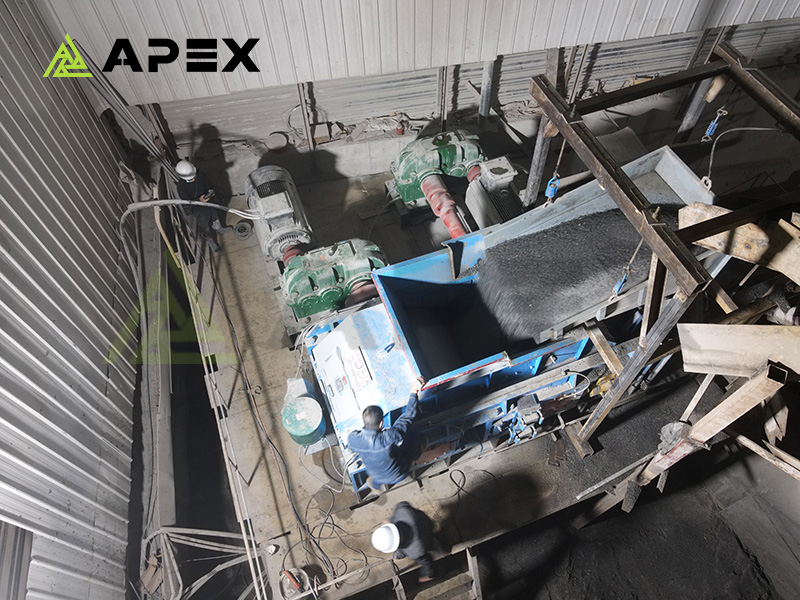
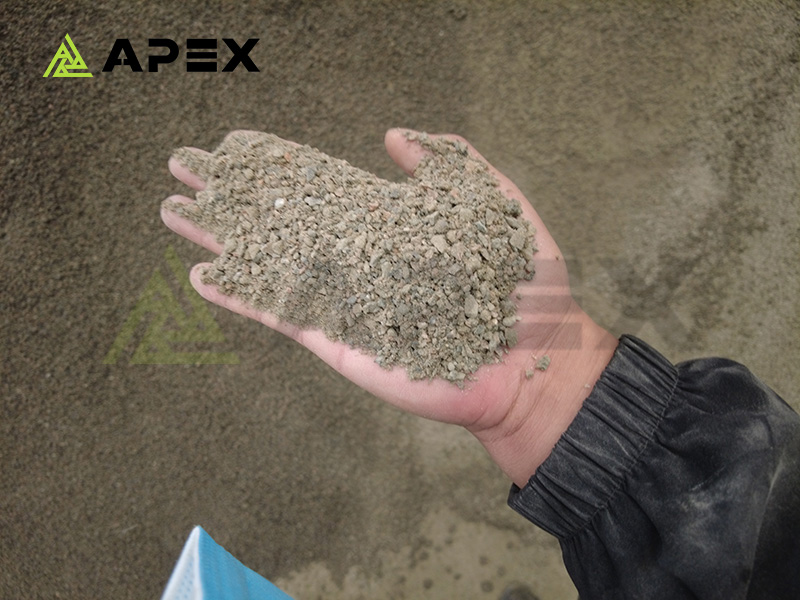
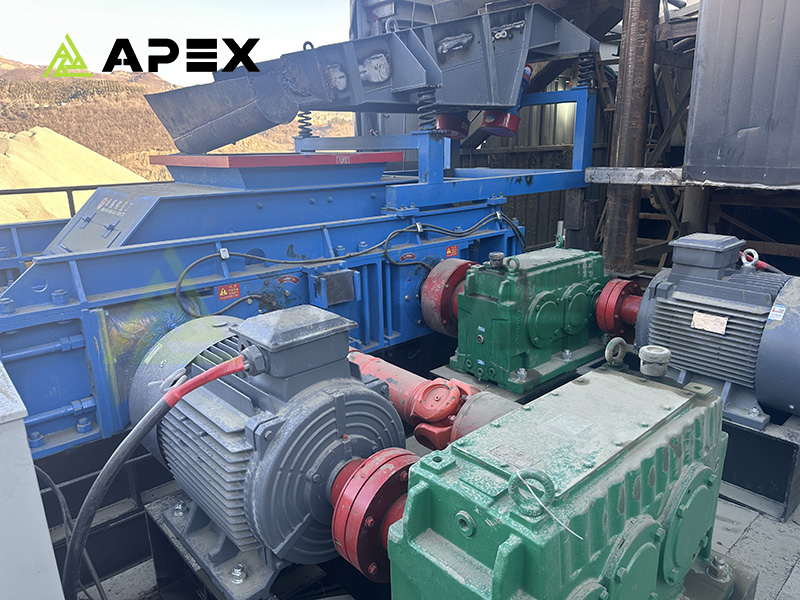
Apex Double Roll Crusher Operating in a Calcite Processing Facility
1. Why a Roll Crusher Suits Calcite Processing
- Crush-to-Size-and-Exit (Minimal Over-Crushing): The roll crusher releases particles the instant they reach the set inter-roll gap. For calcite feeding a grinding mill, this ensures the crusher delivers a consistent lump feed without generating unnecessary fine powder—fines that the mill would only waste energy re-grinding, or that dust-collection systems would struggle to capture. The crusher’s sole mission is sizing, not grinding.
- Slow Wear Protects Whiteness: Commercial calcite value is tied directly to whiteness and chemical purity. High-speed impact crushers wear down steel hammers and liners rapidly, introducing worn steel into the product as visible discoloration. A roll crusher operating on soft calcite experiences minimal wear—the mineral barely abrades the roller shells. Consequently, iron pickup is negligible, and shell alloys can be selected to match premium whiteness specifications 【Custom Parameters Available】.
- Low Specific Energy on Soft Rock: Calcite requires very little mechanical force to fracture. The roll crusher’s low-speed compression handles it with a modest electrical power draw. Because over-crushing is minimized, zero energy is wasted re-breaking already-sized material. For filler-grade calcite plants operating continuous milling lines, this crushing efficiency translates directly into lower cost per ton.
- Moisture Tolerance Without Blinding: Calcite sourced from wet open pits or exhibiting high surface moisture blinds impact crushers and vibrating screens easily. The roll crusher tolerates moist feeds reliably; for damp, slightly sticky calcite, specialized toothed roll surfaces are readily available.
- Quiet & Dust-Lean Operation: Low peripheral roll speeds generate less induced airflow and minimize dust emissions at transfer points—a vital advantage for GCC filler plants frequently situated near residential zones or industrial park environments.
2. Where It Sits in the Calcite Flowsheet
Standard Proven Flowsheet:
Calcite (As-Mined Lumps) $\rightarrow$ Double Roll Crusher (Primary / Secondary Sizing) $\rightarrow$ Vibrating Screen (Optional) $\rightarrow$ Rotary Dryer (If Wet) $\rightarrow$ Grinding Mill (Raymond / Ball / Vertical Roller Mill) $\rightarrow$ Air Classifier $\rightarrow$ GCC Powder Product.
Two Practical Engineering Rules:
- Size to the Mill, Not Below It: The grinding mill handles fine pulverization; the crusher’s operational scope ends precisely at mill feed size. Over-crushing at this stage is pure energy waste.
- Keep the Circuit Simple: Calcite’s softness means a single roll crusher stage typically suffices, whereas hard abrasive minerals demand multi-stage jaw, cone, and roll arrangements. This delivers a simpler flowsheet, lower capital expenditure, and fewer transfer points requiring dust management.
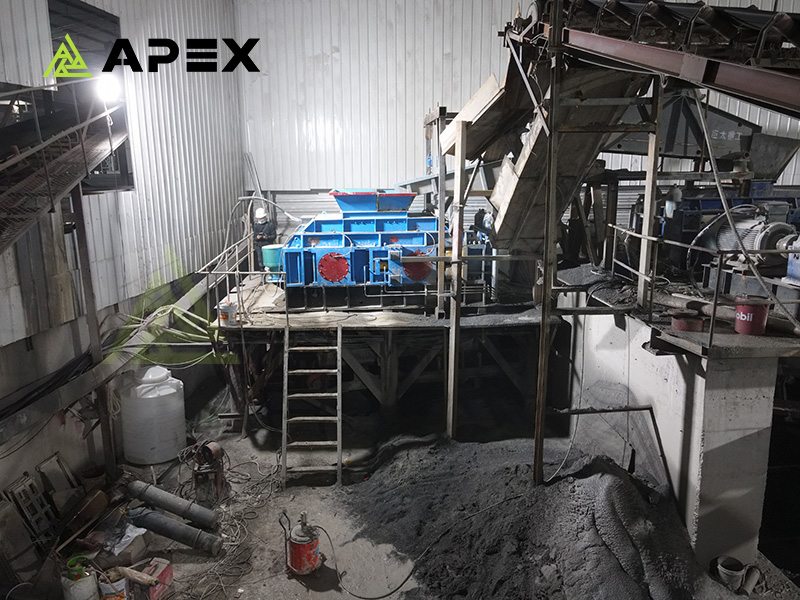
Calcite Crushing Site
3. Size Your Calcite Crusher With Four Data Points
To receive a precise engineering proposal and quotation for calcite processing, please provide:
- Calcite Grade & Whiteness Requirement: (e.g., optical whiteness percentage, chemical purity specs)
- Feed Top Size: (As-mined lump dimensions entering the crusher)
- Required Product Size: (Grinding mill feed top size specification)
- Design Capacity: (Tons per hour target)
Providing these four metrics allows Apex to specify exact equipment models, motor ratings, and roll surface metallurgies matched to your calcite grade 【Custom Parameters Available】.
Referenced process descriptions serve as engineering guidelines; specific performance parameters are governed by official project customization agreements.
Ready to Protect Whiteness and Save Energy in Your Calcite Plant?
Apex Heavy Machinery offers factory-direct inventory, rapid dispatch, and specialized roll surfaces matched to your calcite grade 【Custom Parameters Available】.
Site videos and GCC plant operational references for Southeast Asian and African operations available upon request!
Hot Products
How to Solve Excessive Fine Powder in Crusher Output? Apex Double Roll Crusher for Low Over-Crushing & Cubical Particles
Can a Double Roll Crusher Process High-Hardness Ore? Engineering Capabilities and Reinforced Design
Can a Double Roll Crusher Replace a Ball Mill? The Fundamental Boundary Between Crushing and Grinding
Calcite Crushing: Double Roll Crusher vs. Hammer Crusher for Whiteness Protection and Energy Efficiency