Article Summary:
Bentonite processing presents a unique challenge: it is not excessively hard, but its high plasticity and moisture sensitivity cause sticky clay to swell, blind screens, cake impact chambers, and bring high-speed crushers to a halt. When equipped with specialized toothed roll surfaces, double roll crushers overcome sticky clay through low-speed positive gripping, tearing action, and an open crushing chamber. This article explores why toothed roll crushers excel in bentonite duty, reviews processing flowsheets, presents reference model specifications, and details the four critical data points required for custom sizing from Apex (Apex) Heavy Machinery.
Bentonite processing presents a unique challenge: it is not excessively hard, but its high plasticity and moisture sensitivity cause sticky clay to swell, blind screens, cake impact chambers, and bring high-speed crushers to a halt. When equipped with specialized toothed roll surfaces, double roll crushers overcome sticky clay through low-speed positive gripping, tearing action, and an open crushing chamber. This article explores why toothed roll crushers excel in bentonite duty, reviews processing flowsheets, presents reference model specifications, and details the four critical data points required for custom sizing from Apex (Apex) Heavy Machinery.
The bentonite problem is not hardness—it is stickiness. Bentonite is a soft clay mineral (montmorillonite) with a peculiar physical property: it swells when wet and transforms into a sticky, highly plastic mass. Mined bentonite is rarely hard—its compressive strength is low, meaning almost any mechanical crusher can technically “break” it. The true engineering bottleneck is material handling: wet, sticky bentonite blinds screens, cakes impact chambers, builds up on chute walls, and stops high-speed machines dead in their tracks.
This is precisely where the double roll crusher—specified with toothed roll surfaces—outperforms impact-type crushers for bentonite duty. Low-speed compression combined with gripping teeth tears sticky clay apart instead of compacting and caking it; the open crushing chamber prevents blinding; and adjustable roll gaps govern precise product sizing ahead of downstream drying or milling circuits.
Note: Capacity and size figures are indicative; final equipment selection is confirmed against your specific bentonite grade and moisture range 【Custom Parameters Available】.

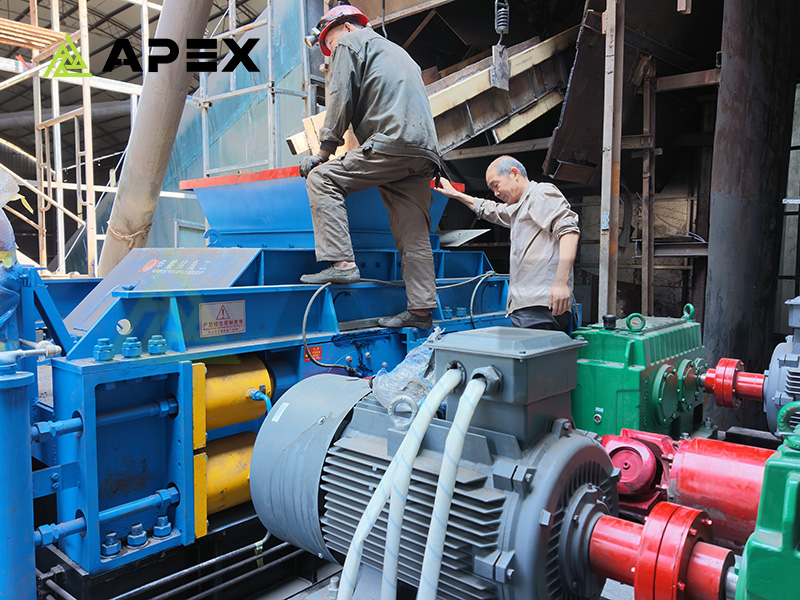
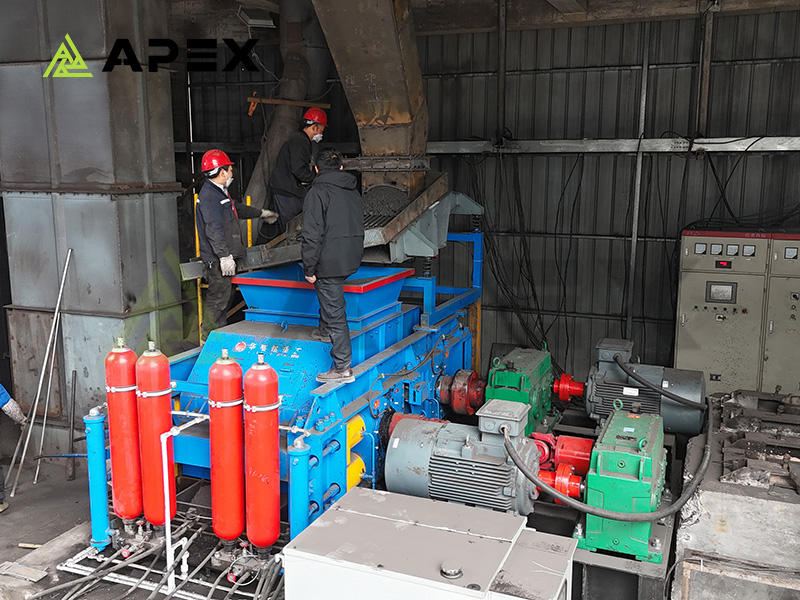
Apex Toothed Double Roll Crusher Operating in a Bentonite Processing Plant
1. Why a Toothed Roll Crusher Suits Bentonite Duty
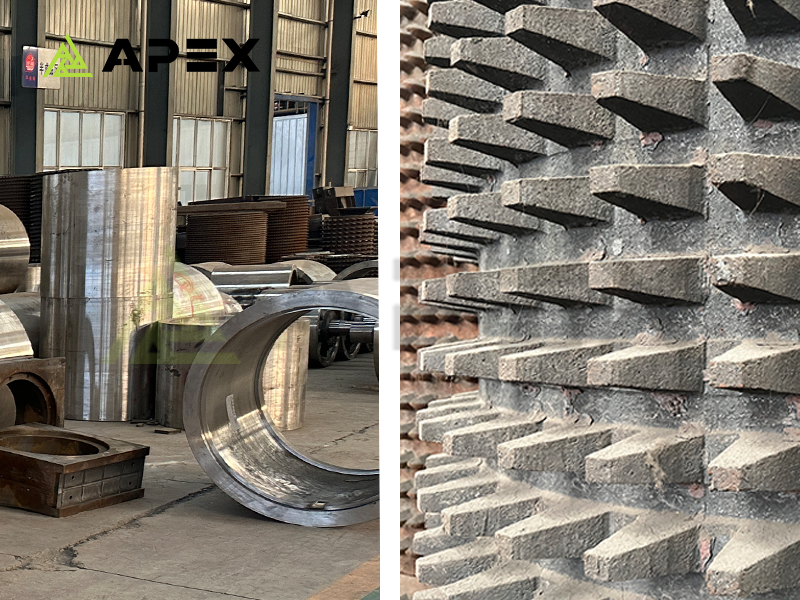
- Teeth Grip and Tear (No Slipping on Wet Clay): Smooth rolls slide helplessly on wet clay, while impact hammers cake it. Toothed roll surfaces bite directly into the sticky mass, tearing chunks loose and forcibly drawing them through the nip gap. The teeth provide mechanical grip that smooth surfaces and high-speed impacts lose entirely on plastic, wet material 【Custom Parameters Available】.
- Low Speed, No Caking: High-speed impact generates frictional heat and compacts wet clay into dense cakes that adhere stubbornly to wear parts and chamber walls. The roll crusher’s low peripheral speed avoids compaction—it simply draws material through. This results in less build-up, reduced cleaning downtime, and steadier throughput on difficult feeds.
- Open Chamber, No Blind Points: Crashing action occurs directly at the roll gap; there are no internal classifier screens and no restricted impact zones to clog. Bentonite that would choke a hammer mill within an hour flows continuously through a double roll crusher.
- Adjustable Sizing for Drying and Milling: Bentonite processing typically follows: Mining \rightarrow Drying (optional) \rightarrow Crushing \rightarrow Milling \rightarrow Classification. The roll gap sets the crusher product top size to match dryer or mill feed requirements—breaking down coarse lumps into consistent granule sizes without over-grinding into fine dust that is difficult to handle and loses swelling capacity.
- Hydraulic Relief for Country Rock & Tramp Metal: Mined bentonite frequently carries country rock and occasional tramp metal. High-response hydraulic relief systems retract movable rolls to pass uncrushable objects safely, protecting roll teeth and drive shafts.
2. Typical Bentonite Processing Flowsheet
Standard Flowsheet: Bentonite (As-mined, possibly pre-dried) rightarrow Toothed Double Roll Crusher rightarrow Vibrating Screen (Optional) rightarrow Dryer / Mill Feed rightarrow Final Product.
Common Bentonite End Uses & Crushing Placement:
- Foundry Sand Binder Grade: Crushed to a consistent milling feed size, then pulverized into fine powder.
- Drilling Mud Grade: Dried, crushed, and milled; product fineness is controlled by the classification mill rather than the crusher.
- Iron Ore Pelletizing Binder: Consistent lump reduction executed prior to thermal drying and fine pulverization.
- Civil Engineering / Sealing Grade: Coarser sizing where the roll crusher serves as the primary sizing step.
- Cat Litter / Absorbent Grade: Granular sizing where the crusher establishes lump dimensions alongside screening circuits.
The double roll crusher acts as the reliable sizing step ahead of drying and milling—transforming sticky raw clay into a manageable, free-flowing granular product.
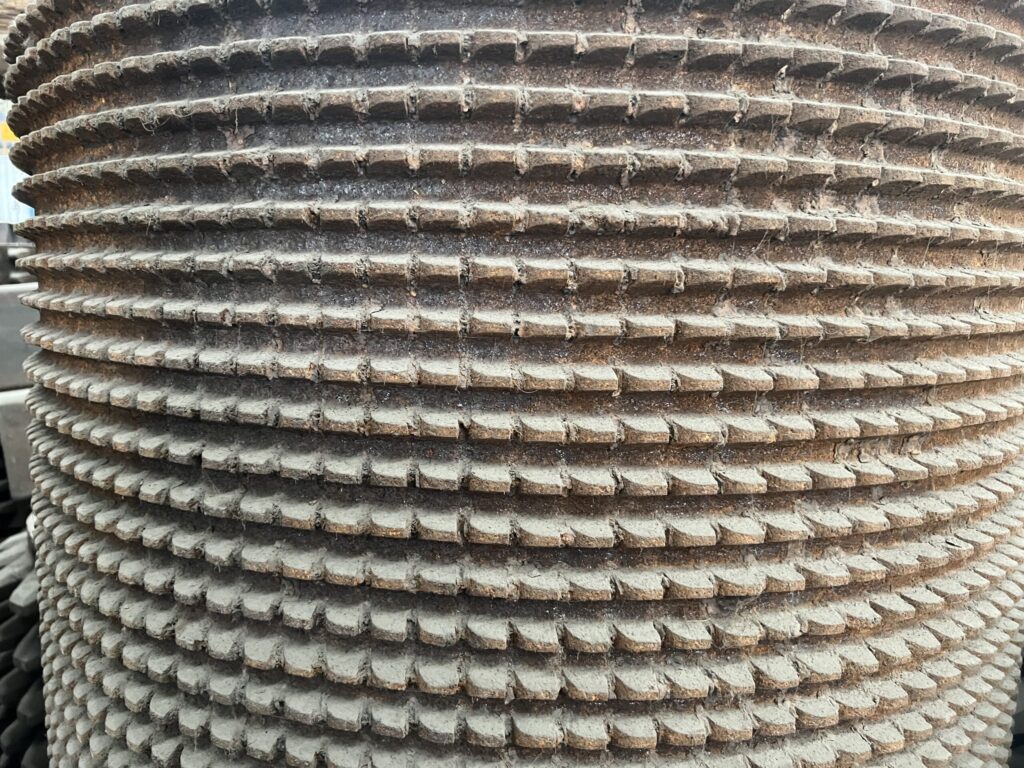
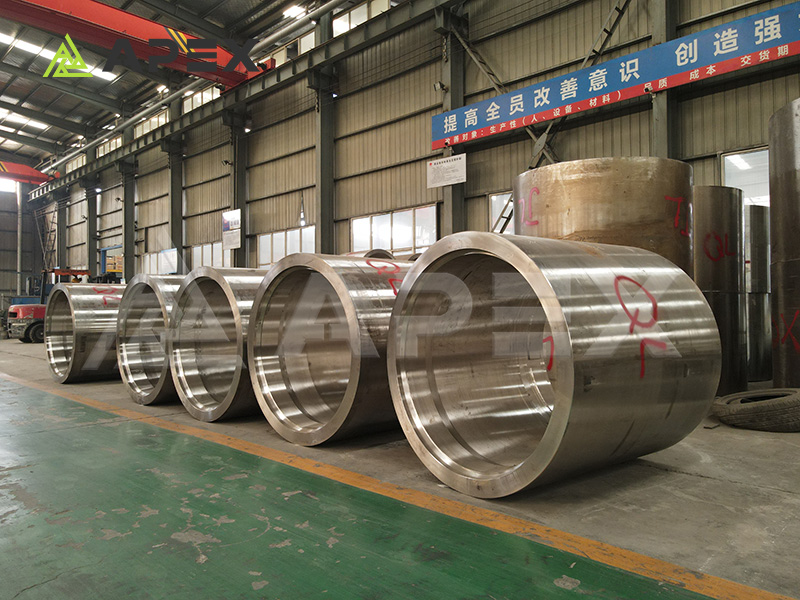
Heavy-Duty Toothed Roll Shells
3. Model Range for Bentonite Duty (Reference)
| Model Designation | Roll Diameter (mm) | Max Feed Size (mm) | Capacity (T/H) |
|---|---|---|---|
| 2PGT400×400 | 400 | 25 | 5–12 |
| 2PGT610×400 | 610 | 30 | 5–20 |
| 2PGT750×500 | 750 | 30 | 10–40 |
| 2PGY800×1000 | 800 | 40 | 50–80 |
| 2PGY1200×1200 (Large Scale) | 1200 | 60 | 120–150 |
Selection Rule: Choose a model whose mid-range capacity covers your operational duty. Toothed roll surfaces are the standard specification for bentonite; smooth rolls are reserved exclusively for pre-dried, clean feeds. Small-scale bentonite operations commonly utilize the 2PGT400–750 series, while larger processing plants specify the 2PGY hydraulic series 【Custom Parameters Available】.
4. Frequently Asked Questions
Q: Roll crusher or hammer mill for wet bentonite?
A: For wet, sticky bentonite, the toothed roll crusher is the vastly superior and more reliable choice. Hammer mills blind and cake rapidly on wet clay; the roll crusher’s low-speed tearing action maintains continuous material flow. For pre-dried bentonite where dust generation is acceptable, hammer mills remain viable—however, most bentonite plants dry after crushing rather than before, precisely because wet crushing heavily favors roll machinery.
Q: How wet can the feed material be?
A: Toothed roll crushers tolerate surface moisture remarkably well—far better than impact machines. Extremely high moisture levels (saturated, highly plastic clay) may still benefit from partial pre-drying or blending with dried product; send us your typical moisture range and we confirm feasibility through operational experience 【Custom Parameters Available】.
Q: Smooth rolls or toothed rolls for bentonite?
A: Toothed rolls, almost without exception. Bentonite’s plastic, sticky behavior defeats smooth rolls entirely, causing material to slide rather than drawing in. Toothed surfaces grip and tear—the fundamental working principle that makes roll crushers viable on sticky clay feeds.
Q: Does the crusher generate significant dust?
A: Low-speed compression generates considerably less airborne dust than impact crushing. When processing wet feed, dust emissions are minimal. If dust control is a strict regulatory requirement when processing dry feed, the crusher integrates easily with standard plant dust-extraction ducting at feed and discharge points.
5. Size Your Bentonite Crusher With Four Data Points
To receive a precise engineering proposal and quotation for bentonite processing, please provide:
- Bentonite Grade & Moisture Range: (e.g., as-mined lump clay, typical surface moisture percentage)
- Feed Top Size: (As-mined lump dimensions or pre-sized feed)
- Required Product Size: (Mill feed, dryer feed, or final specification top size)
- Design Capacity: (Tons per hour target)
Providing these four metrics allows Apex to specify exact equipment models, motor ratings, and specialized toothed roll configurations 【Custom Parameters Available】.
Referenced process descriptions serve as engineering guidelines; specific performance parameters are governed by official project customization agreements.
Ready to Eliminate Blinding in Your Bentonite Processing Line?
Apex Heavy Machinery offers factory-direct inventory, rapid dispatch, and standard toothed roll surfaces engineered specifically for sticky clay duty 【Custom Parameters Available】.
Site references and bentonite project videos for Southeast Asian and African operations available upon request!
Hot Products
How Fine Can Double Roll Crushers Adjust Their Discharge Sizing? Engineering Limits & Adjustment Guide
What Is the Ideal Feed Size for Crushing Hard Rock with Double Roll Crushers?
Double Roll Crushers vs. Cone Crushers: How to Choose the Right Fine Crushing Equipment for Your Plant
Does Decreasing the Roll Gap of a Double Roll Crusher Reduce Throughput? Performance Analysis & Solutions