Article Summary:
This article provides a comprehensive selection guide for 100 TPH (tons per hour) double roll crushers in medium-to-large production lines. It evaluates how material hardness, feed lump size, target gradation, motor power, and wear package levels directly dictate machine sizing. Highlighting common pitfalls—such as under-sizing for hard rock or confusing raw feed rates with net finished yields—the piece demonstrates how APEX (APEX) matches heavy-duty equipment configurations to real-world operating conditions, backed by ready-to-ship inventory and factory trial testing.
This article provides a comprehensive selection guide for 100 TPH (tons per hour) double roll crushers in medium-to-large production lines. It evaluates how material hardness, feed lump size, target gradation, motor power, and wear package levels directly dictate machine sizing. Highlighting common pitfalls—such as under-sizing for hard rock or confusing raw feed rates with net finished yields—the piece demonstrates how APEX (APEX) matches heavy-duty equipment configurations to real-world operating conditions, backed by ready-to-ship inventory and factory trial testing.
Operating at 100 TPH represents a medium-to-large industrial production scale, imposing far stricter engineering demands than a 50 TPH plant. Key variables—including raw material hardness, maximum feed lump dimensions, target discharge gradation, motor power ratings, and wear protection levels—must be determined accurately right from the start; under-sizing equipment at this capacity severely bottle-necks plant throughput. APEX (APEX) matches heavy-duty equipment configurations to exact operating conditions, backed by ready-to-ship factory stock and empirical material trial testing to ensure total customer purchasing confidence.
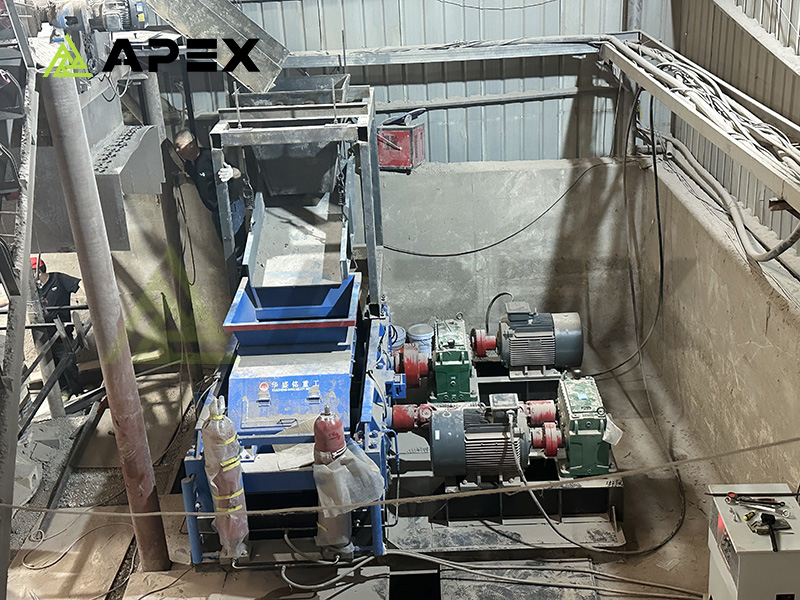
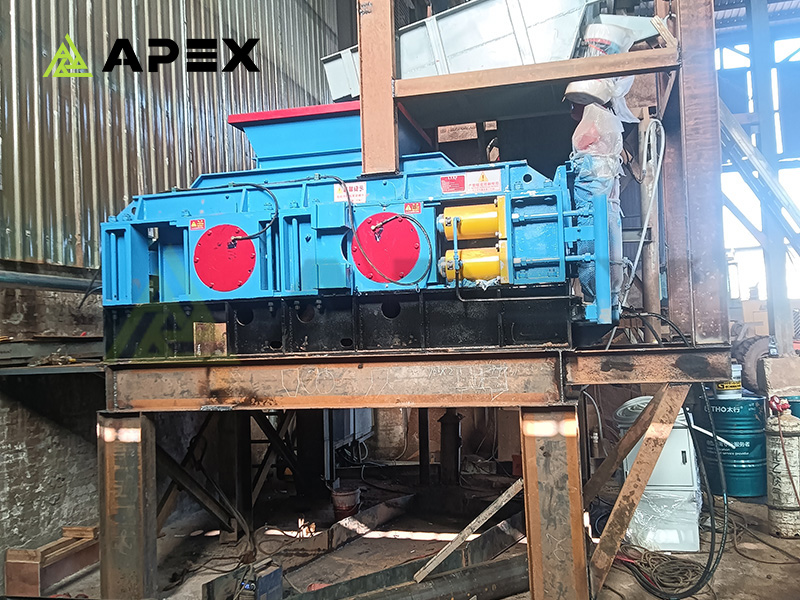
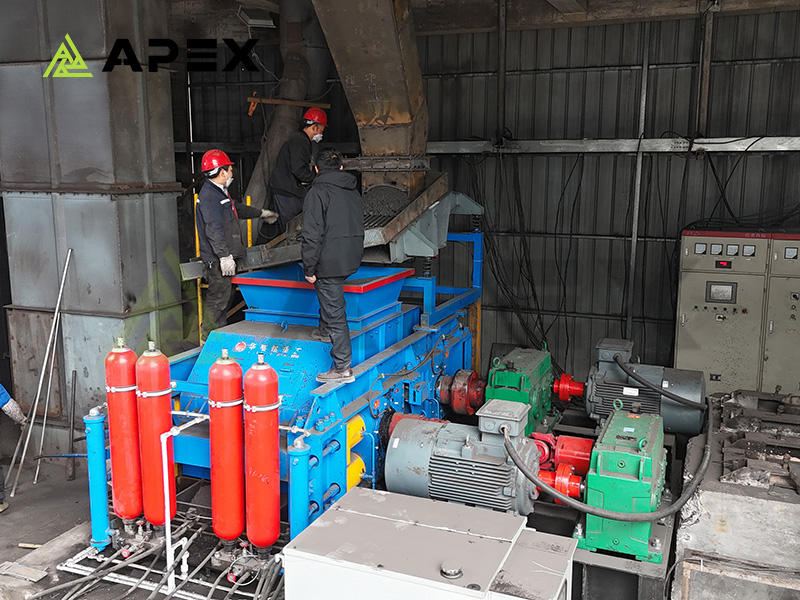
100 TPH APEX Double Roll Crusher Operating in a Large Aggregate Plant
1. Key Engineering Priorities for 100 TPH Sizing
- 1. Material Hardness Dictates Equipment Tier: For medium-hard rocks like limestone, coal, or river pebbles, 100 TPH is a standard large-capacity target satisfied by APEX’s standard heavy-duty models 【Custom Parameters Available】. For hard ores like granite, basalt, or gold ore, motor power must be upgraded alongside high-chromium alloy shells and hydraulic tramp relief systems 【Custom Parameters Available】.
- 2. Feed Lump Size Dictates Roll Diameter: Coarser raw feed dimensions require larger roll diameters and wider intake nips; routing large boulders through primary jaw crushers first optimizes double roll sizing and minimizes initial capital outlay 【Custom Parameters Available】.
- 3. Target Discharge Sizing Dictates Capacity Calculations: Producing 0–5mm manufactured sand requires tighter roll clearance and higher reduction energy, calculating machine sizing based on fine sand-making capacity; producing 10–30mm aggregates yields higher tonnage at equivalent motor ratings.
2. Common 100 TPH Flowsheet Configuration Strategies
| Configuration Strategy | Process Circuit Setup | Plant Operational Advantage |
|---|---|---|
| Standalone Heavy-Duty Unit | Single large-diameter double roll crusher fed with pre-sized material 【Custom Parameters Available】. | Ideal for streamlined plant layouts with uniform, pre-screened raw feed inputs. |
| Primary Jaw + Secondary Roll Circuit | Primary jaw crusher (coarse reduction) feeding into a secondary fine double roll crusher. | Reduces strain on fine crushers, ensures stable operation, and lowers overall capital investment. |
| Closed-Circuit Screening Loop | Double roll crusher integrated with vibrating screens and oversize return conveyers 【Custom Parameters Available】. | Eliminates out-of-spec particles, stabilizes fineness modulus, and maximizes finished sand yields. |
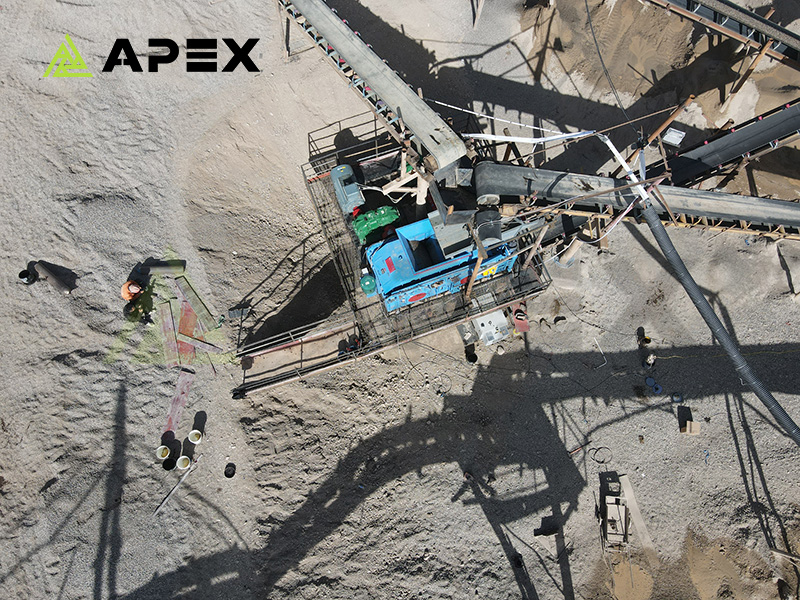
100 TPH Closed-Circuit Screening & Conveying System
3. Two Common Selection Pitfalls to Avoid
• Pitfall 1: Calculating Capacity Based Strictly on Raw Feed Input
Net finished sand conversion yields vary depending on material properties and screen mesh sizes. Target 100 TPH finished product output must be calculated on a net finished basis, factoring in a 10%–20% operational safety buffer to handle peak seasonal demand.
• Pitfall 2: Selecting Soft-Material Models for Hard-Rock Conditions
Specifying standard, light-duty machinery for hard materials like granite forces equipment to operate under continuous mechanical overload—causing rapid surface wear, frequent downtime, and high overall operating costs.
4. Four-Step Protocol for Precision Equipment Specification
- 1. Provide Complete Operational Data: Report raw material type, maximum feed lump size, target finished gradation, and net hourly finished output requirements.
- 2. Match Motor Power & Drive Train: Calculate required motor power based on compressive rock hardness and throughput, upgrading drive ratings for hard rock 【Custom Parameters Available】.
- 3. Equip Heavy-Duty Wear Protection: Equip high-hardness applications with thickened high-chromium alloy roller shells and dynamic hydraulic tramp release systems 【Custom Parameters Available】.
- 4. Conduct Factory Sample Testing: Verify capacity ratings and crushing efficiency with hard performance data through pre-purchase factory sample trial testing.
Planning a 100 TPH Production Line? Partner with APEX Heavy Industry:
Selecting a 100 TPH double roll crusher relies on accurately mapping “Material Hardness + Feed Size + Target Gradation + Net Output Target.” Provide your site parameters to let APEX engineers lock in the ideal heavy-duty model 【Custom Parameters Available】.
Contact APEX Heavy Industry today to review technical specifications, request quotation proposals, or arrange a free raw material sample trial test.
Hot Products
What Is the Ideal Feed Size for Crushing Hard Rock with Double Roll Crushers?
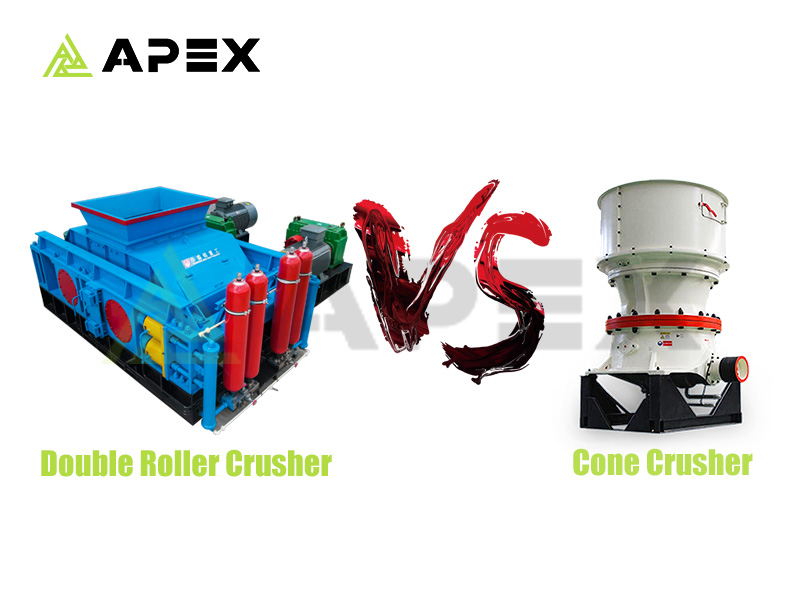
Double Roll Crushers vs. Cone Crushers: How to Choose the Right Fine Crushing Equipment for Your Plant
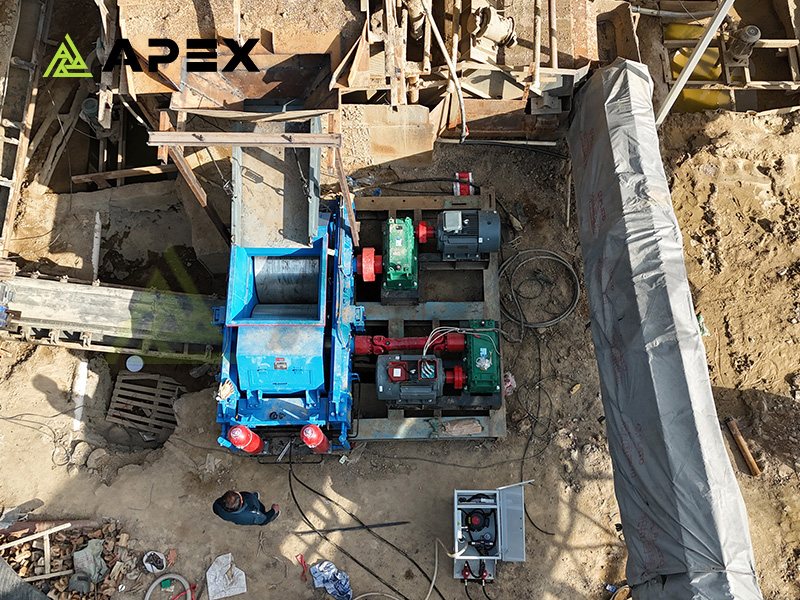
Does Decreasing the Roll Gap of a Double Roll Crusher Reduce Throughput? Performance Analysis & Solutions
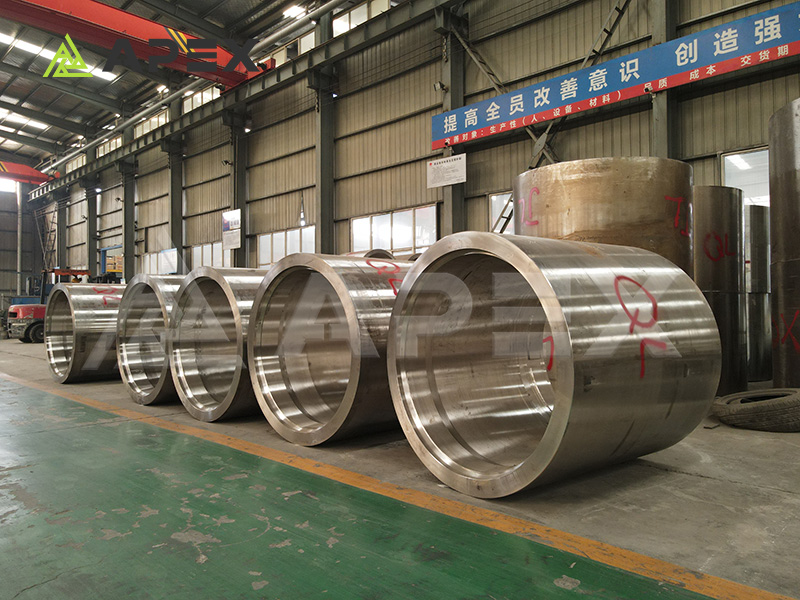
How Long Do Double Roll Crusher Roller Shells Last? Understanding the 3 Wear Stages & Maintenance Timing