Key Circuit Positioning Rules:
- Not a Primary Crusher: A double roll crusher is a precision tool for secondary or tertiary reduction, not a sledgehammer for oversized run-of-mine (ROM) boulders.
- Requires Feed Preparation: Demands an evenly distributed feed pre-treated by an upstream jaw crusher, gyratory crusher, feeder breaker, or sizer.
- Controlled Reduction Ratio: Takes 50–300 mm feed down to a tight 5–50 mm product before final screening, washing, or milling.
A double roll crusher almost never runs alone. In an industry-standard comminution circuit, it operates alongside primary crushing units to deliver precise size reduction with minimal fines. Understanding where and why it sits in the circuit is essential for protecting the equipment, maximizing throughput, and optimizing energy consumption.
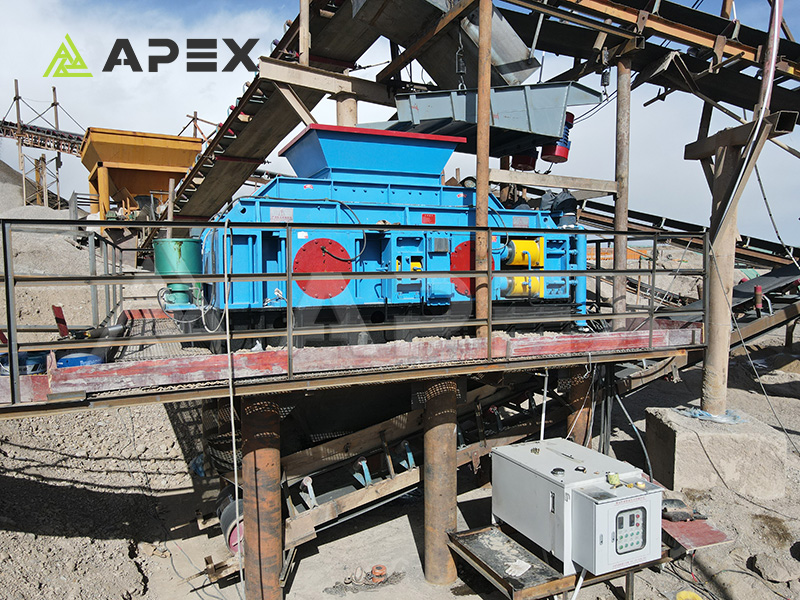
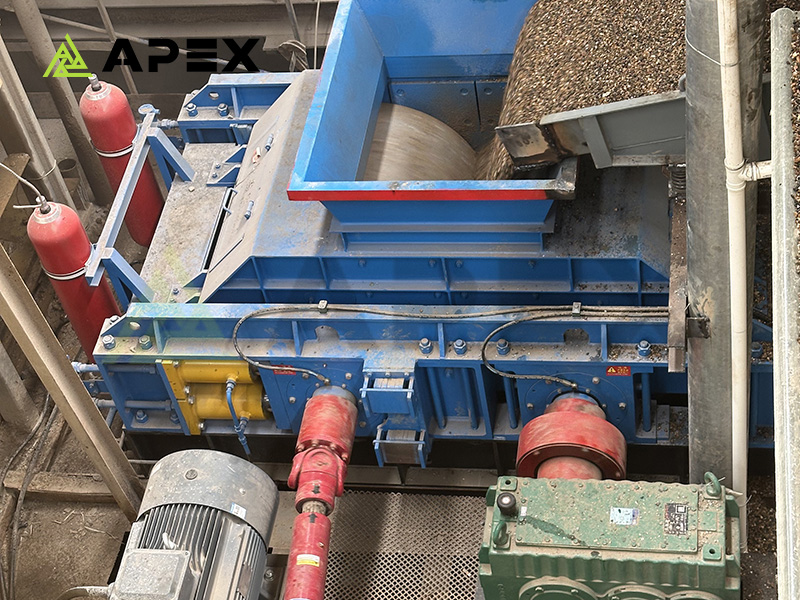
APEX Double Roll Crusher
Stage-by-Stage Breakdown of the Comminution Chain
| Circuit Stage | Typical Equipment | Primary Function & Feed Size |
|---|---|---|
| 1. Primary Crushing | Jaw Crusher, Gyratory Crusher | Breaks massive run-of-mine (ROM) rock down to a manageable top size. |
| 2. Feed Preparation | Feeder Breaker, Mineral Sizer | Pre-conditions material, ensuring an even distribution and preventing oversize spikes. |
| 3. Secondary / Tertiary | Double Roll Crusher | Reduces 50–300 mm feed to a tight, consistent 5–50 mm product. |
| 4. Downstream Processing | Vibrating Screens, Washers, Ball Mills | Classifies final product sizes or prepares material for grinding and beneficiation. |
Two Critical Reasons Placement Matters
1. Protection from Oversized Feed
A double roll crusher requires a well-prepared and evenly distributed feed across the entire width of the rolls. Unconditioned run-of-mine boulders can cause severe mechanical stress, premature tooth wear, or structural damage.
2. Controlled Reduction Ratios
Because roll crushers have a fixed reduction ratio limit, they cannot perform the entire reduction job in a single pass. Treating them as a precision tool at the end of the comminution chain—rather than a primary sledgehammer—guarantees optimal product sizing with minimal fines.
Double Roll Crusher vs. Impactors & Hammer Mills
In secondary and tertiary positions, the primary alternatives to double roll crushers are impact crushers and hammer mills. However, the coal, cement, and mineral-processing industries increasingly favor double roll crushers due to distinct operational advantages:
| Performance Factor | Double Roll Crusher | Impactor / Hammer Mill |
|---|---|---|
| Fines Generation & Over-Grinding | Extremely Low: Shear/split action produces clean, cubical output with minimal fines. | High: High-speed impact causes excessive pulverization and fine creation. |
| Handling Sticky / Wet Feed | Superior: Counter-rotating teeth shear through moist feed without choking the chamber. | Poor: Wet, sticky feed quickly clogs grates and impact plates. |
| Energy Efficiency & Wear | High Efficiency: Low RPM design minimizes power draw and wear component cost. | Moderate / High Wear: High-speed hammers/blow bars suffer rapid abrasion. |
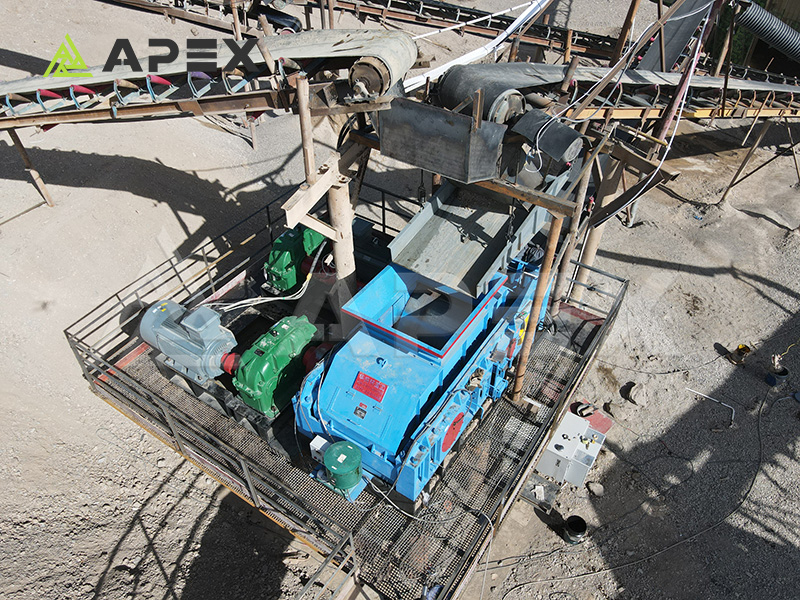
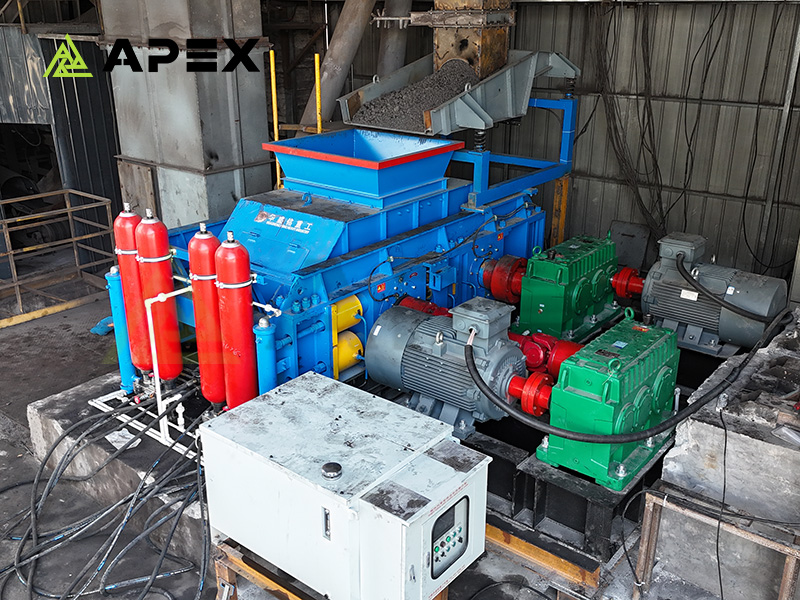
APEX Heavy Industry Double Roll Crusher in Action
Summary: Positioned correctly as a secondary or tertiary crusher, a double roll crusher delivers unmatched sizing accuracy, lower energy consumption, and high tolerance for moist materials—making it the preferred choice over impactors in modern coal and mineral circuits.
Hot Products
Double Roll Crusher Selection Guide: Sizing Machinery Based on Raw Feed Parameters
Can a Double Roll Crusher Grip Smooth River Pebbles? Physics & Performance Analysis
Where a Double Roll Crusher Fits in a Crushing Circuit
Troubleshooting Excessive Fines and Over-Crushing in Double Roller Crushers & Control Strategies
