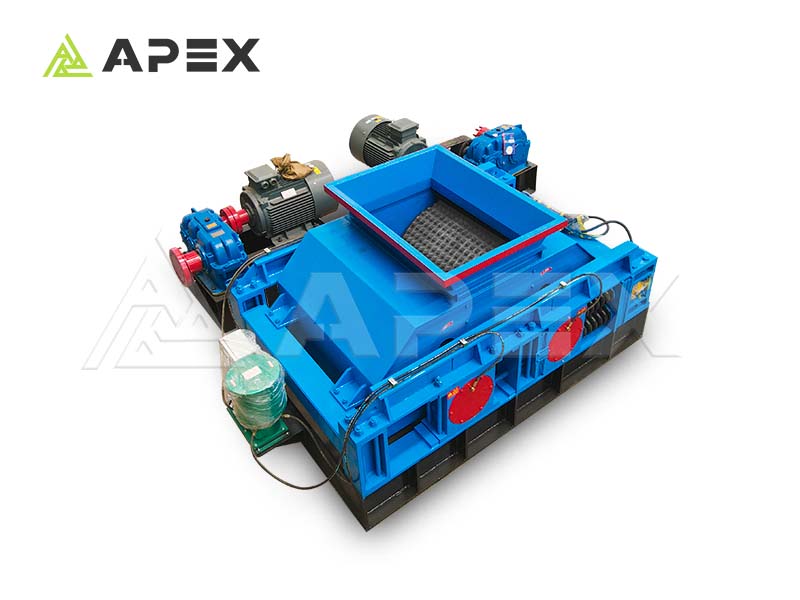
Granite is hard and highly abrasive, making it one of the toughest materials in the sand‑making industry. Many users have questions when choosing a sand maker: Can a roll crusher handle granite? Are the roll shells wear‑resistant? What about sand quality? Based on HSM’s field experience, here are answers to some common questions.
Q1: Why is a roller sand maker recommended for granite sand production?
Granite has a Mohs hardness of 6‑7, making it a typical high‑hardness, highly abrasive material. Traditional hammer crushers and impact sand makers rely on high‑speed impact to break the material, which causes extremely fast wear on hammers and impact plates, leading to frequent replacement and costly downtime. The HSM roller sand maker uses a double‑roll lamination crushing principle: two rolls rotate at low speed in opposite directions, continuously compressing and grinding the material rather than impacting it. This significantly reduces wear on wear parts, and the roll shells have a much longer service life than ordinary hammers.
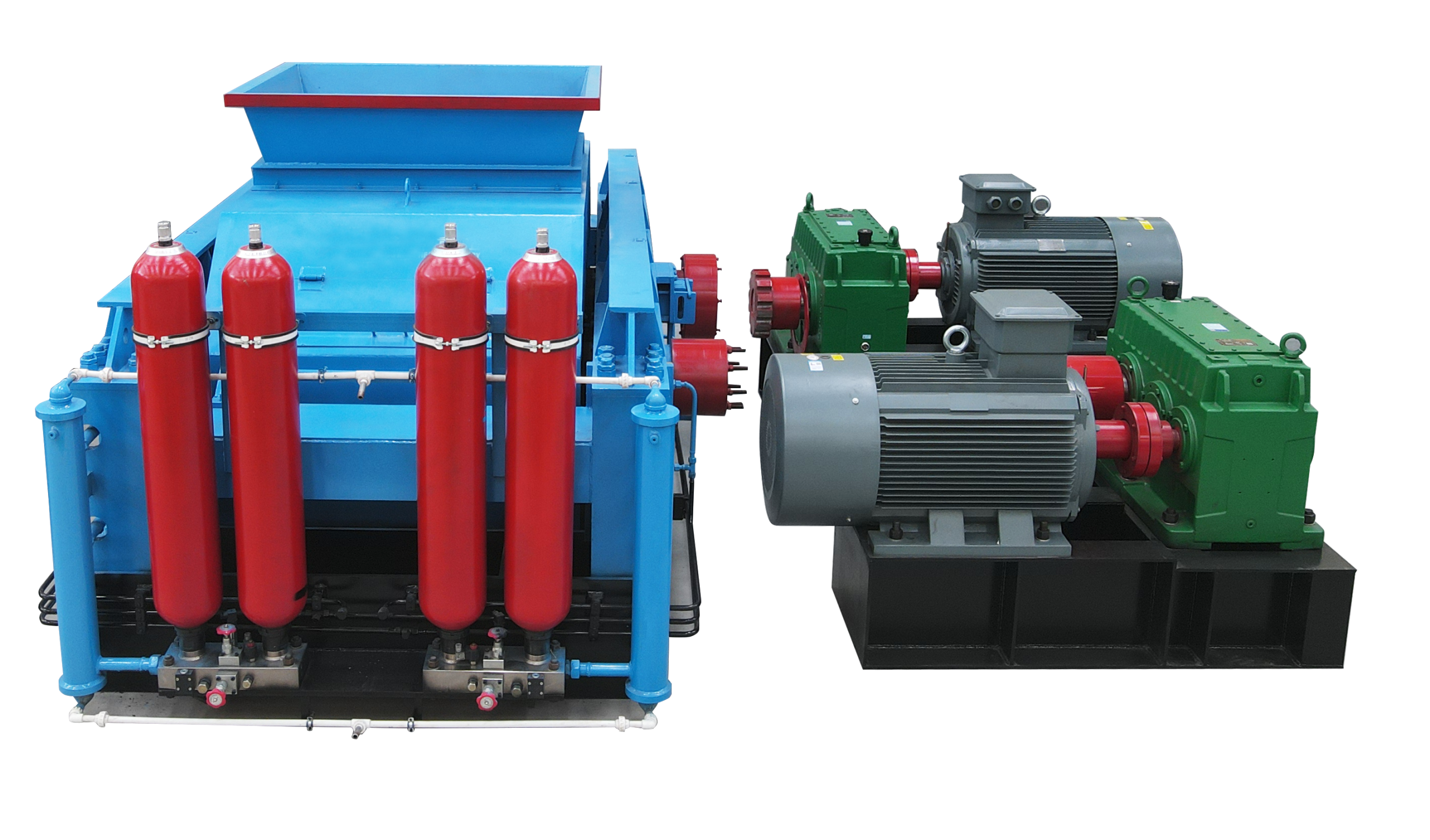
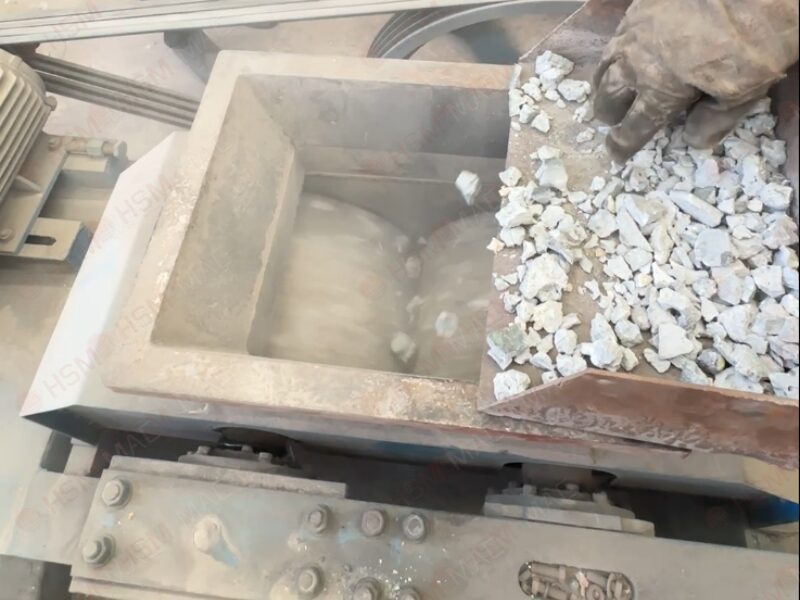
granite sand maker
Q2: Are the roll shells durable enough for crushing granite?
Granite causes significant wear on roll surfaces. Ordinary materials tend to develop grooves or spalling. HSM roller sand makers use high‑chromium manganese steel composite hardfacing roll shells with high surface hardness and strong abrasion resistance, maintaining stable service life even when processing hard granite. The extra‑thick roll shell design extends service life further. Even after prolonged operation, local wear can be repaired on‑site by turning, without needing a full replacement.
Q3: What about the quality of the finished sand? Does it meet standards?
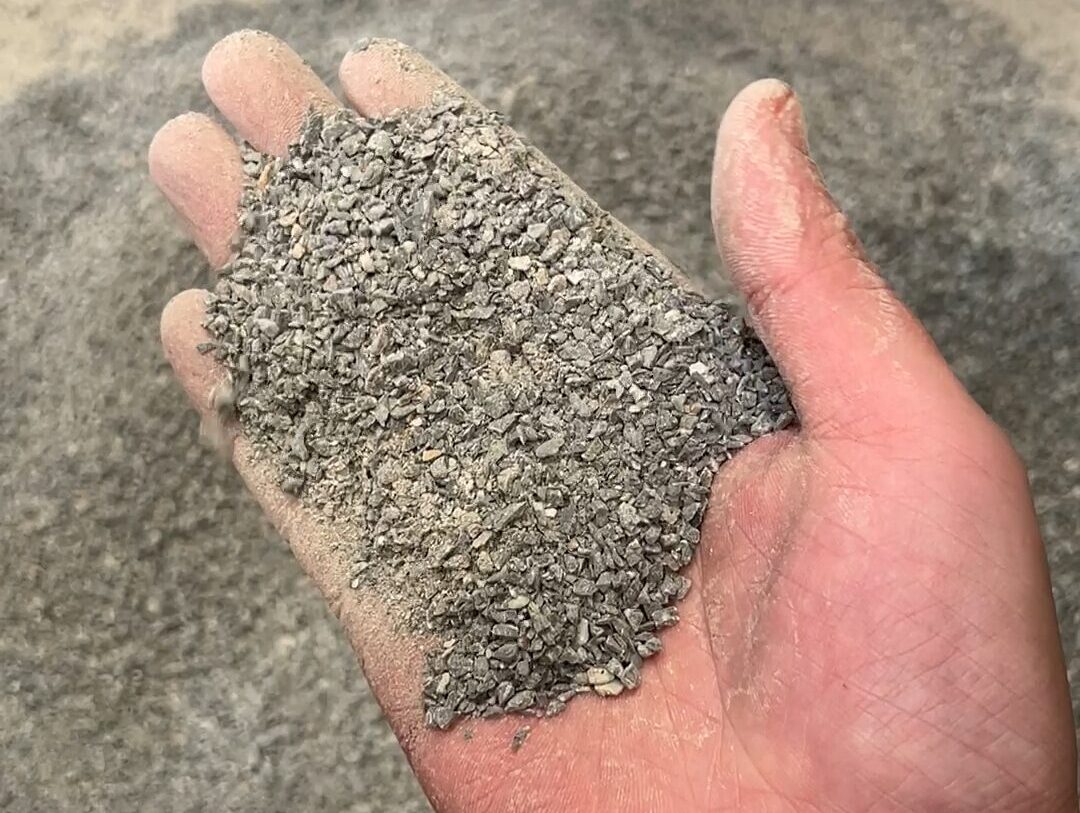
Impact sand makers produce excessive fines, often causing the stone powder content to exceed specifications. The HSM roller sand maker uses low‑speed lamination crushing, where particles fracture along natural cleavage planes, resulting in cubical shape, good gradation, and low flakiness content. Over‑crushing is minimal, and the fine powder ratio is controllable, fully meeting construction sand standards.
Q4: Can the discharge size be adjusted?
Yes. HSM roller sand makers are equipped with hydraulic or spring adjustment systems for precise roll gap control. The discharge size can be changed without stopping the machine or disassembling any parts, allowing flexible switching between coarse and fine sand to meet different project requirements.
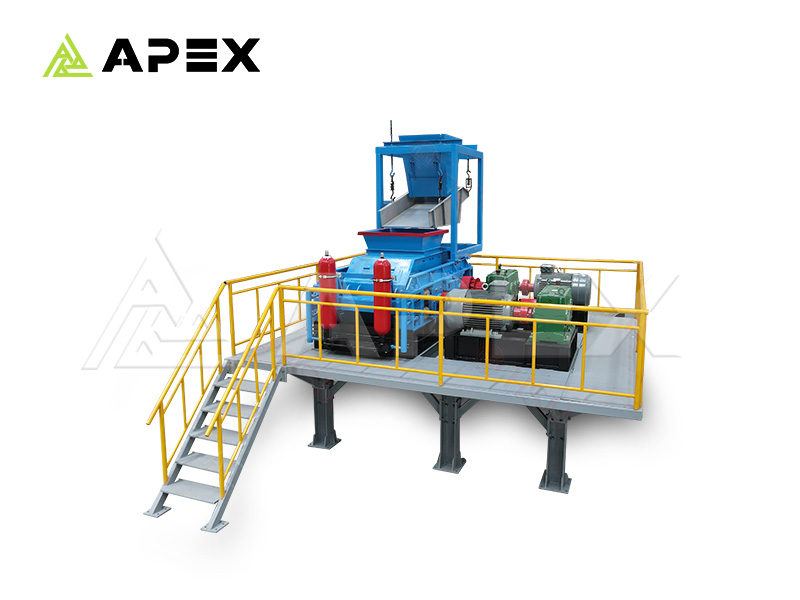
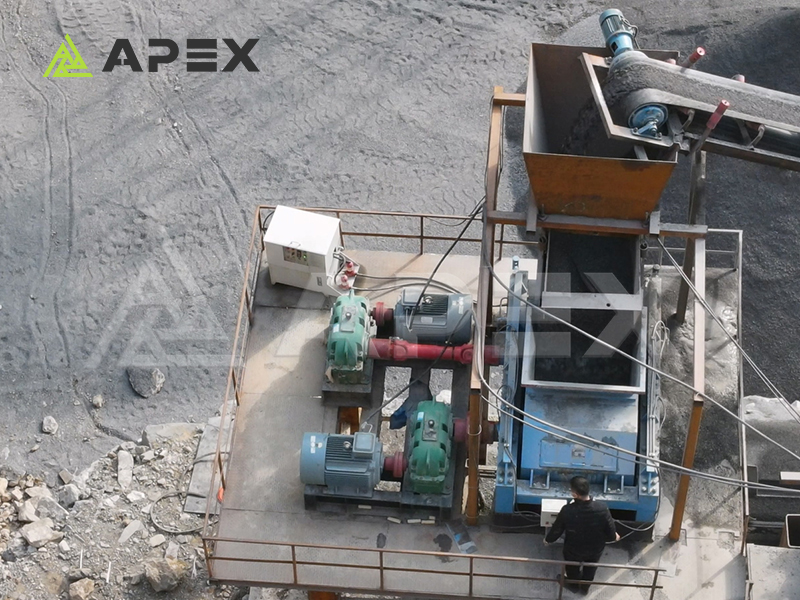
Granite sand maker and supporting frame
Q5: Does clay or moisture in granite cause clogging?
If the raw granite has high clay content or moisture, clogging is a possible risk. HSM roller sand makers are designed with sealed dust‑proof structures, and proper feeding with magnetic separation measures can effectively reduce clogging. If the material has extremely high moisture, pre‑treatment at the feed point is recommended.
Q6: What happens if the crusher encounters tramp iron or overload?
No damage occurs. HSM roller sand makers are equipped with a hydraulic overload protection system. When hard objects or tramp iron enter, the rolls automatically retract to increase the gap, avoiding jamming or damage, while maintaining stable discharge. Once the foreign material passes, the rolls automatically return to their normal position – unlike rigid crushers that may break teeth or burn motors.
Q7: What models of HSM roller sand makers are available?
HSM offers a full range of roller sand maker models to meet different capacity requirements – from small spring‑type units suitable for start‑up plants or small projects, to medium hydraulic models for regular production, and large CNC models for high‑capacity production lines. No matter the scale of your sand plant, you can find a suitable hard‑rock sand maker. Additionally, HSM supports customisation according to customer requirements, including roll surface material, tooth profile, discharge size, motor power, and other parameters, to match specific material characteristics and process needs.
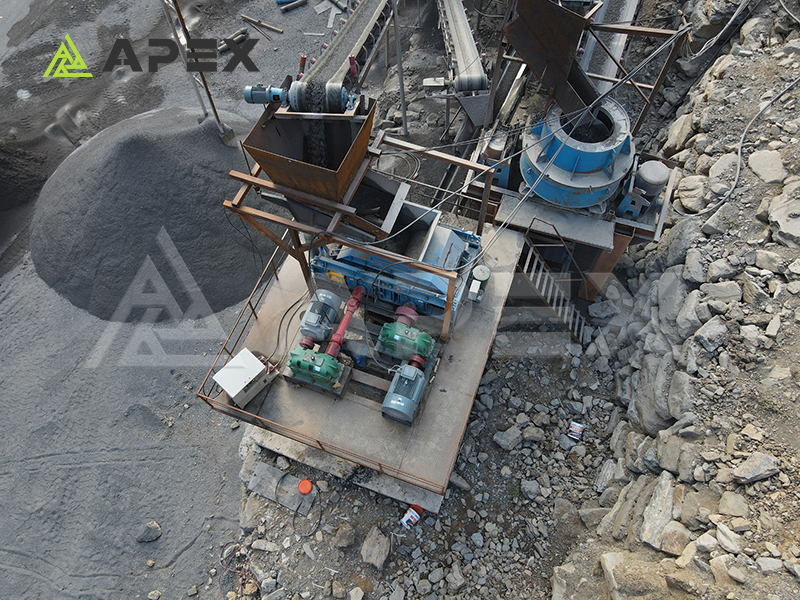
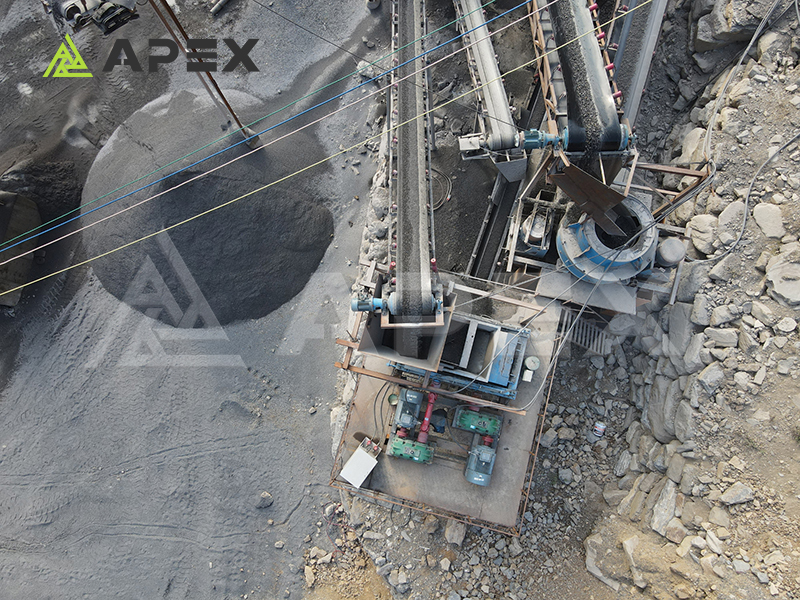
Granite sand maker at production site
Q8: Is the energy consumption of a roller sand maker high for granite?
No. The roller sand maker operates on a relatively simple and direct principle, with no complex high‑speed rotating components, thus reducing unnecessary energy losses. The optimised power transmission system lowers energy consumption per ton, achieving “more sand with less power.” Energy consumption per ton is far lower than that of impact sand makers, making operating costs controllable.
Q9: How can I get selection advice or learn more?
HSM provides one‑stop services including equipment selection guidance, free material testing, and on‑site installation support. For a detailed technical proposal for a granite sand maker or to schedule a test, please contact HSM Heavy Machinery → https://www.hsmrollcrusher.com/contact-us
Hot Products
Why Does a Double Roll Crusher Suddenly Produce Coarser and Uneven Output?
Double-Roll Crusher Performance in Sand-Making: Fines Production & Finished Particle Shape Guide
Double-Roll Crusher Wear Parts & Roller Shell Service Life Guide ?

What Materials Are Suitable for a Double-Roll Crusher?